Bridging the Gap in Accessibility of Finance in India




 11209
11209
 0
0

 9194
0
9194
0

Bridging the Gap
 8218
0
8218
0

 11137
0
11137
0
 4933
0
4933
0
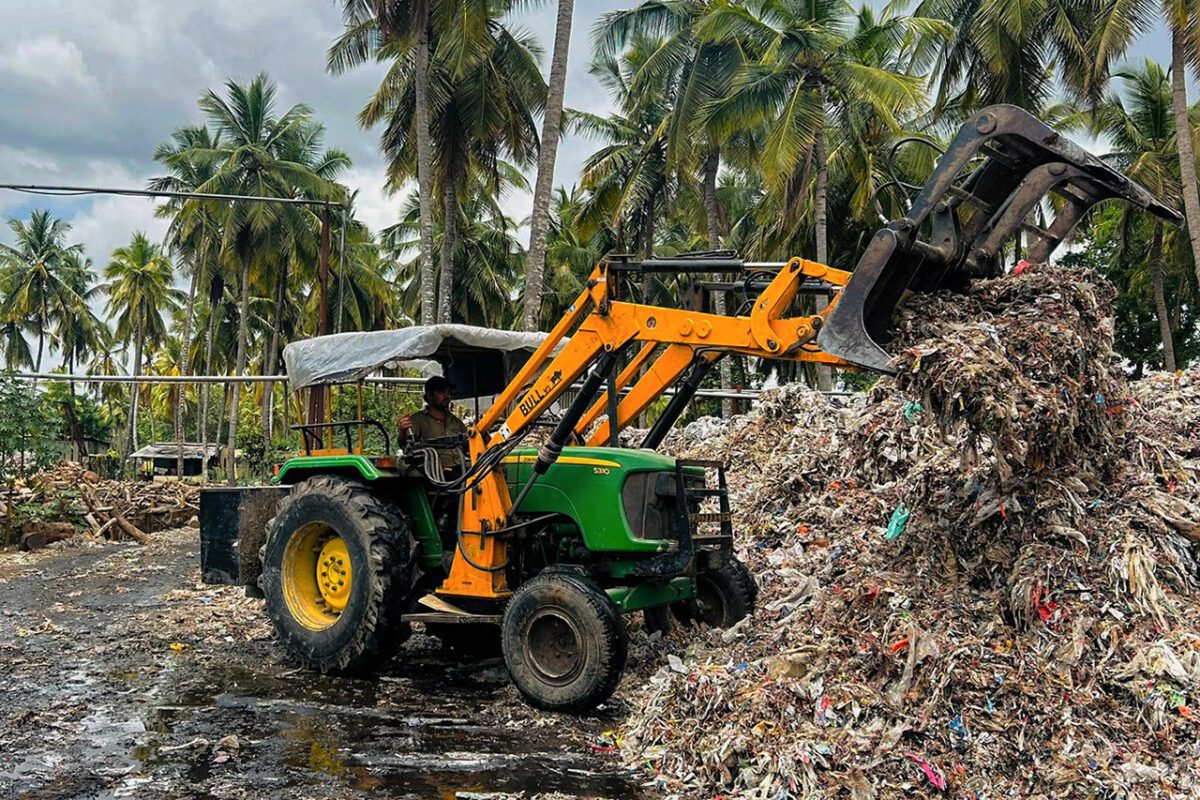
Plastic waste collection
India's solid waste collection rates have reportedly climbed above 90% under Swachh Bharat, yet treatment and disposal lag dangerously behind. Legacy waste chokes landfills while untreated non-recyclables and mixed waste still reach drains, water bodies, and open burn sites. For the Impact Economy, waste represents a systems challenge touching multiple SDGs — where progress demands enterprises that align policy, community, and commerce to convert costly externalities into investable value.
Enter ZEROTRASH, a Mumbai-based venture whose evolution illustrates impact entrepreneurship's dual imperative: maintaining commercial viability while staying true to deeper purpose.
ZEROTRASH launched in 2017 with on-site composting for residential societies, then expanded into plastics through Extended Producer Responsibility (EPR) programs for brands like HUL, Nestlé, and Britannia. These ventures revealed three uncomfortable truths: the real crisis was non-recyclable and mixed waste heading to landfills; enterprise-led recyclable collection could undercut waste-picker earnings; and the sector was fraught with impact-washing.
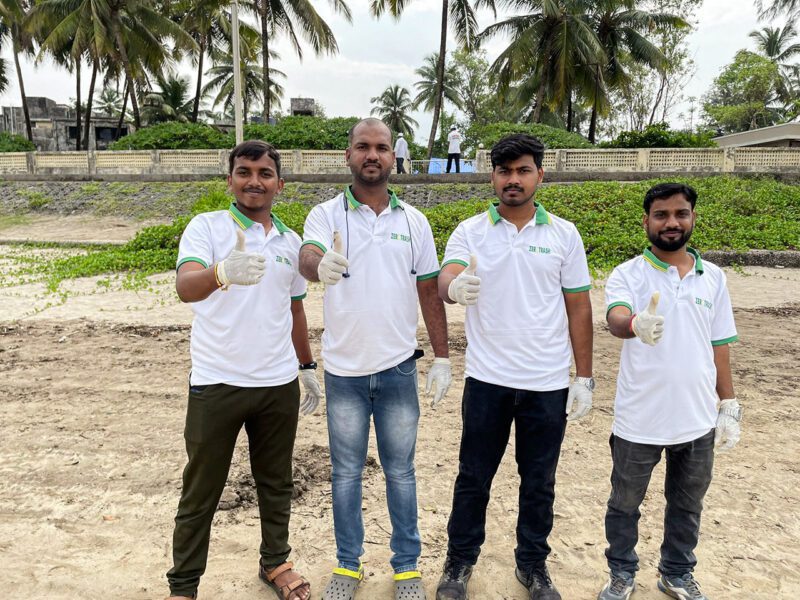 ZEROTRASH team members
This prompted a strategic pivot. ZEROTRASH paused EPR operations to explore non-recyclable streams — timing that proved fortuitous. By 2020, cement plants were dramatically increasing demand for refuse-derived fuel (RDF) to replace fossil fuels through co-processing. ZEROTRASH secured contracts with major cement companies including Dalmia, UltraTech, and ACC to handle up to 1,000 tons daily.
[Context: EPR makes producers responsible for post-consumer waste; RDF is fuel from non-recyclable dry waste; co-processing substitutes RDF for fossil fuels in cement kilns at high temperatures.]
Altaf Shaikh began his impact journey at 19, living with homeless youth on Mumbai's streets. Over 35 years spanning NGO founding (Saathi, Urja Trust) and coaching, he maintains "sensitivity at the center." Raviprakash Shrivastava's path from rural Uttar Pradesh traversed child labor, NGO-supported skilling, and informal waste work, bringing irreplaceable ground-level perspective.
 Collection and sorting of waste
The two first collaborated at Saathi, later reuniting around a shared vision: "Waste is a resource to be responsibly managed." Altaf drives strategy and systems thinking; Ravi leads execution and business development.
ZEROTRASH positions itself between waste generators (municipalities, brands) and consumers (cement kilns, recyclers), acting as a configurator — customizing quality and quantity to meet precise specifications.
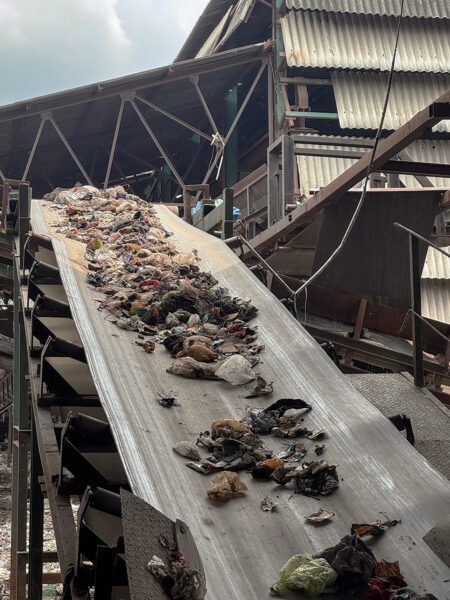 RDF moving to trommel machine by conveyor belt
The model reveals elegant simplicity: ZEROTRASH reduces municipal landfill burdens through kiln co-processing at no charge to cities, using existing facilities. Cement plants pay for the RDF, creating a triple win: cities increase disposal at reduced costs, cement companies lower fuel expenses and carbon intensity, and ZEROTRASH captures optimization value.
This enables remarkable leanness — just 15 core staff, with additional manpower deployed as needed. Initial segregation remains the engaging agency's responsibility, allowing ZEROTRASH to focus on value-added processing.
ZEROTRASH claims to have diverted 700,000+ metric tons from landfills through partnerships with 100+ municipalities and 100+ co-processing plants across India. Since 2019-20, they've achieved six-fold growth, currently processing 120,000+ tons annually.
The bootstrapped venture reached INR7.5 crore revenue last year (operating at a loss), with 50% growth projected and profitability in sight. They're seeking US$750,000 in equity to deploy mobile technology, scale mechanization, and expand RDF capacity.
While claiming significant CO2 reductions and resource savings, no third-party impact assessment has been conducted. Given the materiality of these claims, independent verification using established frameworks would substantially strengthen credibility with municipal partners and investors.
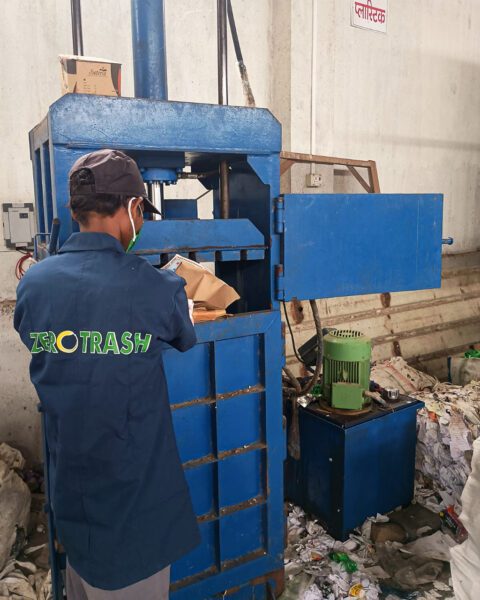 Bailing recyclable dry waste
ZEROTRASH exemplifies how impact enterprises monetize negative externalities, aligning municipal cost avoidance, industrial fuel substitution, and environmental outcomes. The model successfully blends policy and commercial incentives while de-risking municipal systems through existing infrastructure and private offtake.
For investors, this represents the intersection of circular economy infrastructure and climate mitigation — suited to patient capital valuing verified, cash-flow-linked impact.
The founders estimate capacity could scale to 300,000 tons annually across municipal, EPR, and untapped industrial waste. Environmental upsides include continued fossil fuel displacement, reduction of indiscriminate dumping, and reduced open burning.
Yet India's evolving regulations — EPR now covers batteries, tires, used oil — create both opportunity and complexity. To scale responsibly, ZEROTRASH must:
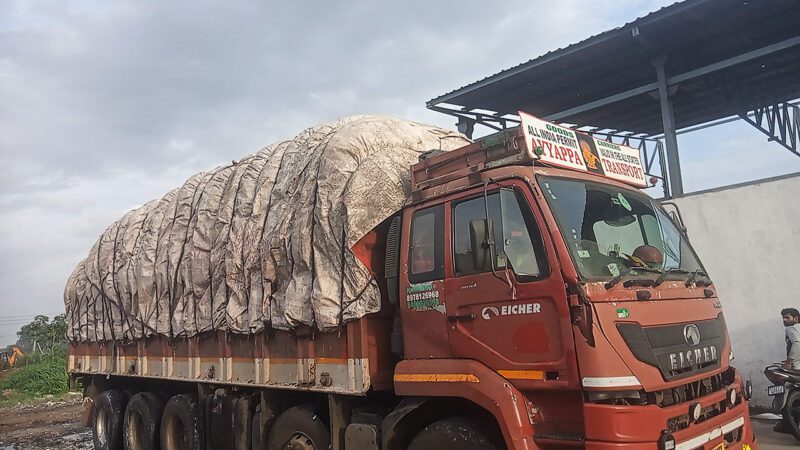 Waste loaded and ready for transport
"As consumption continues, waste increases," Ravi observes — a reality unlikely to change. ZEROTRASH stands positioned to transform this persistent liability into a system-level asset for climate and public health. Success depends on matching entrepreneurial passion with disciplined focus, verified impact, and durable partnerships.
Their pivot from recyclables to non-recyclables, driven by concern for waste-picker livelihoods, demonstrates values-based decision-making that distinguishes authentic impact enterprises. Yet absent third-party verification reminds us that intentions alone don't constitute systemic change. As ZEROTRASH scales, its ability to maintain both commercial viability and social purpose while navigating India's complex waste ecosystem will offer valuable lessons for impact entrepreneurs worldwide.


Related Content

Start early!
7706
0
Rethinking the reporting of waste
 12161
0
12161
0

Leveraging research-backed insights in the due diligence room
 12274
0
12274
0
The evolution of X-Press Feeders towards global impact
10279
0
Comments
Deep Dives
RECENT
 9194
0
9194
0
 8218
0
8218
0
 11137
0
11137
0
Editor's Picks
 11209
0
11209
0
Webinars
News & Events
Subscribe to our newsletter to receive updates about new Magazine content and upcoming webinars, deep dives, and events.
Become a Premium Member to access the full library of webinars and deep dives, exclusive membership portal, member directory, message board, and curated live chats.

Join our global community of systems-minded changemakers.
Subscribe to the Impact Entrepreneur newsletter for the latest insights, magazine features, and invitations to exclusive webinars, Deep Dives, and events.


0 Comments