How Cutting-Edge Science Can Solve the Looming Protein Crisis




 14466
14466
 0
0

 11063
0
11063
0

 9072
0
9072
0

Bridging the Gap
 8111
0
8111
0
 11012
0
11012
0
 10199
0
10199
0

After leaving Indonesia with his mother at a young age to live in the United States, and even though his family co-owned a sugar plantation, Ferron Haryanto never expected to return to the country to help heavily criticized palm oil, sugar, and coconut plantations become more sustainable. After graduating from university, he progressed steadily upwards in a highly successful career journey at leading consulting firms and then in high tech.
 Ferron Haryanto, founder of eKomoditi
A fundamental problem for plantations, Ferron explains, is that owners and managers cannot easily track what happens on their land. A plantation covers thousands of hectares, and workers are on their own in the fields. Plantations that are not run well may destroy rainforests, have labor issues, or deploy hazardous chemicals. Managers may calculate workers’ hours incorrectly or not give the right amount of cash for wages. Workers might take supplies to the wrong location or stay in one place and not work.
When you make the operations transparent, the impact is huge.
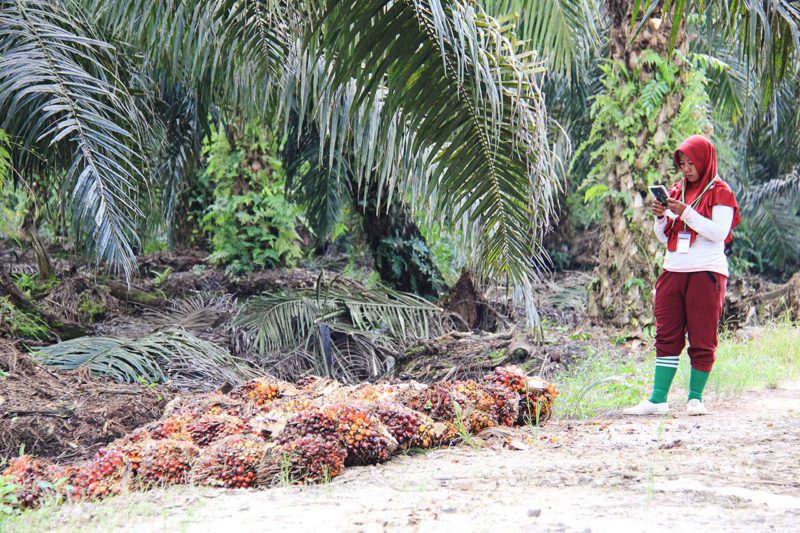 Palm oil plantation fruit counter using eKomoditi application to track details of palm quality and quantity that is harvested
“We started by making the platform easy to use,” Ferron said. The first few clients were difficult. eKomoditi discounted the price, offered flexible payments, and had high expenses for the six months it took to do mapping and training. “We’re often the first Android device the workers have used, so we have to train them. They can’t call tech support. We make the user manual easy to follow.”
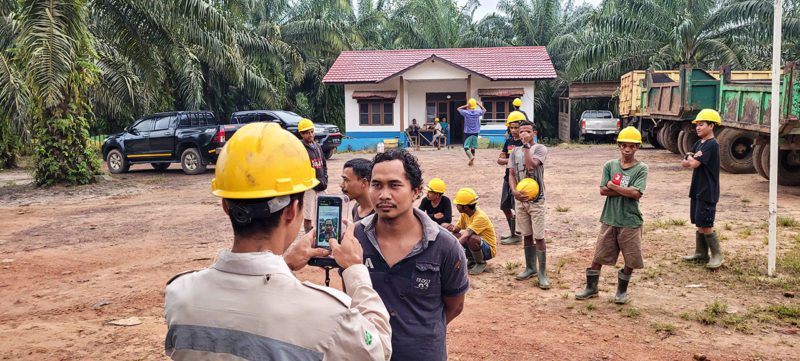 Facial recognition, GPS coordinates, and time stamps for each staff are recorded, and staff are tracked to make sure daily work plan is followed
The large plantations that are eKomoditi’s forte usually have at least 400 to 600 workers. Staff now use facial recognition when they log in or out, and the software also tracks road maintenance, pruning, fertilizer usage and drivers’ locations. “When you go digital, it’s easy to calculate,” Ferron said. “Workers are fairly compensated. Payroll goes directly into their bank account. There is transparency over whether too much fertilizer was used, whether it was organic. For palm oil, we can track every fruit to a specific block. The truck driver has a device, so we know it’s not from an area in the rainforest and it went to the mill.”
While the software he created was intended for the palm oil industry, clients now include a large private sugar company in Indonesia and one of the largest coconut companies in Southeast Asia.
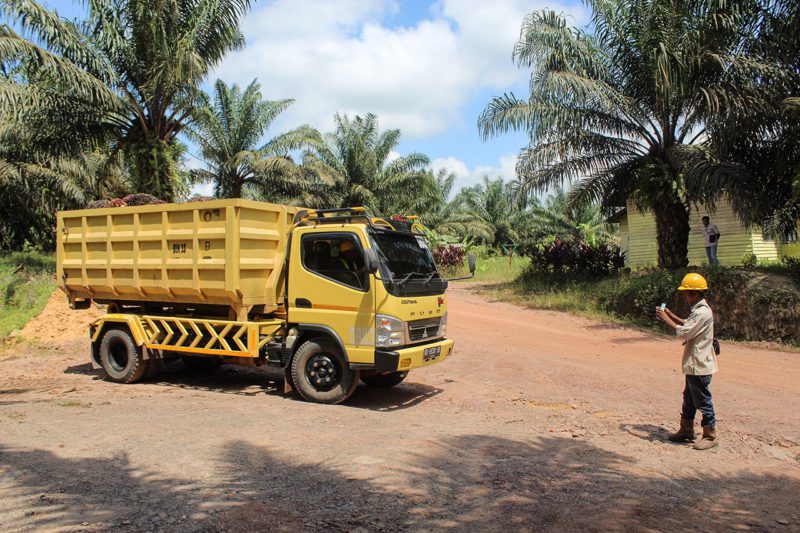 Palm oil plantation staff using eKomoditi application to keep a record of internal driver and vehicle shipment details for each truck
Ferron even wants to restore the thousands of abandoned coal mines in Indonesia. “If they want to plant something, they need to restore the soil and then plant. You can also capture carbon if you do it right. Without us, the coal mine would be barren.”


Related Content

Start early!
7464
0
Rethinking the reporting of waste
 12017
0
12017
0

Leveraging research-backed insights in the due diligence room
 12162
0
12162
0
The evolution of X-Press Feeders towards global impact
10159
0
Comments
Deep Dives
RECENT
 9072
0
9072
0
 8111
0
8111
0
 11012
0
11012
0
Editor's Picks
 14466
0
14466
0
 11063
0
11063
0
Webinars
News & Events
Subscribe to our newsletter to receive updates about new Magazine content and upcoming webinars, deep dives, and events.
Become a Premium Member to access the full library of webinars and deep dives, exclusive membership portal, member directory, message board, and curated live chats.

Join our global community of systems-minded changemakers.
Subscribe to the Impact Entrepreneur newsletter for the latest insights, magazine features, and invitations to exclusive webinars, Deep Dives, and events.


0 Comments