Why Impact Management Matters
Making a transformative difference requires us to focus on active, engaged management of our investments…



Making a transformative difference requires us to focus on active, engaged management of our investments…

 14989
14989
 0
0

Aunnie Patton Power and Sachi Shenoy argue for a different kind of impact finance strategy.
11780
0

Recycling is not the challenge.
 14370
0
14370
0

Leveraging support systems and capital for economic mobility
 9065
0
9065
0

 9121
0
9121
0

 13285
0
13285
0

 4102
0
4102
0

The next generation coming through the world’s universities has developed an admirable passion for helping others — in contrast to the more materialistic ethos often associated with the 1980s — and this is manifesting in social entrepreneurship directed at both local and global problems.
Examples of student and graduate social enterprises are becoming commonplace. Project Palaash, a venture from the University of Delhi, makes organic dyes from floral waste to help address fast-fashion pollution while employing underprivileged women. 31 Bits, created by students at Vanguard University of Southern California, sells handmade jewelry produced by Ugandan women. Textbooks for Change, started at Western University in Canada, provides donated textbooks to learners in developing countries.
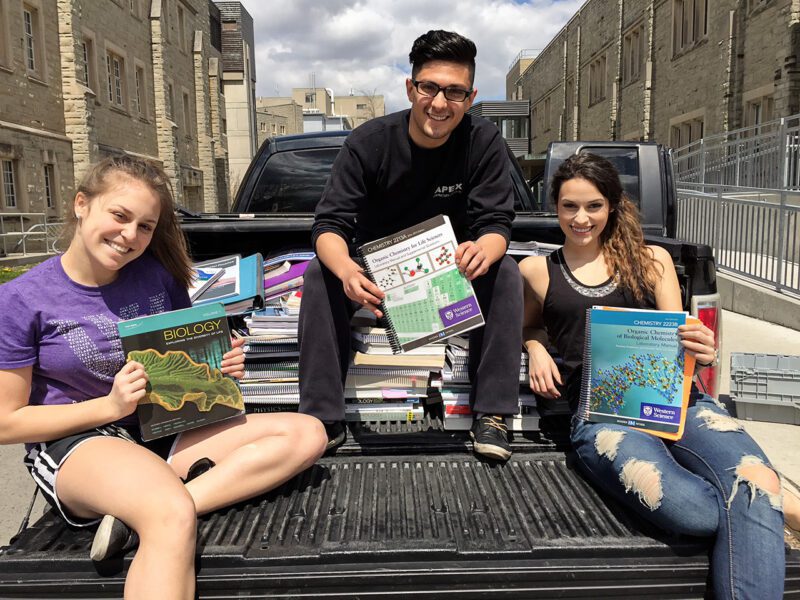 Image Courtesy of Textbooks for Change
A combination of factors has led to this increased interest — and action. Greater awareness of world events via social media means we are connected like never before; real-time issues are visible to all, generating opportunities for would-be social entrepreneurs. Students also want to feel they are making a difference, and this sense of purpose is not always satisfied by a corporate career. There is a general impatience among the “TikTok generation” — a desire to see instant impact — and there is no shortage of challenges to tackle, from the environment, poverty, and health to agriculture and support for victims of war. Students’ minds have been focused by Covid, when inequalities were exacerbated, and, more positively, by the high-profile UN Sustainable Development Goals, which provide a focal point for their energy. This rise in interest is not confined to any particular group or subject — it is found across the campus.
Universities can help in a number of ways — from raising awareness of social enterprise as an option, to providing sector-specific skills and knowledge, and finally offering practical support.
 Image Courtesy of Santa Clara Miller Center for Global Impact
While entrepreneurship in general has become more popular — and students across the campus often have access to for-credit (curricular) courses — social entrepreneurship is, in many cases, addressed only fleetingly and without tackling common misconceptions. For example, social enterprises can generate income for founders. Courses should also cover issues specific to social enterprise, including the challenges of scaling, finding suitable funding, understanding different legal structures, and working with a diverse range of stakeholders. Teaching should not ignore potential downsides, such as unintended consequences when a well-meaning social enterprise ends up competing with existing provision from companies or local and national government programs. Curricular courses need to examine metrics for success, measuring outcomes for people — how lives or communities have improved — as well as simpler outputs such as numbers served and cost per beneficiary. Including social entrepreneurship meaningfully within entrepreneurship courses can give students a taste of the field and help them decide whether to take things further.
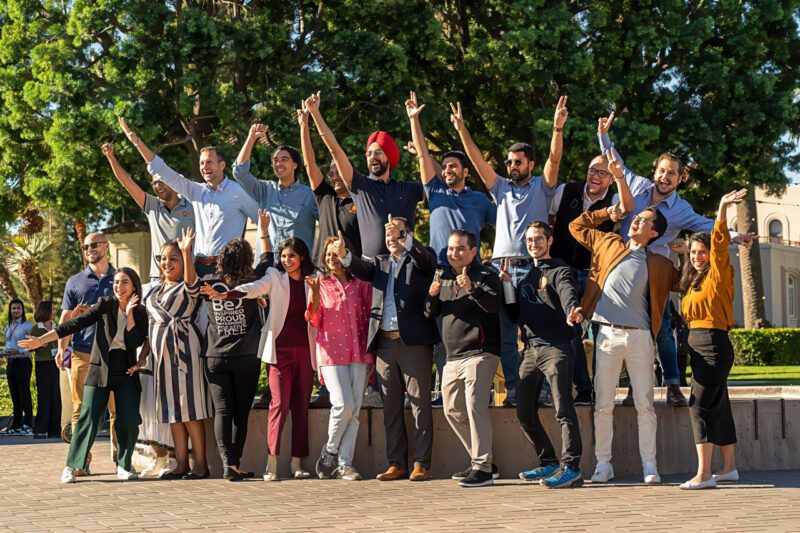 Image Courtesy of Santa Clara Miller Center for Global Impact
Curricular teaching benefits from real-world projects. Consulting assignments with social enterprises engage students through practical application — with the added advantage that students can quickly see the benefits they are creating for real people. Multidisciplinary teams work especially well. Many universities offer facilities to external social enterprises — the Miller Center at Santa Clara University and the 100x Impact Accelerator at the London School of Economics, for example — creating opportunities for current students to interact with live ventures. Increasing opportunities for work placements and curricular projects allows social enterprises to draw on student talent while students contribute to meaningful initiatives.
Extracurricular activities are well suited to students’ curiosity and willingness to experiment. When no grade is at stake, students tend to take more risks and be more creative. Hackathons are effective for helping students gain skills and networks — a weekend working in groups on a real problem, with an emphasis on practical solutions and a clear time limit — and can address local issues where quick results benefit real people.
 RideLogix Team; Image Courtesy of Bethnal Green Ventures
Venture competitions are a good place to start if you have a tangible idea. They can bring seed funding to test concepts and, just as importantly, provide independent feedback, mentoring, and publicity that can attract other investors. Many university competitions have a dedicated social enterprise track or category — such as the University of Manchester’s Venture Further Competition, won in 2025 by The Senior Vision Project, which focuses on tech-driven innovation to create employment opportunities for older adults. There are external competitions as well, such as the Ignite competition for student and graduate social entrepreneurs, and Enactus — a worldwide program that engages more than 40,000 students annually.
Other practical support can come from university-based accelerators. These intensive, short-duration programs are best used once an idea has been clarified and the founder is ready to move forward. In addition to skill-building and motivation, the cohort experience provides a ready-made network of potential customers, suppliers, and supporters. Outside the university, graduates can access accelerators such as Bethnal Green Ventures’ Tech for Good Accelerator, a six-week program. Local networks can also help — London Social Ventures, for example, facilitates collaboration between London’s universities to support social entrepreneurs.
Ideally, students with social enterprise ideas can follow a clearly signposted pipeline of curricular and extracurricular activities that together provide a roadmap to success. Helping students succeed brings broader benefits, too. There are now worldwide university rankings for social responsibility to which student social enterprises can contribute as part of a university’s local-community commitments — and there is evidence that prospective students consider a university’s reputation in this area when making their choices.


Related Content


 8246
0
8246
0

A vicious cycle in wealth inequality
 15561
0
15561
0

Krakakoa's ethical journey in the cocoa industry
 10427
0
10427
0
Comments

Deep Dives
RECENT
 9065
0
9065
0
 9121
0
9121
0
 13285
0
13285
0
Editor's Picks
 14989
0
14989
0
 11780
0
11780
0
 14370
0
14370
0
Webinars
News & Events
Subscribe to our newsletter to receive updates about new Magazine content and upcoming webinars, deep dives, and events.
Become a Premium Member to access the full library of webinars and deep dives, exclusive membership portal, member directory, message board, and curated live chats.

Join our global community of systems-minded changemakers.
Subscribe to the Impact Entrepreneur newsletter for the latest insights, magazine features, and invitations to exclusive webinars, Deep Dives, and events.



0 Comments