Building an Impact Economy in Georgia
Connecting Georgia’s social enterprises to markets and capital




Connecting Georgia’s social enterprises to markets and capital

 71
71
 0
0
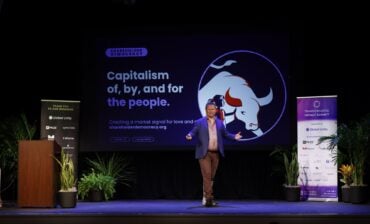
Gabriel Grant on giving shareholders a way to express what matters to them
 92
0
92
0

For mission-led organizations, a change of manager tests whether workplace inclusion is built to last.
 74
0
74
0

Why free education tools need reliable access, credible evidence, and lasting support
 378
0
378
0

What Islamic finance and impact investing can learn from each other
 430
0
430
0

After the flood, recovery capital must do more than replace what was lost
 404
0
404
0

 578
0
578
0
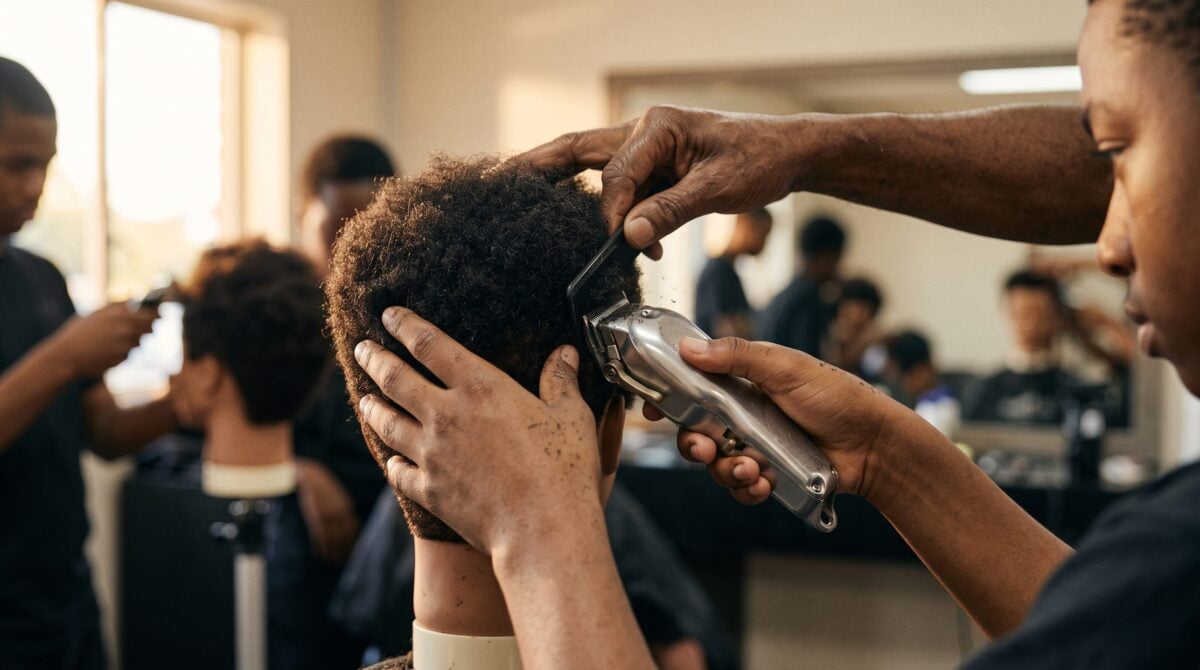
Barbering becomes a pathway to economic agency when technical training is connected to mentorship, professional tools, and opportunities to earn.
In Brampton, a free barbering program connects Black youth with skills, tools, mentors, clients, and a place to begin earning. Bartley Skills Development shows how a community-rooted trade can become economic and social infrastructure.
During the second week of July, hair clippers moved across mannequin heads in a high school cosmetology classroom in Brampton, Ontario. Twenty-five teenagers had gathered for the fifth summer edition of Beyond Barbering and Beyond Hairstyling, a free five-day workshop led by Chadwin and Camille Bartley. Some had come to learn about grooming or meet peers with similar interests. Others were “hall wanderers” — students who sometimes roam school corridors rather than sit in classrooms where they feel overwhelmed, unsupported, or anxious about failing.
On one side of the room, Camille taught braiding techniques to female students. On the other, Chadwin introduced male students to barbering, guiding them through the use of clippers and scissors. Over five days, he watched their confidence grow alongside their interest in the trade. They also made new friends.
Chadwin wanted the students to see barbering as a possible career. Just as important, he wanted to create the conditions in which they could begin to see themselves differently.
“Whether it’s a basketball court, a barber chair, or a classroom, we have found that young people don’t simply need programs. They need places where they feel seen, valued, challenged, and supported. The haircut is simply the tool.”
For young people interested in the beauty trades, barbering can offer a relatively direct route to income and entrepreneurship. In Canada’s metropolitan centers, specialized experience cutting and styling Afro-textured, coiled, and coarse hair can be especially valuable. The work depends on dexterity, physical proximity, care, trust, and conversation. Those qualities make it comparatively resistant to automation and place a premium on the human skills that develop through practice and relationships.
That opportunity has deep roots. Barbering offered an early pathway to economic mobility for some Black men in the United States, and Black-owned shops became businesses, apprenticeship sites, and community institutions. Barbershops and beauty salons have also served as trusted social spaces where customers could talk openly about family, work, politics, health, and neighborhood life. The barber’s chair joined livelihood with belonging.
Brampton gives that history a particular contemporary relevance. The 2021 Canadian census counted 656,480 residents; nearly 53 percent were immigrants, more than 80 percent belonged to groups the census classified as visible minorities, and 13 percent were Black. Yet economic opportunity has not kept pace evenly. A City of Brampton youth policy paper, drawing on earlier regional research, cited an unemployment rate approaching 30 percent among Black youth ages 15 to 24 in Peel Region. More recent national data for 2023 showed the disparity persisting: unemployment was 16.2 percent among Black youth, compared with 9.7 percent among non-racialized youth.
A Diversity Institute study found that racialized youth face barriers at several levels, including unequal access to social and financial capital, limited visible role models and peer support, and gaps in education and employment services. Training matters, but work-linked learning becomes more powerful when it is connected to tools, mentors, customers, and a credible route into paid work.
Chadwin and Camille grew up in Brampton and attended the same high school. Chadwin immigrated to Canada from Jamaica at age eight. He struggled to adjust to a new education system and to find his place. By 16, he was homeless; during his final two years of high school, he lived in his car.
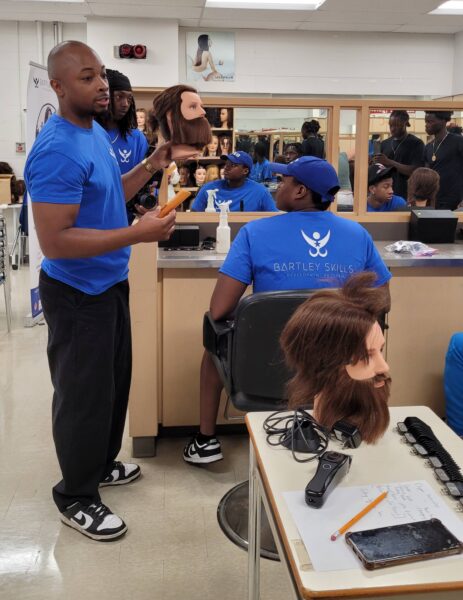
Chadwin Bartley demonstrates barbering techniques during a Beyond Barbering workshop in Brampton, Ontario, where students develop practical skills alongside confidence, mentorship, and pathways to economic opportunity. Photo courtesy of Michi Komori.
Football gave him structure, role models, accountability, and a reason to keep showing up. It taught him that talent alone was not enough: winning teams require consistency, preparation, communication, and trust. After graduation, he spent three years at an entertainment talent agency, learning business management, customer service, and professional protocols.
Camille had long been interested in hairstyling. After high school, she trained to become a licensed hairstylist and barber. When she and Chadwin reconnected several years after graduation, he left the talent agency and became her barbering apprentice. He eventually earned his own qualification.
When they married in 2012, they made a commitment to “building a different future than the one we grew up with. Everything we’ve built together has been rooted in that promise.”
Their shared experience led them toward a simple conviction: skilled trades, mentorship, and confidence can change the direction of a young person’s life, sometimes beginning with one adult who recognizes an ability that the young person cannot yet see. In 2018, they launched the Bartley Skills Development Program (BSD), a registered charity that provides free barbering and hairstyling training to youth and helps them imagine a future with greater agency and economic independence.
BSD reduces several barriers at once. It provides introductory training in working with Afro-textured and coarse hair, professional tools, mentorship from licensed Black practitioners, opportunities to practice with clients, and access to a barbershop. Together, those elements turn a short course into a form of inclusive entrepreneurship: learners gain a skill, a network, a place to work, and an early route to income. The training also emphasizes punctuality, respect, active listening, initiative, and customer relationships.
In the free Beyond Barbering program, learners study barbering, entrepreneurship, and financial literacy. After completing the program, they receive their own clippers. They can also use Chadwin’s shop without charge to serve clients and keep what they earn. Graduates can participate in Hair for Self-Esteem, which provides complimentary hair services to youth and makes grooming more affordable for families. In August 2026, students from the barbering and hairstyling programs provided free hair services to 43 young people attending a basketball camp associated with Toronto Raptors player RJ Barrett.
BSD is an entry point into a longer professional pathway. Ontario regulates barbering within the compulsory Hairstylist trade. The provincial apprenticeship program generally requires 3,500 hours — 3,020 hours of on-the-job experience and 480 hours of in-school training — followed by a certifying examination. Skilled Trades Ontario, not an individual trainer, issues the Certificate of Apprenticeship and Certificate of Qualification. BSD helps learners begin accumulating skills, experience, and professional connections that can carry them toward that destination.
The organization is also working with Mentor Canada to strengthen its mentoring approach. BSD plans to recruit and train experienced Black barbers, hairstylists, braiders, estheticians, and other beauty professionals in youth engagement, encouraging them to become mentors and mental-health advocates. The aim is to develop a new generation of mentors for the Black beauty industry who can draw on lived experience while helping younger peers grow.
Justin Bailey was one of BSD’s first learners. At 21, he was working as a handyman and looking for a new direction. He had no barbering tools, mentor, or professional setting in which to learn. BSD gave him his first clippers, introductory training, and access to Chadwin’s guidance.
Justin admits that learning the trade was difficult at first. He made mistakes and had to adjust to Chadwin’s demanding but supportive teaching style: “Be punctual. Pay attention. Be a leader. If you see a mess, clean it up.”
When Justin realized that barbering was his métier, his confidence grew and he became more outgoing. He learned that technical ability would take him only so far; a barber also has to build relationships. He now describes conversations with his clients as exchanges “between friends.” He just happens to cut their hair.
Training matters, but work-linked learning becomes more powerful when it is connected to tools, mentors, customers, and a credible route into paid work.
“You can be the greatest barber; however, if you are very quiet with your clients, a lot of them will probably go to someone not as skilled, but who they can have a conversation with,” Justin said. “Being skilled in both avenues is very vital.”
Chadwin watched Justin develop professionalism, confidence, leadership, communication skills, and an understanding of community responsibility. BSD later placed him in a barbershop under a licensed practitioner, where he could add training hours and hone his craft.
Justin says he now has a full roster of clients and can earn as much as $2,000 a week. He plans to obtain his professional qualification and teach the next generation of Black barbers. He already returns to BSD to assist at workshops and mentor younger students. His journey shows how access to tools and training can lead toward quality jobs, and then circle back into community capacity.
In June 2026, after two years of study while running BSD and parenting three young children, Chadwin and Camille crossed the convocation stage together as graduates of York University’s Bachelor of Education in Technological Education program. Chadwin’s mother and grandmother traveled from Jamaica for the ceremony. Camille is now a full-time cosmetology teacher at a high school in Oakville, Ontario.
The degrees deepen a partnership already built through hardship, trade, marriage, and shared work. They also give BSD’s students something concrete to see: two people from their city using skilled trades and education to widen the choices available to the next generation.
Back in the July classroom, the first step was modest — a mannequin head, a set of clippers, and five days to discover an ability. In Chadwin’s formulation, the haircut is the tool. What BSD is building around it is the pathway.


Related Content
Connecting Georgia’s social enterprises to markets and capital
71
0
Gabriel Grant on giving shareholders a way to express what matters to them
92
0
For mission-led organizations, a change of manager tests whether workplace inclusion is built to last.
74
0

Artist Rob Strati on inherited objects, the limits of market price, and the creative possibilities…
114
0
Comments
Deep Dives
RECENT
 378
0
378
0
 430
0
430
0
 404
0
404
0
Editor's Picks
 71
0
71
0
 92
0
92
0
 74
0
71
0
92
0
71
0
92
0
74
0
74
0
71
0
92
0
71
0
92
0
74
0
Webinars
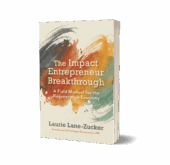
Signed and personally inscribed — you'll write the inscription as you order. Limited · 50…
News & Events

The board can add 2% for each 50% rise in the company’s value
Applications close December 2, or sooner once 250 arrive

Repeat borrowers in Colombia and Indonesia took it over the line
Subscribe to our newsletter to receive updates about new Magazine content and upcoming webinars, deep dives, and events.
Become a Premium Member to access the full library of webinars and deep dives, exclusive membership portal, member directory, message board, and curated live chats.


0 Comments