Love and Care in the Future of Public Markets
Gabriel Grant on giving shareholders a way to express what matters to them


Gabriel Grant on giving shareholders a way to express what matters to them

 67
67
 0
0

For mission-led organizations, a change of manager tests whether workplace inclusion is built to last.
 71
0
71
0

Artist Rob Strati on inherited objects, the limits of market price, and the creative possibilities…
109
0

Why free education tools need reliable access, credible evidence, and lasting support
 324
0
324
0

What Islamic finance and impact investing can learn from each other
 405
0
405
0
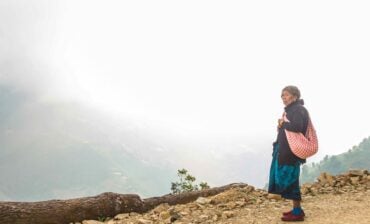
After the flood, recovery capital must do more than replace what was lost
 388
0
388
0

 425
0
425
0

Traditional food enterprises can preserve cultural continuity while creating new livelihoods and points of connection in a host community.
For Artsakhtsi rebuilding their lives in Armenia, economic integration depends on far more than finding a job. Housing, legal status, transferable skills, productive assets, and cultural continuity all shape whether livelihoods and enterprises can take root.
When more than 100,000 people fled Nagorno-Karabakh for Armenia in September 2023, they did not leave behind only homes and property. They also lost businesses, tools, professional networks, land, documents, and the local conditions that had made their skills economically useful. For many of the displaced Armenians who identify as Artsakhtsi, rebuilding a livelihood in Armenia has therefore become inseparable from a second challenge: rebuilding a sense of belonging.
That connection matters for anyone thinking about post-conflict recovery. Economic integration is often measured through employment, income, housing, and access to finance. But the Artsakhtsi experience shows that those outcomes are also shaped by legal status, cultural continuity, transferable skills, social networks, and whether people feel secure enough to make long-term decisions about work, property, and enterprise.
The lesson echoes other post-conflict cases covered by Impact Entrepreneur — from Bosnia’s recovery economy to Colombia’s ex-FARC cooperatives: livelihoods become durable only when the systems around them make participation possible.
Nagorno-Karabakh was an ethnically Armenian-majority region within the internationally recognized borders of Azerbaijan. After decades of conflict, Azerbaijani forces took control of the territory in September 2023, and virtually the entire Armenian population fled to Armenia. In August 2025, Armenia and Azerbaijan initialed an agreement on peace and interstate relations, but as of August 2026 a final treaty has not yet been signed.

A baker prepares bread in a traditional oven, illustrating how familiar skills and cultural practices can become anchors for livelihood rebuilding after displacement; Photo by Yunus
For the people who fled, displacement has produced a mismatch between what they know how to do and the conditions in which they must now do it. A World Food Programme barrier analysis of refugees and host communities in Armenia identified legal status, housing, access to services, and employment opportunities as central determinants of socioeconomic integration. The problem is not simply a shortage of jobs. It is the loss of the physical, institutional, and social infrastructure that previously made livelihoods viable.
Agriculture makes the problem especially visible. Many Artsakhtsi households depended on farming and livestock. In Armenia, land fragmentation, different terrain and climate, the cost of renting plots, and the loss of equipment can make it difficult to reproduce an agricultural livelihood. Similar barriers affect other occupations. Nurses may need different credentials; tradespeople and service workers may have lost the tools they used to earn an income; and people who fled without records can struggle to prove qualifications or experience.
The result is a form of economic displacement layered on top of geographic displacement: skills remain, but the ecosystem that gave them value has changed.

Displacement can leave skills intact while stripping away the tools, credentials, and networks that once made them economically productive.
Legal status is another part of that ecosystem. Armenia granted temporary protection to people forcibly displaced from Nagorno-Karabakh and created a simplified pathway to Armenian citizenship. By early June 2026, 39,650 displaced people had acquired Armenian citizenship — a substantial number, but still a minority of those who arrived in 2023.
The distinction has practical consequences. Refugees in Armenia have access to employment and social services, but some rights differ from those of citizens; for example, refugees are not entitled to own land. Documentation also shapes access to public programs and the ability to navigate housing, finance, and administrative systems. UNHCR has described legal documentation as a gateway to employment, social protection, healthcare, and other services — precisely the kinds of foundations on which economic participation depends.
But legal status is not purely administrative. For many Artsakhtsi, citizenship decisions are entangled with grief, identity, and unresolved claims to a homeland they did not choose to leave. That makes a conventional economic assumption — that people will simply relocate to wherever opportunity exists — inadequate. Long-term investment depends partly on whether people believe the place where they now live can become home.
Housing insecurity compounds the problem. Most displaced families initially relied on rental housing, often while using savings to replace furniture, appliances, tools, and other basic assets left behind. WFP’s research found housing to be among the most urgent barriers to integration, and Armenia subsequently introduced a state housing-assistance program.
Skills remain, but the ecosystem that gave them value has changed.
As of May 31, 2026, 6,444 displaced families had received housing certificates, and nearly 3,000 had already purchased homes or apartments. The scale is significant, but so is the remaining need.
This is more than a shelter issue. A household uncertain about rent, future assistance, or permanent residence is less able to take on business debt, buy equipment, relocate for work, or invest in property. Housing security is therefore part of the enabling infrastructure for entrepreneurship and employment, not a separate social-policy concern.

Economic integration depends on more than jobs alone; it requires stable housing, finance, equipment, market access, and supportive networks; Photo by Getty Images
These ventures are economically modest in relation to the scale of displacement, but conceptually important. They demonstrate that cultural knowledge can remain productive capital after displacement. Food traditions, hospitality, craft, language, and memory can differentiate products, preserve social ties, and create spaces where displaced and host communities interact.
Other displaced entrepreneurs are following similar paths. Recent reporting on women from Artsakh rebuilding creative and food businesses shows how enterprise can simultaneously generate income and preserve cultural practices. In this sense, entrepreneurship can function as both livelihood strategy and social infrastructure.
Cultural knowledge can remain productive capital after displacement.
That dual role closely resembles the dynamic examined in Impact Entrepreneur’s “Shared Threads of Recovery,” where a women’s cooperative in Rwanda operates not only as an enterprise but as a mechanism for sharing risk and sustaining community participation after conflict.
The challenge is to make such rebuilding less exceptional. Armenia now has a growing ecosystem of organizations working on livelihoods and entrepreneurship for displaced people. Hub Artsakh, itself displaced from Stepanakert to Yerevan, focuses on employability, reskilling, community building, and entrepreneurship. Impact Hub Yerevan’s Three4ResilientArmenia initiative combines employment support, business mentoring, equipment, direct funding, housing assistance, and social-cohesion programming for refugees and host communities.
Those interventions point toward a more integrated model of recovery. Legal-navigation support addresses administrative barriers. Housing assistance creates the stability needed for longer-term decisions. Credential recognition and reskilling reduce the loss of human capital. Equipment grants and appropriately structured finance allow people to reactivate occupations and businesses. Land access and agricultural infrastructure can help farmers convert experience into viable livelihoods. And community spaces can rebuild networks that displacement has fractured.
The important point is that these are not separate problems. They are parts of one economic system. A microloan is of limited value if a borrower lacks secure housing, recognized credentials, equipment, market access, or confidence that she can remain in the community long enough to repay it. Entrepreneurship programs work best when the surrounding conditions make enterprise possible.
The displacement of the Artsakhtsi shows why post-conflict economic integration cannot be reduced to employment statistics. Displacement destroys assets, but it can also break the institutional conditions that allow skills, identity, networks, and cultural knowledge to function economically. Rebuilding those conditions is part of rebuilding an economy.
Displacement destroys assets, but it can also break the institutional conditions that allow skills, identity, networks, and cultural knowledge to function economically.
For impact practitioners, that means treating belonging as more than a social outcome. When people have secure housing, usable legal status, pathways for their skills, access to productive assets, and spaces where cultural identity can survive rather than disappear, they are better positioned to make the long-term choices on which local economies depend.
Businesses such as Patara Bakery and Bardak offer small but instructive examples. Their value is not simply that they sell products associated with Artsakh. They show how enterprise can carry memory forward while creating new economic relationships in a new place. The larger task is to build systems in which that kind of agency is not the exception, but part of the architecture of recovery.
--
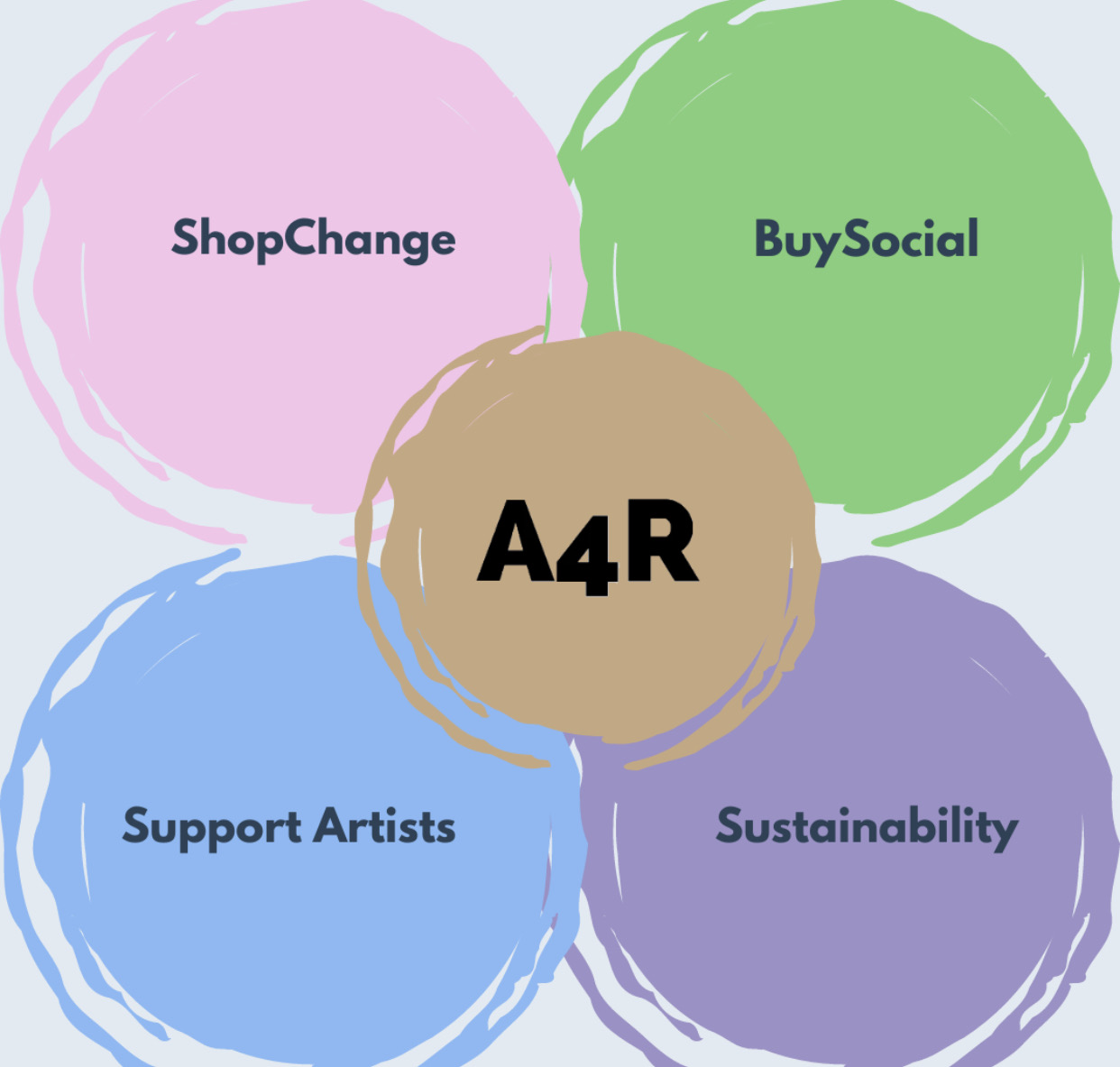
Editor’s note: This article is part of Impact Entrepreneur's Impact Journalism Institute, in collaboration with Arts4Refugees' A4R Media Hub, supporting emerging Gen Z journalistic voices covering how the Impact Economy is being built — and tested — in communities affected by conflict, displacement, and economic fragility.


Related Content
Gabriel Grant on giving shareholders a way to express what matters to them
67
0
For mission-led organizations, a change of manager tests whether workplace inclusion is built to last.
71
0
Artist Rob Strati on inherited objects, the limits of market price, and the creative possibilities…
109
0
Counting what we fail to prevent, sixty seconds at a time
101
0
Comments
Deep Dives
RECENT
 324
0
324
0
 405
0
405
0
 388
0
388
0
Editor's Picks
 67
0
67
0
 71
0
71
0
 109
0
67
0
67
0
71
0
109
0
109
0
67
0
67
0
71
0
109
0
Webinars
Signed by the author. Collected at the door at Lipton Hall, NYU School of Law,…
News & Events
The 2025–2026 edition also tries to count benefit corporations
The only craft-focused project in Catalytic Capital Consortium’s new cohort.

The September 14 program and a live IFI Tool demo are online
Subscribe to our newsletter to receive updates about new Magazine content and upcoming webinars, deep dives, and events.
Become a Premium Member to access the full library of webinars and deep dives, exclusive membership portal, member directory, message board, and curated live chats.


0 Comments