What a Broken Plate Reveals About Value
Artist Rob Strati on inherited objects, the limits of market price, and the creative possibilities…



Artist Rob Strati on inherited objects, the limits of market price, and the creative possibilities…

 78
78
 0
0
Counting what we fail to prevent, sixty seconds at a time
84
0

How collateral rules and payment terms keep impact capital out of reach
 191
0
191
0

How states can crowd in local early-stage capital
362
0

Why last-mile healthcare needs an operating model, not just more mobile clinics
 343
0
343
0
How Australia’s succession wave could turn ownership into a funding model
 461
0
461
0
 326
0
326
0
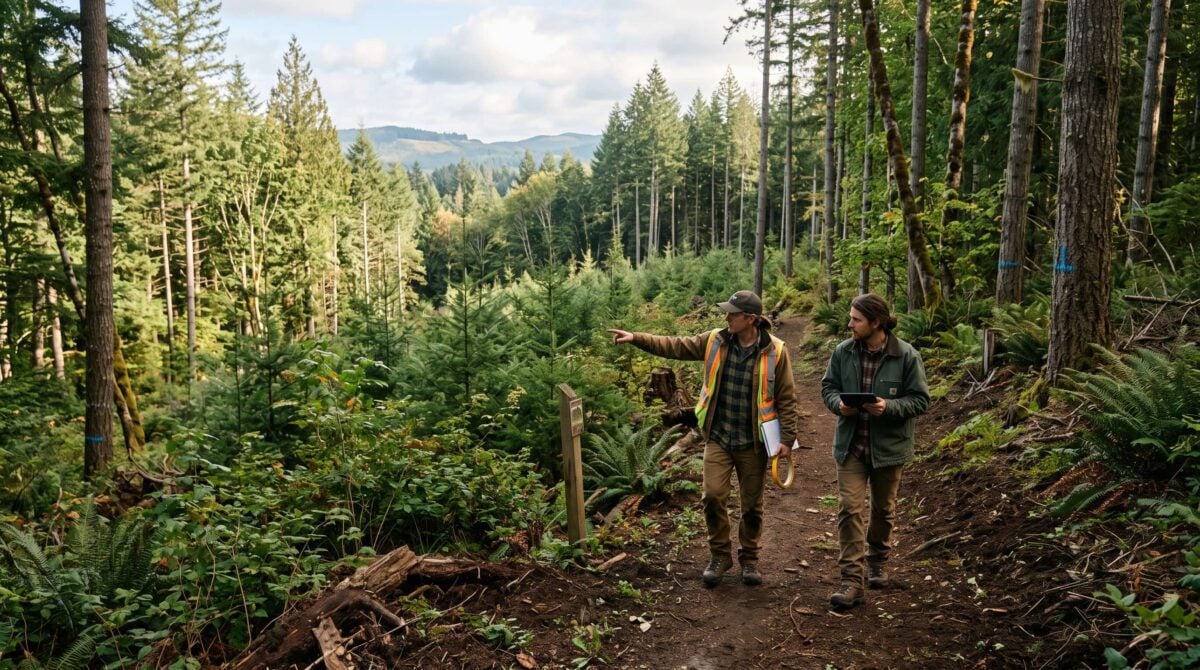
Playing offense in nature finance means putting capital behind active stewardship — managing forests and other working landscapes for ecological recovery, resilience, and long-term value.
Nature finance has become better at avoiding harm, but rebuilding living systems requires something more: capital willing to finance restoration before markets are fully formed. Kathleen Simpson argues that foundations can use patient, catalytic capital to prove models, strengthen integrity, and help private investment move from defense to offense.
For years, nature investing has largely been built around avoidance: don't finance deforestation, divest from the worst polluters, and reduce exposure to environmental risk. These are worthwhile goals, but they are fundamentally defensive. At a time when ecosystems are deteriorating faster than capital is flowing toward restoration, avoiding harm is no longer enough.
Playing offense means putting capital to work to rebuild living systems: restoring watersheds, managing forests, and supporting farms that rebuild their soil. Capital can actively help restore the health and resilience of living systems and, with them, the communities that depend on those systems to survive.
There are positive signals from the market, too. A new report released in June 2026 by The Nature Conservancy and Forest Trends tracked more than $60 billion of private investment in nature over the past decade, with annual flows rising fivefold, from $2.8 billion in 2016 to more than $14 billion in 2025. Two in three respondents used financial risk-reducing approaches, including public or philanthropic funding, to attract private capital. That describes a job, and it is one philanthropy is unusually well suited to do.
Despite this growth, current levels of investment in nature are still not enough. UNEP's State of Finance for Nature 2026 estimates that for every dollar invested in protecting or restoring nature, more than thirty dollars finance activities that degrade it. This misalignment between nature risk and capital flows has become a systemic economic risk. Read the other way, it is also an enormous underinvestment, and closing even a sliver of this gap could redirect significant capital toward recovery.
Moving from "do no harm" to "help nature heal" sounds abstract until you put capital behind it. To me, restoring health means a portfolio working on several fronts at once.
It means deploying capital not simply to avoid cutting down forests, but to protect and sustainably manage forests and restore degraded land, rebuilding the carbon sinks, watersheds, and habitats that healthy landscapes provide. A degraded forest bought, restored, and managed for long-term yield can produce timber revenue and carbon credits while restoring watershed value and appreciating as an asset. Restoration can be investment: restoring living systems can generate returns.
EFM, a commercial forestland manager in the western United States, is one example from our portfolio. We invested in its second and third funds, providing early capital that helped launch both. EFM buys working forestland and manages each property toward a defined future condition — longer rotations, retained reserves, restored streams. The return comes from timber inventory that grows while trees stand longer and from verified carbon credits, with eventual sales to value-aligned buyers that continue the management approach. Of the five properties EFM has exited, two went to Indigenous tribes, two to land trusts, and one to a state agency.
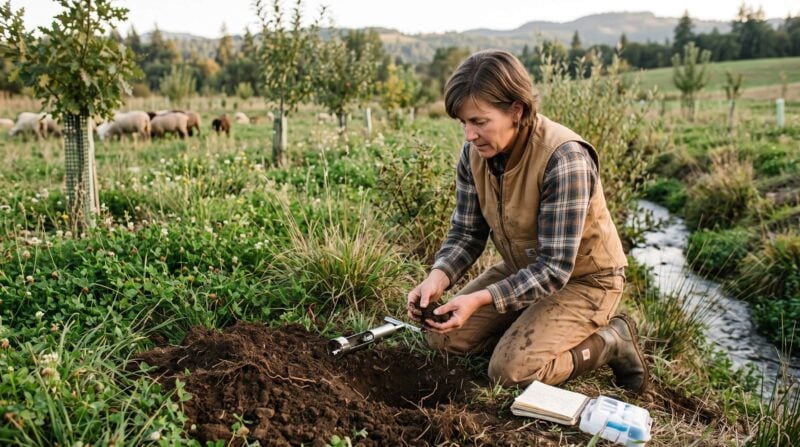
Restoration finance reaches beyond forests: regenerative land management can rebuild soil, water systems, habitat, and the productive capacity of working landscapes.
It means supporting the transition to food and agricultural systems that regenerate soil and water, recognizing that how we grow food is among the most direct levers we have on the health of land and therefore its long-term ability to provide for the communities that farm it.
Restoration is ultimately local. Watersheds, forests, farmland, and communities are interconnected systems.
Restoring living systems is not only a question of where dollars flow, but also of who has the conviction and capacity to steward that change over decades. Investing in our community means we can align our investments with direct needs and foster resilience. Local capital, in our experience, is where the link between living systems and human well-being becomes most visible.
Foundations are small players in absolute terms. What we can do is take the risks that come earliest, when a strategy has no track record and no natural buyer: being an early investor rather than the fifth; accepting a horizon most capital won't tolerate; using grants for the unglamorous work that makes a market possible, such as project development, measurement, and legal plumbing.
One 2025 grant backs Sustainable Northwest to test models for aggregating carbon credits from community forests to create new revenue for ecological forest management. If that works, the result isn't simply a grant outcome but a scalable revenue model that could help make community forests more investable.
Avoiding harm protects what remains. Investing in recovery creates what comes next.
A nature label doesn't make finance regenerative, and natural capital carries a real impact-washing risk. So we look for third-party verification rather than self-reported claims, for evidence that the people who live and work in a landscape have a stake in how it is managed and who buys it next, and for a clean line between verified results and projections — the distinction most easily blurred and most worth keeping.
I've made this argument before in a different context. In climate work, I've resisted the temptation to hit net-zero targets through divestment alone, because walking away from high emitters cleans up our balance sheet, but doesn't reduce emissions.
The same logic applies to nature. Selling an asset in decline can improve a portfolio's optics without restoring a single acre. The same test has to run in both directions. Buying into an established timberland fund at its fourth close is a fine investment; it isn't the same as making the fund possible. So we try to ask what happens in this landscape if we don't do this. If the answer is "roughly the same thing," the investment may still earn its place, but we shouldn't call it restoration finance.
What we can do is help build the market rather than wait for it.
Investing for a healthy planet asks more of us. It asks us to finance recovery and measure ourselves by outcomes in the real world, like restored land and cleaner air.
No single foundation will close the gap between what nature finance needs and what it has. What we can do is help build the market rather than wait for it: prove the path is investable, publish what we learn, and make it easier for the next investor to underwrite than it was for us.
TRFF's work with public-equity investors reflects a conviction that mainstream capital can be steered toward regeneration as a durable strategy. The more of us who align our capital around restoration, the faster the broader market follows.
Right now, our world is imbalanced, capital and living systems pulling in opposite directions. I believe philanthropy is well positioned to help align them, precisely because we can take the longer view and absorb the harder questions.
The question is no longer whether nature represents investment risk. The question is whether investors are willing to see restoration as an investment opportunity. Avoiding harm protects what remains. Investing in recovery creates what comes next. Nature investing has a defense problem. It's time to play offense.
Disclosure: The Russell Family Foundation has investments and grants discussed in this article, including investments in EFM and a grant to Sustainable Northwest.


Related Content
Artist Rob Strati on inherited objects, the limits of market price, and the creative possibilities…
78
0
Counting what we fail to prevent, sixty seconds at a time
84
0
How collateral rules and payment terms keep impact capital out of reach
191
0

Why free education tools need reliable access, credible evidence, and lasting support
 250
0
250
0
Comments

Deep Dives
RECENT
 362
0
362
0
 343
0
343
0
 461
0
461
0
Editor's Picks
 78
0
78
0
 84
0
84
0
 191
0
78
0
78
0
84
0
191
0
191
0
78
0
78
0
84
0
191
0
Webinars
Signed by the author. Collected at the door at Lipton Hall, NYU School of Law,…
News & Events

The September 14 program and a live IFI Tool demo are online

Pre-seed and seed startups can apply on a rolling basis

Their Built platform helps teams design, launch and run funds
Subscribe to our newsletter to receive updates about new Magazine content and upcoming webinars, deep dives, and events.
Become a Premium Member to access the full library of webinars and deep dives, exclusive membership portal, member directory, message board, and curated live chats.


0 Comments