Converting Waste to Value
Recycling is not the challenge.


Recycling is not the challenge.

 14306
14306
 0
0
Improperly irrigated land has led to low income and food insecurity.
 9710
1
9710
1

 14830
1
14830
1

Leveraging support systems and capital for economic mobility
 9038
0
9038
0

 9069
0
9069
0
 13236
0
13236
0
 10610
0
10610
0
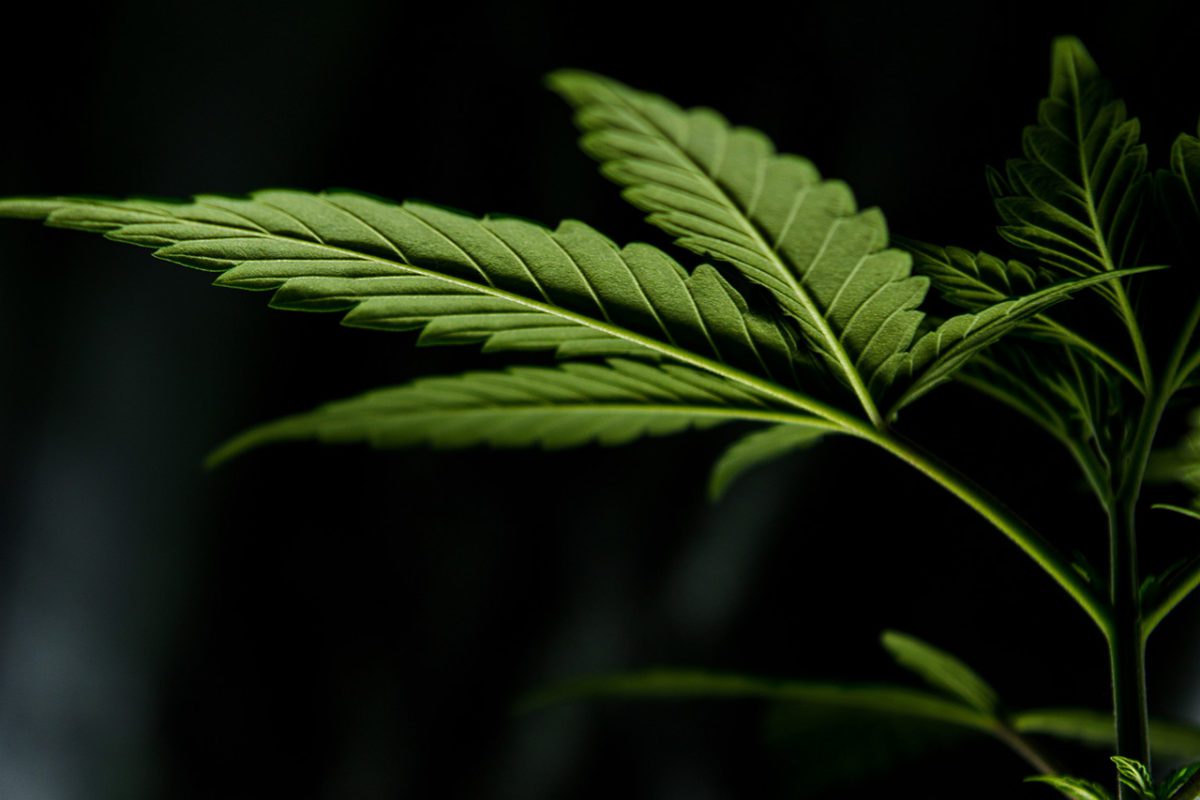
An entrepreneurial team is taking on climate change, and enabling sustainable farming in parts of Africa, through the provision of innovative “mini factories” to farmers. These smart boxes can be placed on farmland, used off-grid, and turn carbon-neutral hemp crops into a multitude of products.
The three co-founders of eHempHouse, wanted to use their complementary skills in business, green technology, and regenerative agriculture, to take on climate change and help African farmers develop sustainable incomes, as well as make a profit. In early 2020, Peter Miles, the CEO based in the UK, and Steven Putter, the COO in Zambia, joined up with Andy Neal, the US-based CTO, who had designed a system in a container that could process crops into simple products. What’s more, the container, or SmartBox, can be self-powered, without the need to be connected to the grid. Or as Peter says, “by combining our technical innovation with the power of nature, we create a green industrial revolution in Africa...establishing a decarbonised, sustainable, and environmentally friendly industrial base”.
Agriculture is a crucial sector in Africa, playing a significant role in employment, exports, and food security. However, it is highly susceptible to climate change and land degradation. The implementation of regenerative agriculture and climate-resilient land use practices is essential for addressing these challenges. Despite Africa's vast agricultural potential, the continent faces the major obstacle of approximately 200 million hectares of underutilized land, which constitutes around 50% of the global total. One contributing factor to this issue is the limited availability of electricity in farmland, which severely constrains land use. In rural areas of sub-Saharan Africa, only about 25% of the population has access to electricity. Moreover, most crops demand significant amounts of water and pesticides, which adversely impact sustainability.
Hemp was chosen as the most suitable crop to process through the SmartBox because it is fast growth, uses little water, doesn’t need pesticides, and removes more carbon out of the atmosphere than other crops; at 22 tonnes per hectare of CO2 sequestration, hemp is also more effective than trees. Growing from seed to harvest in 100 days, it also restores soil health and suppresses weeds. In addition, thousands of industrial products can be produced from hemp including textiles, paper, organic compost, oil, fuel, paint, flour, animal, and bird feed.
The SmartBox looks like a green train carriage or container and is designed so it can be transported to the farmer’s field. It is powered off-grid in the field, so the processing can be sited next to where the hemp is grown. It is smart in the sense that crop data can be collected and verified, and they can be customised to show exactly how much CO2 has been removed; for example, X amount was processed today resulting in Y CO2 removed.
The SmartBox functions as a compact processing facility, transforming hemp crops and seeds into a variety of marketable products for farmers. These products include textiles, animal feed, and biofuel, as well as providing fuel and clean drinking water for the farm itself. Although equipped with solar panels, the primary power source for the generators comes from hemp biodiesel — similar to what Henry Ford used to power his cars in the 1930s — or other forms of recycling. The SmartBox has the potential to significantly boost sustainable income for African farmers, as the global hemp market is experiencing rapid growth. According to eHempHouse, the market is projected to reach a value of nearly $27 billion in 2025, a substantial increase from $4.6 billion in 2019.
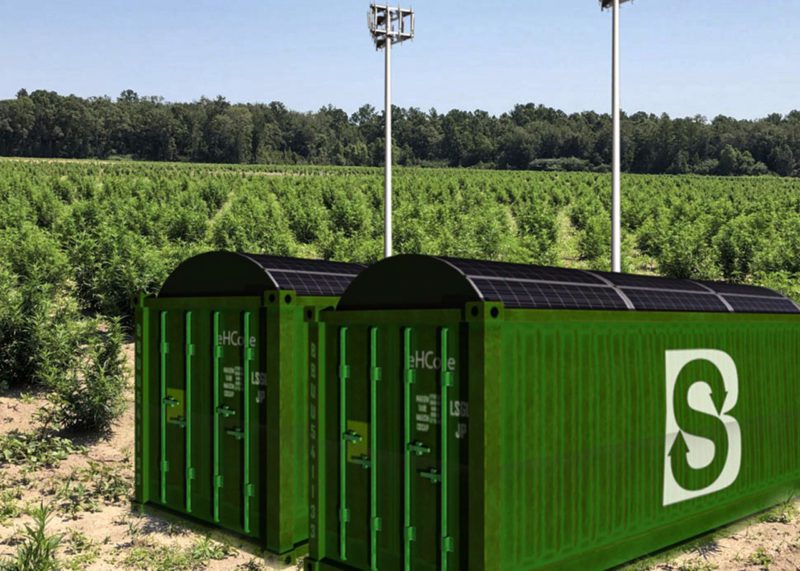 The SmartBox by eHempHouse
The first stage is piloting the system on a 1000-hectare organic farm and training local people on hemp production and how to use it (about 200 trained so far). The first operational units, which may cost around $200k each, are targeted for mid-2023 and will probably be on the farm in Zambia. The plan is then to expand to Mozambique, Angola, and South Africa.
The second stage is encouraging and enabling the national roll-out of industrial hemp in Zambia. One of the challenges has been securing approval given the association of hemp with cannabis. It has taken a while, but now the House of Chiefs has approved production on 10,000 hectares. The House of Chiefs has a key role in the distribution of communal land, and the organisation of communal projects, so it has a powerful influence.
The third stage has been to develop and test the technology, ready for a full-scale pilot. Two patents have been filed and the system is ready for trialling the prototype on the farm and then scaling up to 5 and then 120 units by the end of 2026. The units will be given to trained farmers for free with eHempHouse income derived from a distribution margin on the product sales arising?
The container, or SmartBox, can be self-powered, without the need to be connected to the grid.
In terms of the financials, the business is 88% owned by the founders and aims to make a small profit by the end of 2023. It has raised £300k in early seed capital and is looking for another £1m to fund the plan above.
In addition to the profit generated from product sales, there is potential for incremental revenue through carbon credits obtained via CO2 sequestration, as measured by the SmartBox itself. Although the methodology requires approval, this approach could potentially expedite the return on the capital investment.
Africa is the fastest growing consumer market in the world, with 50% of the population under the age of 20, and an expected population of 1.9 billion by 2050 (New Frontier Data Dec 2020). There have been regulatory and political challenges slowing progress, but the eHempHouse team are hoping that the combination of hemp, new technology, and the ensuing CO2 reduction will help to charge a green revolution across Africa, making its huge potential a reality.
In the words of the company, “The overall business vision is to build something that will have a material impact on addressing the climate emergency, but in a way that delivers many co-benefits to communities and the environment...making a profit and harnessing the power of entrepreneurialism are the ways to drive this vision forward”.


Related Content
 8202
0
8202
0

A vicious cycle in wealth inequality
 15492
0
15492
0
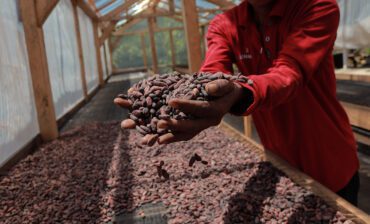
Krakakoa's ethical journey in the cocoa industry
 10381
0
10381
0

Comments
Deep Dives
RECENT
 9038
0
9038
0
 9069
0
9069
0
 13236
0
13236
0
Editor's Picks
 14306
0
14306
0
 9710
1
9710
1
 14830
1
14830
1
Webinars
News & Events
Subscribe to our newsletter to receive updates about new Magazine content and upcoming webinars, deep dives, and events.
Become a Premium Member to access the full library of webinars and deep dives, exclusive membership portal, member directory, message board, and curated live chats.

Join our global community of systems-minded changemakers.
Subscribe to the Impact Entrepreneur newsletter for the latest insights, magazine features, and invitations to exclusive webinars, Deep Dives, and events.


0 Comments