Building an Impact Economy in Georgia
Connecting Georgia’s social enterprises to markets and capital



Connecting Georgia’s social enterprises to markets and capital

 56
 0
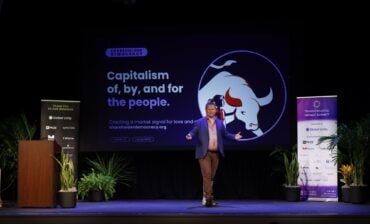
Gabriel Grant on giving shareholders a way to express what matters to them
 87
0

For mission-led organizations, a change of manager tests whether workplace inclusion is built to last.
 73
0

Why free education tools need reliable access, credible evidence, and lasting support
 342
0

What Islamic finance and impact investing can learn from each other
 416
0

After the flood, recovery capital must do more than replace what was lost
 397
0

 6572
0
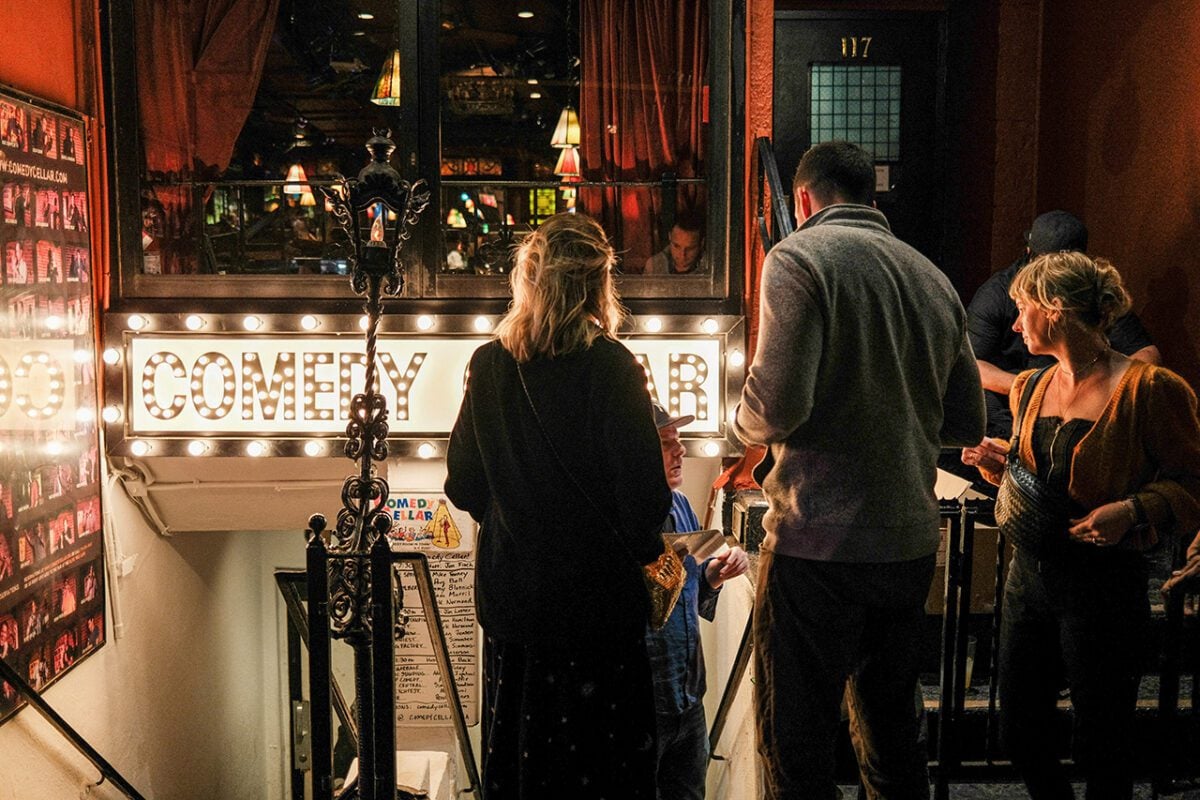
How do you make climate change funny?
A growing number of climate communicators are asking this question — not because they find the climate crisis humorous, but because they recognize that fear-based storytelling often alienates audiences. As climate anxiety deepens, entertainers and advocates are exploring how humor and levity can re-engage people who’ve tuned out the “doom and gloom” narrative.

Jessie Bluedorn
One of the leading figures at this intersection of culture and climate is Jessie Bluedorn, a producer, funder, and comedian whose work bridges philanthropy, movement-building, and media production.
As Founder and Executive Director of The Carmack Collective, a $10 million philanthropic fund focused on dismantling the fossil fuel industry, Bluedorn invests in organizations advancing either movement building (grassroots organizing, litigation, policy campaigns) or culture change (art, media, and journalism that reshape public narratives). Grantees include Yellow Dot Studios, known for satirical short videos about fossil fuel misinformation, and Clean Creatives, which pushes PR and advertising agencies to drop oil and gas clients.
She also leads Carmack Productions, a for-profit multimedia studio specializing in climate comedy — from sketch series to live events — that seeks to reframe climate action as cultural participation rather than moral obligation.
I spoke with Jessie following Climate Week NYC about her unconventional career path, her philosophy of climate communication, and why she believes laughter may be one of the most powerful catalysts for systems change.
Q: What was your journey into climate activism?
Jessie: I took a winding route to where I am now. But looking back, a lot of what I did prepared me for this — from working on a state-level campaign in 2012 to producing live shows while at school at Washington University in St. Louis.
My big moment of transformation came in 2016 around the election and the backlash against climate progress. At the time, I was set to inherit family wealth, which forced me to ask hard questions about how I wanted to live and contribute.
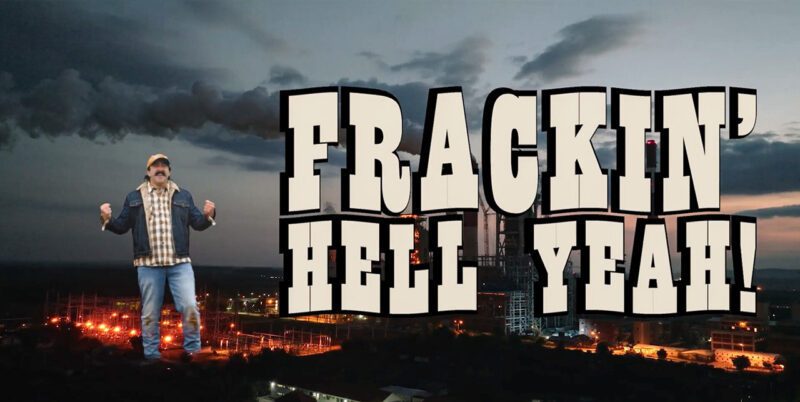
Courtesy of Slick
I also had a personal connection to climate issues. My extended family lives in western Pennsylvania, where fracking had devastated local environments. I started paying attention not just to the pollution and false promises, but to the structural power of the fossil fuel industry.
That led me into organizing with 350.org and the Sunrise Movement, where I helped coordinate the 2020 Earth Week NYC Campaign.
Q: Where did the idea for The Carmack Collective and Carmack Productions come from?
Jessie: The Carmack Collective came out of my experience as an individual funder and donor organizer. I wanted to scale up my wealth redistribution, involve my family, and ensure transparency while centering movement leadership.
Everyone now has a climate story — whether it’s surviving a wildfire, losing a home to a hurricane, or trying to install solar panels.
We launched officially in 2023 with an endowment of $10 million. Our annual $1.5 million in grantmaking targets two areas: Movement Building and Culture Change. The former supports organizing and advocacy; the latter funds creative projects that can shift culture and narratives around fossil fuels.
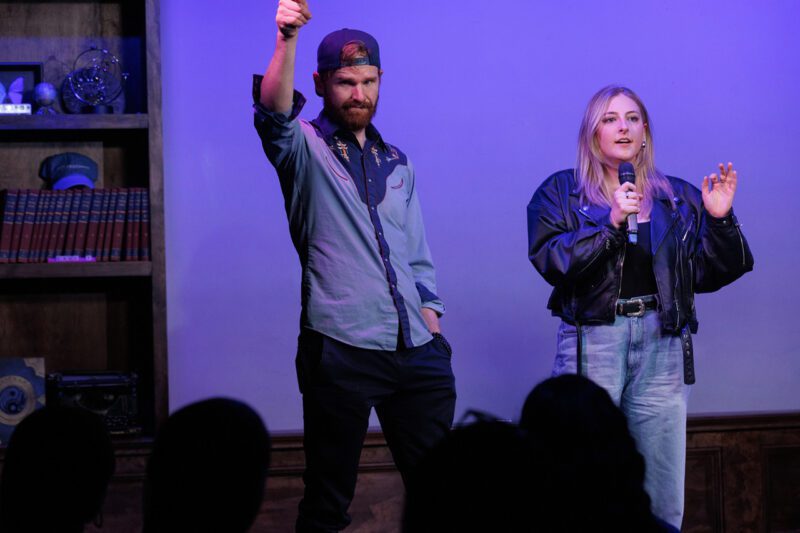
HAHApocalypse Show
In parallel, I was interested in storytelling and production. I’d worked at a digital media agency and saw a gap in development funding for creative climate work. So last year, in 2024, I founded Carmack Productions to fill that space. It’s a separate for-profit studio focused on climate storytelling, particularly comedy.
Together, the two entities form a blended-impact model: one philanthropic, one commercial — both working toward transforming public perception of climate change.
Q: Why the focus on comedy?
Jessie: I’ve always loved comedy, especially stand-up and improv. It’s how I process difficult issues — laughing through the pain.
In 2020, I began connecting my comedy and climate work after encountering the Center for Media & Social Impact (CMSI) at American University. Their research on “Comedy for Racial Justice in the Climate Crisis” really opened my eyes to how comedy has historically driven social change. It made me realize that humor can be more than relief — it can be activism.
Q: What makes comedy such a powerful tool for engagement?
Jessie: There’s a lot of apathy and nihilism in the climate space, especially among younger generations. Comedy helps people lower their guard and become receptive to new ideas. Sometimes it’s as simple as naming the antagonist — calling out the absurdity of a fossil fuel industry that keeps doing harm because it’s profitable. Giving audiences someone to laugh at can turn helplessness into agency.
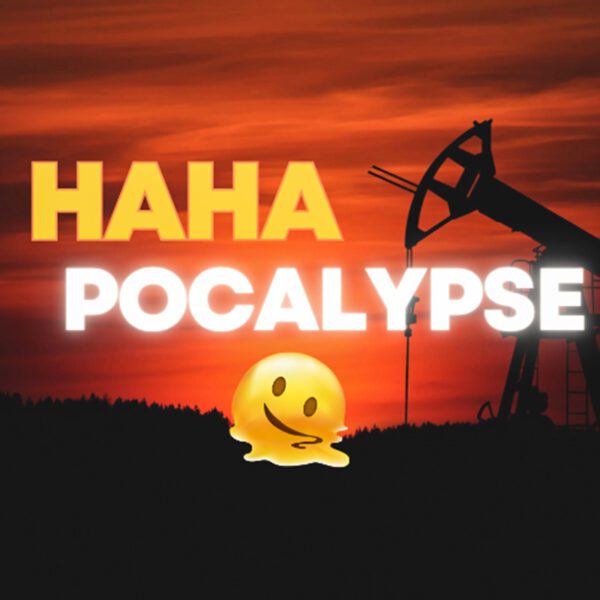
Courtesy of HAHApocalypse
I also think personal narratives are key. Everyone now has a climate story — whether it’s surviving a wildfire, losing a home to a hurricane, or trying to install solar panels. Those stories build empathy and make people feel seen.
There’s no “silver bullet” message, as climate scholar Max Boykoff says, but we can take a “silver buckshot” approach — many small, creative efforts that reach different audiences in different ways. The goal is to show how climate issues are woven into daily life and that everyone has a role to play.
Q: What are some of your current comedy projects?
Jessie: We have several exciting ones.
We also have several other projects in development, all exploring how culture and comedy can expand climate engagement.
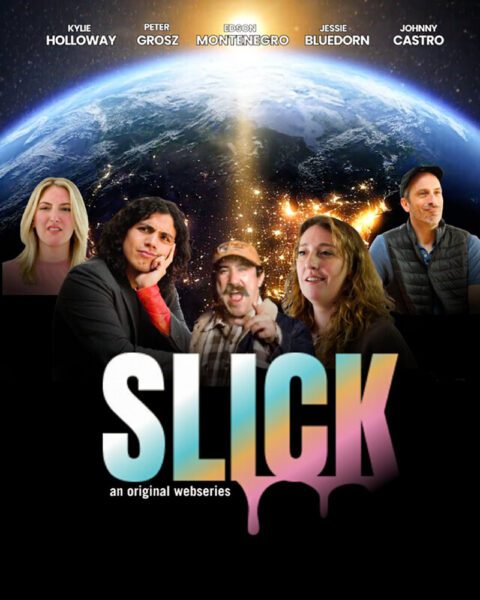
Courtesy of Slick
Q: Who are your comedy influences?
Jessie: One of my earliest influences was Arrested Development — smart, self-aware, and absurd in all the right ways. We actually had one of the show’s writers premiere a sketch at a recent HAHApocalypse, which was a full-circle moment for me.
I’m a big fan of Caleb Hearon, whose HBO special and podcast So True show how comedy can be politically active without being didactic. Chris Fleming is another favorite — his mix of music, dance, and satire is genius.
For a more climate-relevant example, I love the show Hacks for its intergenerational dynamic and willingness to learn across divides. It reminds me of my own collaboration with my dad, who works alongside me at The Carmack Collective.
At a time when many climate narratives lean toward despair, Jessie Bluedorn’s work demonstrates that humor can be a bridge — between generations, between culture and policy, and between disengagement and action.
By funding and producing cultural interventions that challenge the fossil fuel industry while inviting audiences to laugh, she’s reframing the emotional texture of the climate movement. It’s a reminder that transformation doesn’t always begin with data or protest — sometimes, it starts with a laugh.


Related Content
Connecting Georgia’s social enterprises to markets and capital
56
0
Gabriel Grant on giving shareholders a way to express what matters to them
87
0
For mission-led organizations, a change of manager tests whether workplace inclusion is built to last.
73
0

Artist Rob Strati on inherited objects, the limits of market price, and the creative possibilities…
112
0
Comments
Deep Dives
RECENT
 342
0
 416
0
 397
0
Editor's Picks
 56
0
 87
0
 73
0
56
0
87
0
56
0
87
0
73
0
Webinars
Signed and personally inscribed — you'll write the inscription as you order. Limited · 50…
News & Events

The board can add 2% for each 50% rise in the company’s value

Applications close December 2, or sooner once 250 arrive

Repeat borrowers in Colombia and Indonesia took it over the line
Subscribe to our newsletter to receive updates about new Magazine content and upcoming webinars, deep dives, and events.
Become a Premium Member to access the full library of webinars and deep dives, exclusive membership portal, member directory, message board, and curated live chats.


0 Comments