Building an Impact Economy in Georgia
Connecting Georgia’s social enterprises to markets and capital



Connecting Georgia’s social enterprises to markets and capital

 74
74
 0
0
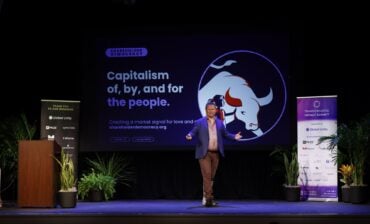
Gabriel Grant on giving shareholders a way to express what matters to them
 95
0
95
0

For mission-led organizations, a change of manager tests whether workplace inclusion is built to last.
 77
0
77
0

Why free education tools need reliable access, credible evidence, and lasting support
 409
0
409
0

What Islamic finance and impact investing can learn from each other
 443
0
443
0

After the flood, recovery capital must do more than replace what was lost
 411
0
411
0

Impact Entrepreneur · Practitioner Resources
Where to Start, How to Sequence, and What to Do Next Monday
A practical guide for practitioners ready to translate the book’s frameworks into action in their enterprises, investments, communities, and careers.
You have read the book, or at least enough of it to feel the pull of possibility and the weight of “where do I start?”
That question is not a sign of confusion. It is a sign that you are taking the work seriously. The Impact Entrepreneur Breakthrough covers enterprise design, ownership structures, capital alignment, security reframing, cultural infrastructure, and civilizational renewal. No one implements all of this simultaneously. The practitioners who succeed are those who choose a point of entry, go deep, build capacity, and then expand.
This Implementation Roadmap is designed to help you do exactly that. It has three sections:
Throughout these sections you will encounter toolkits from the book, referenced by name: among them Enterprise Design, Ownership as Justice, Capital Alignment, Five Pillars Assessment, Prevention Dividend™ / Prevention Ratio™, Defense as a Service™ Implementation, and Culture Triage. The IE Frameworks Workshop Pack provides a single-page printable canvas for every chapter toolkit in the book (eighteen canvases in all, including a cross-cutting Impact Diligence Canvas), each designed for tabloid (17×11) workshop use or letter-size individual reflection. The Pack is a natural companion to this Roadmap: print the canvas that matches your Sprint week or your “One Thing” selection, and use it as the workshop instrument for the toolkit work the Roadmap describes. The appendix maps every toolkit name used here to its chapter and its canvas.
Start with the Diagnostic. It takes ten minutes and will save you months of scattered effort. Then move to the Sprint that matches your results, or to the “One Thing” framework if even ninety days feels like too much right now. Both are valid starting points.
If you are a coach, consultant, or advisor, run the Enterprise Builder or Investor Sprint alongside a client rather than for yourself. If you teach, the Instructor’s Supplement carries the course models, and the sprints here adapt readily to capstone and practicum assignments. If you lead a community organization or wear several hats, see “If Your Scores Are Mixed” in Section A and Question 2E in Section C.
A Note on Pacing: The book’s closing metaphor is the monarch butterfly migration: multigenerational, no individual completing the full route. This work operates on a similar timescale. The sprints in this Roadmap are not meant to “finish” the transformation. They are meant to build the capacity and momentum that makes the next phase possible. Expect to cycle through multiple sprints over months and years. The goal is not completion. The goal is irreversible forward motion.
This diagnostic helps you identify your most productive starting point. For each question, choose the response that best describes your current situation. Don’t overthink it; your first instinct is usually accurate.
Answer all ten questions and the page tallies your responses for you. Nothing you enter is stored or sent anywhere; it lives in this browser tab only. Prefer paper? The same diagnostic is in the PDF edition.
Count your responses in each column:
Mostly A (Economic Architecture): Your priority is enterprise design, ownership, capital, and markets. Start with the Enterprise Builder Sprint or the Investor/Allocator Sprint (Section B). Your key chapters are 3–6, with Chapter 1 as foundation.
Mostly B (Systemic Infrastructure): Your priority is security, prevention, resilience, and systems-level protection. Start with the Policy/Systems Sprint (Section B). Your key chapters are 7–10, with Chapter 2 as foundation.
Mostly C (Cultural Foundation): Your priority is narrative, culture, attention, and identity transformation. Start with the Cultural Worker Sprint (Section B). Your key chapters are 11–14, with Chapter 1 for grounding.
If Your Scores Are Mixed: A split result is not unusual. It often means you are working at the intersection of dimensions, which is where the most powerful leverage exists. This is common among community leaders, nonprofit executives, and cooperative developers whose work spans economic, systemic, and cultural dimensions simultaneously. In this case, read the two relevant Sprints and design a hybrid that addresses both. Or start with the “One Thing” Framework in Section C to identify a single high-leverage entry point.
The Three-Dimension Principle: The book argues that sustainable transformation requires all three dimensions (economic architecture, systemic infrastructure, and cultural foundation) to be addressed eventually. Your Diagnostic identifies where to start, not where to stop. After completing your first Sprint, cycle back to the Diagnostic and see whether your priority dimension has shifted. It usually does: once you address the most urgent gap, the next one becomes visible.
Each Sprint is a structured twelve-week program that takes you from reading to action. The design assumes roughly five to eight hours per week of engagement (reading, analysis, stakeholder conversations, and design work), equivalent to a rigorous professional development commitment. Adjust pacing to your reality, but maintain the sequence: each week builds on the previous one.
Every Sprint follows the same arc: Orientation (weeks 1–2), Diagnosis (weeks 3–6), Design (weeks 7–10), and Commitment (weeks 11–12). The arc moves from understanding through analysis to action.
| Weeks | Focus | Chapters | Deliverable / Action |
|---|---|---|---|
| 1–2 | Orientation: Identity + Systemic Intelligence | Intro, Chs. 1–2Canvas: Impact Entrepreneur · Systemic Intelligence | Complete the Ch. 1 toolkit (Impact Entrepreneur Identity). Write a one-page statement of who you are as an impact entrepreneur and what systemic problem your enterprise addresses. |
| 3–4 | Diagnosis: Enterprise Design | Ch. 3Canvas: Enterprise Design | Apply the Enterprise Design Canvas to your current enterprise or concept. Apply the 100-fold test. Identify gaps between “less bad” and regenerative. B Corps (bcorporation.net) provide useful reference models for studying regenerative enterprise design in practice. |
| 5–6 | Diagnosis: Ownership + Capital | Chs. 4–5Canvas: Ownership as Justice · Capital Alignment | Complete the Ownership as Justice toolkit: map current power, evaluate alternative structures. Apply the Capital Alignment Framework: assess your current capital relationships against custodial criteria. |
| 7–8 | Design: Structural Redesign | Ch. 6 + revisit 3–5Canvas: Market Infrastructure | Draft a structural redesign proposal integrating business model, ownership, capital, and market positioning changes. Consider both the negative externalities your enterprise currently imposes and the positive externalities it generates but is not compensated for. Identify the single most important structural change. |
| 9–10 | Design: Cultural Foundation | Chs. 11 + 14Canvas: Culture Triage · Interdependent Identity | Conduct a culture audit (Ch. 11 toolkit). Assess whether your organizational culture will support or undermine the structural changes. Design cultural practices to bridge the gap. |
| 11–12 | Commitment: Integration + Launch | Ch. 16 + BreakthroughCanvas: Work of Reclamation | Finalize your enterprise redesign proposal. Present to at least one stakeholder (board, co-founder, advisor, investor). Identify your 90-day-after-this-90-days priority. |
Enterprise Builder Checkpoint: By Week 6, you should be able to answer: (1) What is my enterprise’s current Prevention Ratio? How much of what we do prevents harm versus reacts to it? (2) If ownership changed hands tomorrow, would mission be structurally protected? (3) Is my capital patient enough for the transformation timeline? If any answer is uncertain, spend additional time on that chapter’s toolkit before moving to Design.
| Weeks | Focus | Chapters | Deliverable / Action |
|---|---|---|---|
| 1–2 | Orientation: Capital as Custodian | Intro, Ch. 5Canvas: Capital Alignment | Assess your current portfolio or fund against the custodial capital criteria: patient, rooted, answerable to more than profit. Identify where extractive logic persists in your approach. Familiarize yourself with the capital spectrum, from catalytic capital (absorbing first-loss risk to de-risk subsequent investment) through patient capital to market-rate, and with blended finance structures that combine public, philanthropic, and private funds. |
| 3–4 | Diagnosis: Enterprise Due Diligence | Chs. 3–4Canvas: Enterprise Design · Ownership as Justice · Impact Diligence | Apply the Enterprise Design Canvas to your top three portfolio companies or grantees. Evaluate their ownership structures using the Ch. 4 toolkit. Where are they regenerative and where merely “less bad”? B Corps provide ideal comparison cases due to their publicly available impact data. |
| 5–6 | Diagnosis: Markets + Externalities | Ch. 6Canvas: Market Infrastructure | Conduct a true-cost accounting exercise for one sector in your portfolio. Identify both negative externalities (hidden costs imposed on communities and ecosystems) and positive externalities (cascading benefits your investments generate that go unrewarded by current market design). Assess: if true costs and benefits were fully internalized, which investments would strengthen and which would weaken? |
| 7–8 | Design: Security + Prevention | Chs. 7 + 10Canvas: Prevention Dividend & Prevention Ratio · Defense as a Service Implementation | Calculate the Prevention Ratio for your portfolio or a client institution. Then compute the Prevention Dividend for at least one proposed preventive investment. Key benchmarks: disaster preparedness yields $4–$7 per dollar; ecosystem restoration generates $7–$30; pandemic preparedness produces $1,102 in economic gain per dollar spent. This is the Sprint’s analytical core. |
| 9–10 | Design: Cultural Due Diligence | Chs. 11–12Canvas: Culture Triage · Narrative Strategy | Assess the cultural infrastructure of your portfolio companies: do their organizational cultures support or undermine their impact missions? Develop a cultural due diligence framework you can use going forward. |
| 11–12 | Commitment: Revised Thesis | Ch. 16 + BreakthroughCanvas: Work of Reclamation | Write a revised investment thesis integrating custodial capital, Prevention Dividend logic, and cultural assessment. Present to your investment committee, board, or partners. |
Investor Sprint Checkpoint: By Week 8, you should have a concrete Prevention Dividend calculation showing the return on at least one preventive investment versus a reactive alternative. If you cannot yet do this quantitatively, use the qualitative version: identify three downstream costs your proposed investment would prevent, and estimate their order of magnitude. Precision improves with practice.
| Weeks | Focus | Chapters | Deliverable / Action |
|---|---|---|---|
| 1–2 | Orientation: The Misallocation | Intro, Ch. 7Canvas: Five Pillars Assessment · Prevention Dividend & Prevention Ratio | Complete the Five Pillars assessment for your municipality, region, or institution. Rate each pillar (1–10). Identify the weakest pillar; this is your target. Key Prevention Dividend benchmarks to keep in mind: disaster preparedness yields $4–$7 per dollar; ecosystem restoration generates $7–$30; pandemic preparedness produces $1,102 in economic gain per dollar spent. |
| 3–4 | Diagnosis: Who Keeps Us Safe | Ch. 8Canvas: Real Security Workforce | Map the real security providers in your context: care workers, educators, ecological stewards, community organizers. Where are they resourced? Where are they neglected? Interview at least two. |
| 5–6 | Diagnosis: Mutualism vs. Militarization | Ch. 9Canvas: Mutualism | Audit your institution’s strategies for militarized assumptions (Ch. 9 toolkit). Identify where competition logic persists when cooperation would produce better outcomes. Return to the Costa Rica case study in Chapter 7 as the national-scale example. |
| 7–8 | Design: DaaS Application | Ch. 10Canvas: Defense as a Service Implementation | Apply the three foundational principles of DaaS (distributed capacity, preventive infrastructure, and mutual benefit protocols) to your context. Calculate the Prevention Ratio for your institution. Design a specific reallocation. |
| 9–10 | Design: Cultural Conditions | Chs. 12–13Canvas: Narrative Strategy · Attention Commons | Identify the narratives sustaining the current misallocation. Design a narrative strategy for the shift you’re proposing. Assess the attention infrastructure required for your constituents to engage the complexity. |
| 11–12 | Commitment: Policy Brief | Ch. 16 + BreakthroughCanvas: Work of Reclamation | Draft and present a Prevention Dividend policy brief to at least one decision-maker. Include quantified Prevention Dividend, Five Pillars assessment, and implementation pathway. |
Policy Sprint Checkpoint: By Week 4, you should have a clear Five Pillars assessment with at least one pillar rated below 6, your critical vulnerability. If all pillars rate above 6, reexamine your scoring: most systems have at least one major gap. The honest assessment is the foundation for everything that follows.
| Weeks | Focus | Chapters | Deliverable / Action |
|---|---|---|---|
| 1–2 | Orientation: Culture as Infrastructure | Intro, Ch. 11Canvas: Culture Triage | Complete the culture audit for your organization or movement. Identify where the cultural “operating system” is running extraction despite regenerative aspirations. |
| 3–4 | Diagnosis: Narrative Landscape | Ch. 12Canvas: Narrative Strategy | Map the dominant narratives in your sector or community. Identify: Which stories sustain extraction? Which stories make regeneration imaginable? Where are the narrative vacuums, the spaces where no compelling story exists? |
| 5–6 | Diagnosis: Attention Under Siege | Ch. 13Canvas: Attention Commons | Conduct a personal and institutional attention audit. Identify the sources of cognitive capture in your context. Assess: what attention infrastructure is required for your audience to engage with the complexity of the Impact Economy? |
| 7–8 | Design: Narrative Strategy | Ch. 12 (revisit) + Ch. 14Canvas: Narrative Strategy · Interdependent Identity | Design a narrative strategy for a specific campaign or initiative. Your strategy must address: what story to tell, how to protect the attention required to hear it, and what identity shift the story invites. Use the Ch. 14 framework on interdependent identity. |
| 9–10 | Design: Structural Grounding | Chs. 3–4 + 7Canvas: Enterprise Design · Ownership as Justice · Five Pillars Assessment | Ground your cultural strategy in structural understanding. Cultural workers without economic and systemic literacy often find their work absorbed and neutralized. Assess: what enterprise, ownership, or security structures does your narrative work need to succeed? |
| 11–12 | Commitment: Strategy Launch | Ch. 16 + BreakthroughCanvas: Work of Reclamation | Finalize your narrative strategy. Present to at least one stakeholder (editor, funder, movement leader, organizational leader). Identify your 90-day-after-this-90-days priority. |
Cultural Worker Checkpoint: Weeks 9–10 are crucial and should not be skipped. Part IV is your home territory, but the book’s argument is that cultural work without structural grounding gets absorbed by extractive logic. The narrative strategy you produce in weeks 7–8 should be strengthened, not weakened, by the structural analysis in weeks 9–10. If the two feel disconnected, that disconnect is diagnostic: it reveals exactly the integration gap the book warns about.
If ninety days feels like too much — if you are overwhelmed, under-resourced, or simply need a concrete first step before committing to a full Sprint — this section is for you.
The book contains sixteen chapter toolkits, each with reflection prompts, diagnostic exercises, and action steps. Implementing even one toolkit fully (not reading it, but actually doing every step) will produce more transformation than reading the entire book passively. The question is: which one?
Answer each question honestly. Follow the path. Choose an answer and the next question appears.
What feels most broken in your enterprise right now?
What concerns you most about your portfolio or fund?
What is the most urgent gap in your context?
Where does your work feel most stuck?
If you wear multiple hats, lead a community organization or nonprofit, or are uncertain, start with the toolkit that addresses the dimension your Diagnostic identified as priority. If you skipped the Diagnostic, start here:
Once you have identified your toolkit, follow this four-week implementation cycle. Tick each week off as you go.
After the “One Thing”: Once you have implemented one toolkit, you will have built the muscle for the next one. Return to the Decision Tree and choose your second toolkit, ideally from a different dimension than the first. If your first toolkit was economic (Chapters 3–6), try a cultural one (Chapters 11–14) or a systemic one (Chapters 7–10). The integration between dimensions is where the real leverage lives.
Every toolkit named in this Roadmap lives at the end of its chapter in the book, and each has a single-page canvas in the Frameworks Workshop Pack and the online Framework Gallery. Because the book, the Pack, and this Roadmap sometimes use different names for the same instrument, this table maps them.
| Ch. | Toolkit as titled in the book | Workshop Pack canvas | Name used in this Roadmap |
|---|---|---|---|
| 1 | The Impact Entrepreneur | The Impact Entrepreneur Canvas (PDF) | Ch. 1 toolkit (Impact Entrepreneur Identity) |
| 2 | From Single-Bottom-Line to Systemic Intelligence | The Systemic Intelligence Canvas (PDF) | Orientation reading (weeks 1–2 of every Sprint) |
| 3 | Enterprises That Heal | The Enterprise Design Canvas (PDF) | Enterprise Design Canvas; the 100-fold test |
| 4 | Ownership as Justice | The Ownership as Justice Canvas (PDF) | Ownership as Justice |
| 5 | Capital as Custodian | The Capital Alignment Canvas (PDF) | Capital Alignment Framework |
| 6 | Markets That Reflect What Matters | The Market Infrastructure Canvas (PDF) | True-cost accounting exercise |
| 7 | The Misallocation of Defense | The Five Pillars Assessment Canvas (PDF) | Five Pillars Assessment |
| 7 | The Misallocation of Defense | The Prevention Dividend & Prevention Ratio Canvas (PDF) | Prevention Ratio; Prevention Dividend Calculation |
| 8 | Who Really Keeps Us Safe | The Real Security Workforce Canvas (PDF) | Mapping the real security providers |
| 9 | From Militarization to Mutualism | The Mutualism Canvas (PDF) | Militarized-assumptions audit (Ch. 9 toolkit) |
| 10 | Defense as a Service | The Defense as a Service Implementation Canvas (PDF) | DaaS Assessment; DaaS Application |
| 11 | The Culture We Keep Alive | The Culture Triage Canvas (PDF) | Culture Triage; culture audit |
| 12 | The Stories That Shape the Possible | The Narrative Strategy Canvas (PDF) | Narrative Strategy Framework |
| 13 | The Attention Commons | The Attention Commons Canvas (PDF) | Attention Audit |
| 14 | Identities That Remember the Whole | The Interdependent Identity Canvas (PDF) | Identities That Remember the Whole |
| 15 | Reclaiming the Commons | The Commons Stewardship Canvas (PDF) | Not assigned in a Sprint; a natural second “One Thing” for community leaders |
| 16 | The Work of Reclamation | The Work of Reclamation Canvas (PDF) | Ch. 16 + Breakthrough (every Sprint’s Commitment phase) |
| — | Cross-cutting (Chapters 2–6) | The Impact Diligence Canvas (“Evaluating Impact Claims”) (PDF) | Impact Diligence Canvas (Section C, 2B) |
The complete set is in the Framework Gallery and as one print-ready file, the Frameworks Workshop Pack. The Reader’s Companion and the Instructor’s Supplement are on the Resources page.
This Roadmap is your entry point, not your ceiling. The Impact Economy is being built by thousands of practitioners making daily choices to design for regeneration rather than extraction. Your Sprint deliverable — your redesigned enterprise, your Prevention Dividend analysis, your narrative strategy, your culture audit — is not a school assignment. It is a real contribution to a real movement.
Share your work. Join the IE community. Connect with practitioners who are building what you are building. The Reader’s Companion provides framework reference. The Instructor’s Supplement supports formal learning. The Frameworks Workshop Pack provides printable canvases that translate the book’s toolkits into single-page workshop instruments. This Roadmap supports doing. And the IE Platform at impactentrepreneur.com/breakthrough connects it all, including the printable edition of this Roadmap for the workshop table.
Welcome to the breakthrough.
Download the Roadmap (PDF) Back to the Book Hub
© 2026 Impact Entrepreneur PBC. All rights reserved.
Defense as a Service™, Prevention Dividend™, and Prevention Ratio™ are trademarks of Laurie Lane-Zucker.
Join our global community of systems-minded changemakers.
Subscribe to the Impact Entrepreneur newsletter for the latest insights, magazine features, and invitations to exclusive webinars, Deep Dives, and events.