When Automation Outruns Trust
Why verified human judgment remains essential to digital scale



Why verified human judgment remains essential to digital scale

 94
 0
Whose evidence counts
 69
0

The emerging movement to reshape capitalism using purpose-driven M&A
 106
0

For mission-led organizations, a change of manager tests whether workplace inclusion is built to last.
 146
0

Artist Rob Strati on inherited objects, the limits of market price, and the creative possibilities…
 160
0
Counting what we fail to prevent, sixty seconds at a time
143
0

 6213
0
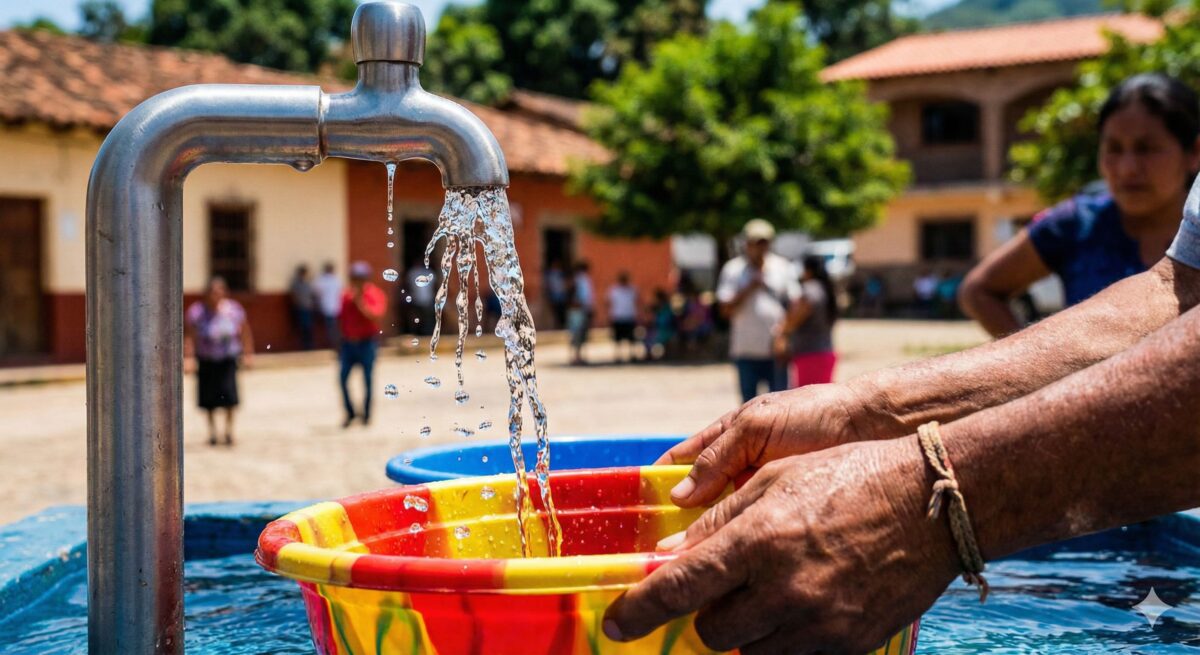
When Toniic’s T100 dataset revealed that SDG 6 — Clean Water and Sanitation — received some of the lowest levels of capital allocation from impact investors, the findings were striking. But to Toniic member and longtime water investor Tony Stayner, they were anything but surprising. Water sits at the heart of health, gender equity, climate resilience, and economic development — yet it remains one of the most overlooked and underfunded areas in global portfolios.

Photo by Chinh Le Duc
Tony’s journey into water investing began with a simple but transformative question: Where can my capital have the greatest impact?
Years ago, the Peninsula Community Foundation explored that question for a donor and concluded that few investments delivered more cost-effective, life-improving outcomes than water, sanitation, and hygiene (WASH). Improvements in WASH disproportionately benefit women and girls — who often fetch water, care for sick family members, and bear the brunt of climate-induced water stress. Those insights resonated with Tony’s early travel experiences and helped him see water not simply as a sector, but as a system: one that touches every other SDG. In fact, access to clean water and sanitation has been linked to progress on all 17 SDGs.
The myth of “uninvestability”
A pervasive narrative in the WASH sector is that water is “too hard” or “too uninvestable.” But Tony’s experience demonstrates the opposite. For more than a decade, he has deployed catalytic capital across a wide spectrum of water-related opportunities — from early-stage venture funds to community water infrastructure — showing that a portfolio approach can unlock meaningful progress on SDG6.
His investments are grounded in a practical lens: impact, risk, and return. Rather than waiting for perfect opportunities, he has used different types of capital — philanthropic, catalytic, concessionary, and market-rate — to help ventures grow into investable propositions.
A portfolio approach: Using the full capital stack
Tony founded the Excelsior Impact Fund, a donor-advised fund at ImpactAssets, initially to prove that impact investing could deliver competitive market returns. In the water sector, that meant backing venture funds such as Burnt Island Ventures and Pure Terra, both of which have grown into strong market-rate opportunities.
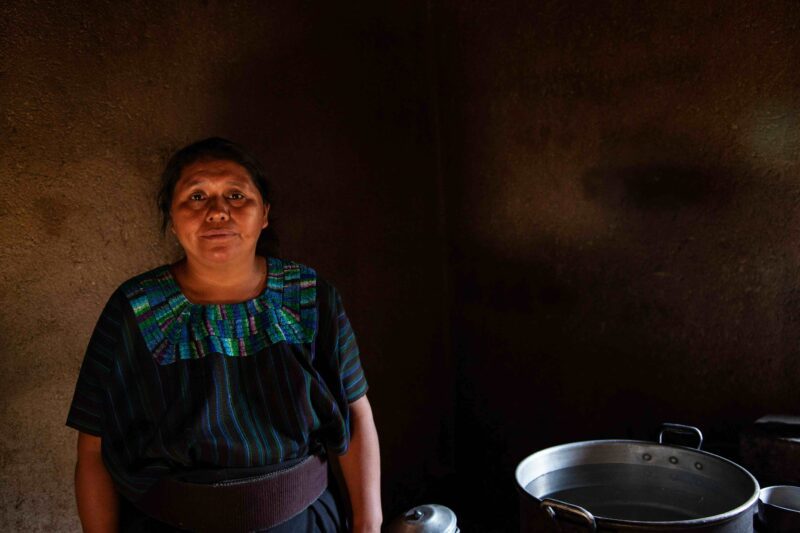
Photo by Lara Lone
But constructing an entirely water-focused portfolio across asset classes proved challenging. To maintain diversification, Tony added broader sustainability investments while continuing to search for catalytic opportunities in WASH.
One of the most compelling examples is Azure Source Capital, which works at the community water-systems level in Central America. Rural water supply in the region is often delivered by community-based organizations that lack the financing needed to expand, digitize, or modernize services. Banks rarely lend to them; community organizations rarely seek loans. Azure steps into that gap.
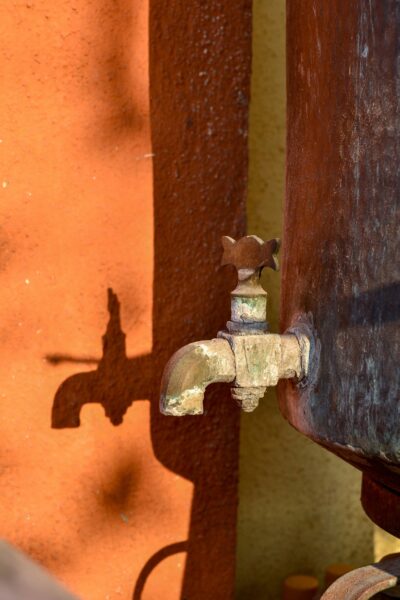
Photo by Shraddha Kulkarni
Azure and its partners — including Catholic Relief Services — provide technical assistance to strengthen local water organizations’ finances and build confidence around responsible borrowing. They also help train local banks and credit cooperatives to understand the WASH sector as a high-value customer segment. Azure lends capital to these financial institutions at favorable rates, enabling them to on-lend to community water providers. Repayment rates so far remain flawless.
Azure also collaborates with national and municipal water authorities to advance supportive policies, extend loan tenors, and co-create blended finance models. Their goal is to make the system work so well that Azure can eventually step aside. For Excelsior, a three-year 3.5% note is below market — but Tony considers the forgone return a high-impact grant in disguise.
Tony has also invested directly in companies such as Ketos (real-time water-quality monitoring), Sanivation (transforming sanitation waste into fuel), and Change Water Labs (low-cost, low-maintenance toilet technologies). Direct investments, however, are time-intensive and risky, so in recent years he has shifted toward investing through expert-led funds.
The catalytic role of philanthropy
Water tech is increasingly investable; access solutions remain harder. This is where catalytic capital proves essential.
Water.org, one of Excelsior’s primary grantees, began with direct solutions like wells. But as the organization scaled, it recognized that philanthropy alone could not close the global funding gap. With evidence that one-third of people without access to safe water could afford a small loan, Water.org pioneered a system-level shift: partnering with microfinance institutions (MFIs) to build WASH lending products.
They provided MFIs with loan guarantees, a WASH playbook, and local partnerships that organized lending groups. This model unlocked enormous leverage — turning small philanthropic inputs into large-scale lending for water and sanitation.
To accelerate that systemic shift, Water.org launched WaterEquity, the first asset manager exclusively focused on water and sanitation. Its early fund of $10M aimed to reach 1 million people — a turning point for Tony, who realized that sacrificing some financial return could generate dramatically greater long-term impact.
Today, WaterEquity operates two major investment vehicles:
Water.org’s reach has expanded dramatically: from 3 million people in 2015 to more than 79 million today, with over 10 million reached in the past year alone.
WaterEquity expects fee income eventually to cover operating expenses, creating a model in which returns can help fuel Water.org’s philanthropic programs — a regenerative financing loop designed for scale.
Building an investable field
Few nonprofits operate at the scale or sophistication of Water.org and WaterEquity. But Tony’s approach amplifies impact beyond his own capital.
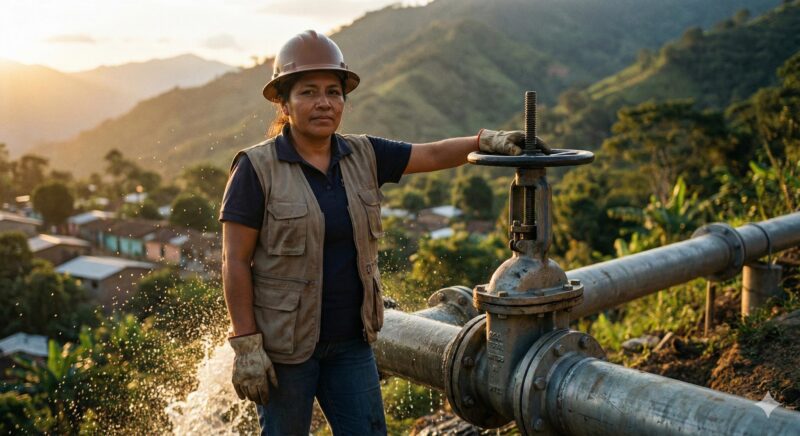
One example: the Pacific Institute, a science-based water sustainability think tank and Secretariat of the UN Global Compact’s CEO Water Mandate. The Institute helped launch the Water Resilience Coalition (WRC), which convenes 200+ corporations to strengthen water sustainability across operations and supply chains. WRC members — including Starbucks, Ecolab, GAP Inc., and DuPont — recently invested a combined $30M into WaterEquity’s Global Access Fund.
Tony’s catalytic investments, philanthropic partnerships, and board service — combined with the guidance of his impact advisor, Align Impact — helped de-risk early opportunities and crowd in additional capital from other investors.
Why water is a growing investment frontier
The moral imperative for clean water and sanitation is clear. But demand is also being driven by macro trends:
Accelerators such as Imagine H2O and the Toilet Board Coalition are building the pipeline of ventures. Water-tech venture funds are maturing. Burnt Island Ventures now has both a second fund and an Opportunity Fund for later-stage growth.
These are signs not of scarcity, but of momentum.
A call to investors: “Come on in. the water Is warm.”
Tony continues to deepen his involvement in the sector — serving on boards, mentoring entrepreneurs, and working through Toniic’s Deep Impact Circle, which challenges members to pursue deeper systemic impact. It’s a significant commitment, but he sees it as a strategic investment in the ecosystem itself.
Water is complex — and chronically underfunded. But with thoughtful, blended capital, patient partnerships, and a willingness to engage across the system, it is not only possible to invest in SDG6 — it is possible to help build the field.
At Toniic, we believe that moving money and mindsets goes hand in hand. When early investors like Tony step into overlooked sectors, they do more than fund solutions; they help shift the narrative of what’s possible.
Tony’s message to fellow investors is simple:
“Come on in. The water is warm.”



Related Content
Why verified human judgment remains essential to digital scale
94
0
Whose evidence counts
69
0
The emerging movement to reshape capitalism using purpose-driven M&A
106
0

Connecting Georgia’s social enterprises to markets and capital
 139
0
Comments
Deep Dives
RECENT
 146
0
 160
0
 143
0
Editor's Picks
 94
0
 5175
0
 4831
0
94
0
94
0
 69
0
 106
0
Webinars
Signed and personally inscribed — you'll write the inscription as you order. Limited · 50…
News & Events
A GIIN survey finds capital concentrated and confidence steady
Each donor gets one vote, whatever the size of the gift

Most deals will run from $500,000 to $2 million
Subscribe to our newsletter to receive updates about new Magazine content and upcoming webinars, deep dives, and events.
Become a Premium Member to access the full library of webinars and deep dives, exclusive membership portal, member directory, message board, and curated live chats.


0 Comments