When Impact Stops at the Office Door
For mission-led organizations, a change of manager tests whether workplace inclusion is built to last.



For mission-led organizations, a change of manager tests whether workplace inclusion is built to last.

 44
44
 0
0

Artist Rob Strati on inherited objects, the limits of market price, and the creative possibilities…
 85
0
85
0

Counting what we fail to prevent, sixty seconds at a time
89
0

How states can crowd in local early-stage capital
 368
0
368
0

Why last-mile healthcare needs an operating model, not just more mobile clinics
 351
0
351
0

How Australia’s succession wave could turn ownership into a funding model
 466
0
466
0
 6319
0
6319
0
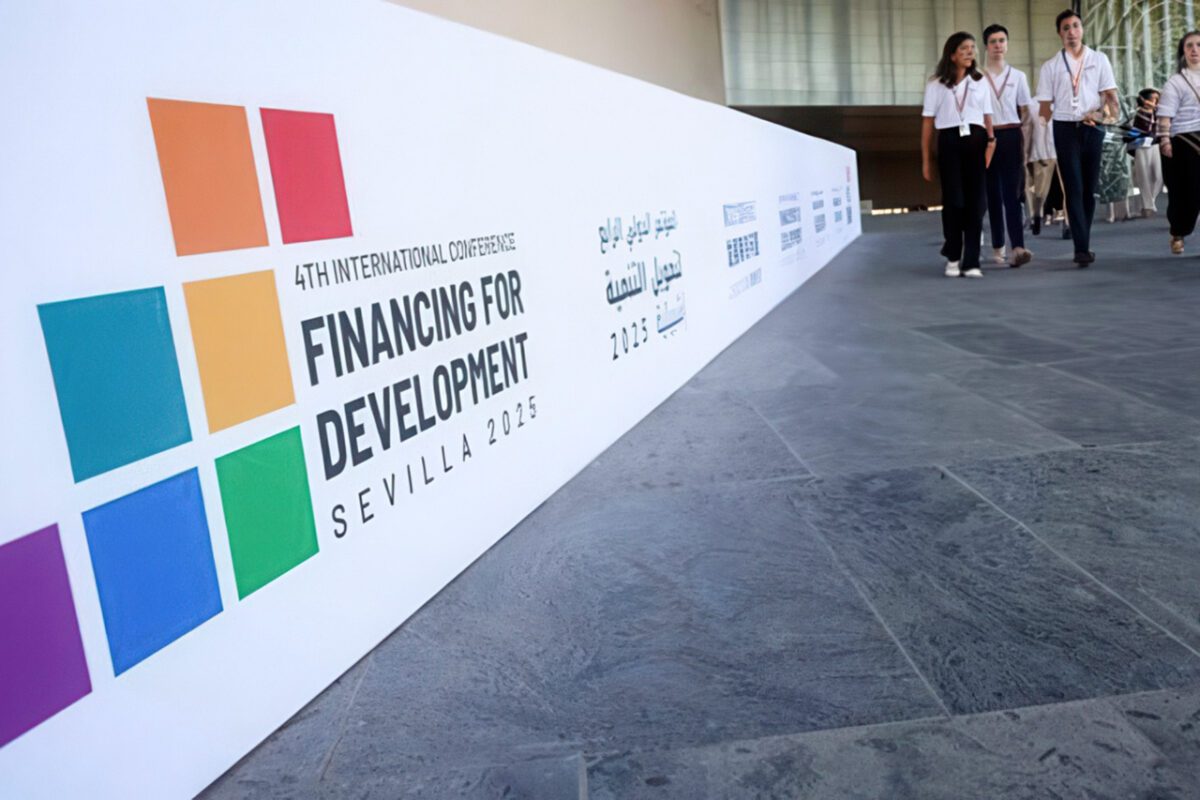
Photo Courtesy of United Nations
An invitation to expand a coalition of thinkers, builders, and funders engaged in shaping a Framework to Unlock Entrepreneurial Growth at Scale.
Solving the SDGs via the private sector stands no chance if return-seeking capital cannot find the demand in the form of scale-ready businesses in the world’s poorest communities. We now know what we need to do to build them.
Discussions at the UN Financing for Development 4 Conference in Sevilla focused on mobilizing finance to achieve the Sustainable Development Goals. But the supply of capital does not magically create demand for it to be put to productive use. Capital seeks returns; what it needs are growing businesses that can absorb and deploy that capital effectively.
How do we build stronger entrepreneurial ecosystems by pairing return-seeking capital with grant funding to foster greater demand for that capital in the places most in need?
To make real progress, we need a shared diagnosis of the problem: the “missing middle.” This concept has become so familiar to practitioners that it’s verging on cliché—and, in some quarters, even fatigue. But let’s not drift into denial. The missing middle is real: underperforming economies are structurally thin when it comes to small and medium-sized, growth-oriented firms. Their absence creates a bottleneck for capital deployment and stymies the private sector’s development role.
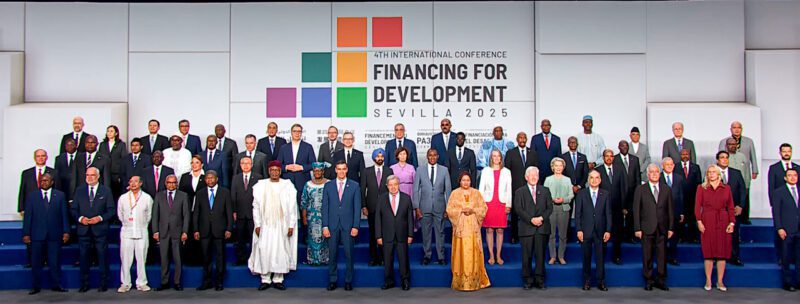 World leaders with Spain’s Prime Minister Pedro Sanchez at the Financing for Development conference 2025; Photo Courtesy of UN News
Economic growth typically relies on expanding the number and scale of firms. Larger firms bring higher productivity, economies of scale, and access to global markets. But to get there, we need a pipeline: roughly 100 ambitious small firms to yield 10 mid-sized ones, and from there, one large enterprise. If we lack sufficient entrants at the bottom, we cannot expect scale at the top. This is a structural feature of poor economies: building a business is hard, and meaningful support is rare. Few try; even fewer succeed.
No amount of return-seeking capital can conjure up businesses that are ready and able to absorb it without an intentional effort to build the institutions that support them.
The reasons are complex. I’ve attempted to model them, and welcome deeper discussion on that front on LinkedIn. But at its core, the challenge lies in aligning different forms of capital — commercial investment, philanthropic grants, and technical assistance — to address the structural barriers that entrepreneurs face in emerging markets.
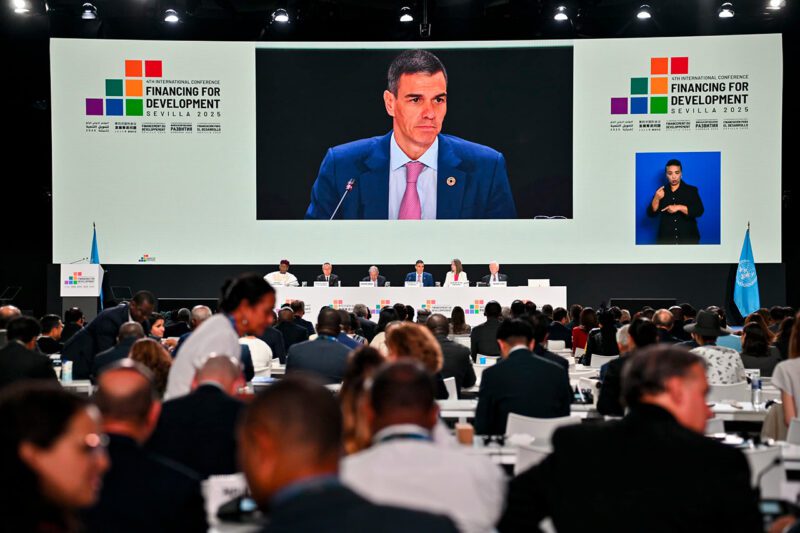 Spain’s Prime Minister, Pedro Sánchez during the opening plenary; Photo courtesy of ECA Events
Too often, grant funding targets microenterprises or early-stage entrepreneurs without growth potential, while return-seeking capital comes in too late, seeking firms that are already scale-ready. This creates a critical gap — one that leaves promising ventures stranded and ecosystems underdeveloped.
We believe the solution lies in a layered approach: blending flexible capital with catalytic support to build both enterprises and the broader systems they depend on.
This is not an entirely new idea. But what is new is a growing body of research that clarifies the how — particularly the role of Entrepreneur Support Organizations (ESOs) in stimulating capital demand. ANDE’s own work, alongside our partners, has distilled five core principles of high-performing ESOs and tested their effect: an eightfold increase in revenue growth, job creation, and capital raised for the ventures they support.
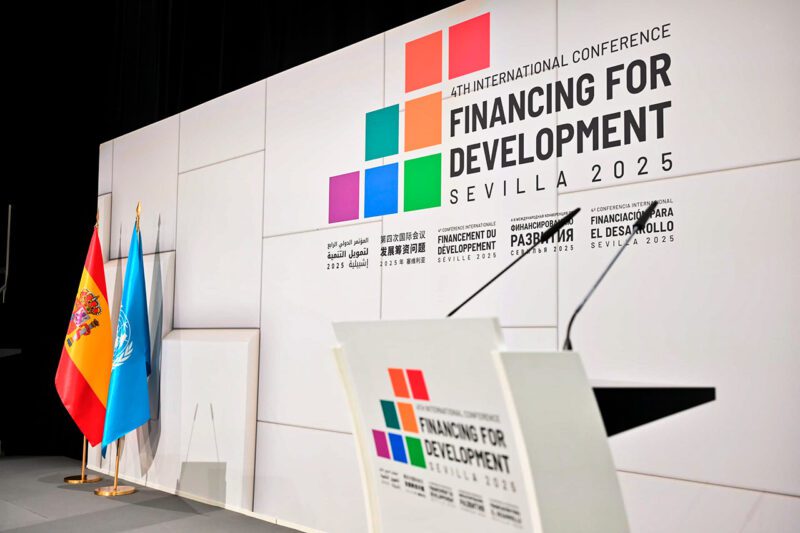 Photo Courtesy of ECA Events
To illustrate: take the case of GrowthAfrica, a Nairobi-based ESO that has participated in ANDE’s performance acceleration work. By embedding targeted technical assistance, refining entrepreneur selection, and strengthening mentorship networks, GrowthAfrica has helped ventures scale sustainably — facilitating over $60 million in investment and contributing to the creation of more than 40,000 jobs across the continent. Their work exemplifies the catalytic role that ESOs can play in reshaping investment-readiness in emerging markets.
Timing matters. At the UN FfD4 Conference in Sevilla, we hosted a side event to explore this model in greater depth, sharing concrete examples of how high-performing Entrepreneur Support Organizations (ESOs) can unlock entrepreneurial growth and reshape capital flows. Organizations like Startup Chihuahua, Stanford SEED, and Alterna are just a few among dozens in the ANDE network demonstrating how evidence-based, non-financial support can drive business growth, improve capital efficiency, generate employment, and help lift communities out of poverty.
Capital providers often fall into the trap of believing that the tools they bring are the solution to most problems — a structural bias I’ve written about before. But the reality is this: no amount of return-seeking capital can conjure up businesses that are ready and able to absorb it without an intentional effort to build the institutions that support them.
We will never achieve the private sector contributions to the SDGs that we need without a strong, well-funded network of ESOs — organizations that draw in capital not by chasing it, but by generating demand for it through thriving enterprises.
We’re on a mission to empower these ecosystem builders — help them use evidence to amplify their impact and find the resources they need to scale. We hope you'll lend your voice to this growing coalition.
--
Watch a short video overview of the model and its implications:
VIDEO – Canva Presentation


Related Content
For mission-led organizations, a change of manager tests whether workplace inclusion is built to last.
44
0
Artist Rob Strati on inherited objects, the limits of market price, and the creative possibilities…
85
0
Counting what we fail to prevent, sixty seconds at a time
89
0

How collateral rules and payment terms keep impact capital out of reach
195
0
Comments
Deep Dives
RECENT
 368
0
368
0
 351
0
351
0
 466
0
466
0
Editor's Picks
 44
0
44
0
 85
0
85
0
 89
0
44
0
85
0
44
0
85
0
89
0
89
0
44
0
85
0
44
0
85
0
89
0
Webinars
Signed by the author. Collected at the door at Lipton Hall, NYU School of Law,…
News & Events

The September 14 program and a live IFI Tool demo are online

Pre-seed and seed startups can apply on a rolling basis

Their Built platform helps teams design, launch and run funds
Subscribe to our newsletter to receive updates about new Magazine content and upcoming webinars, deep dives, and events.
Become a Premium Member to access the full library of webinars and deep dives, exclusive membership portal, member directory, message board, and curated live chats.


0 Comments