Love and Care in the Future of Public Markets
Gabriel Grant on giving shareholders a way to express what matters to them



Gabriel Grant on giving shareholders a way to express what matters to them

 71
71
 0
0

For mission-led organizations, a change of manager tests whether workplace inclusion is built to last.
 71
0
71
0

Artist Rob Strati on inherited objects, the limits of market price, and the creative possibilities…
109
0

Why free education tools need reliable access, credible evidence, and lasting support
 335
0
335
0

What Islamic finance and impact investing can learn from each other
 409
0
409
0

After the flood, recovery capital must do more than replace what was lost
 391
0
391
0

 631
0
631
0
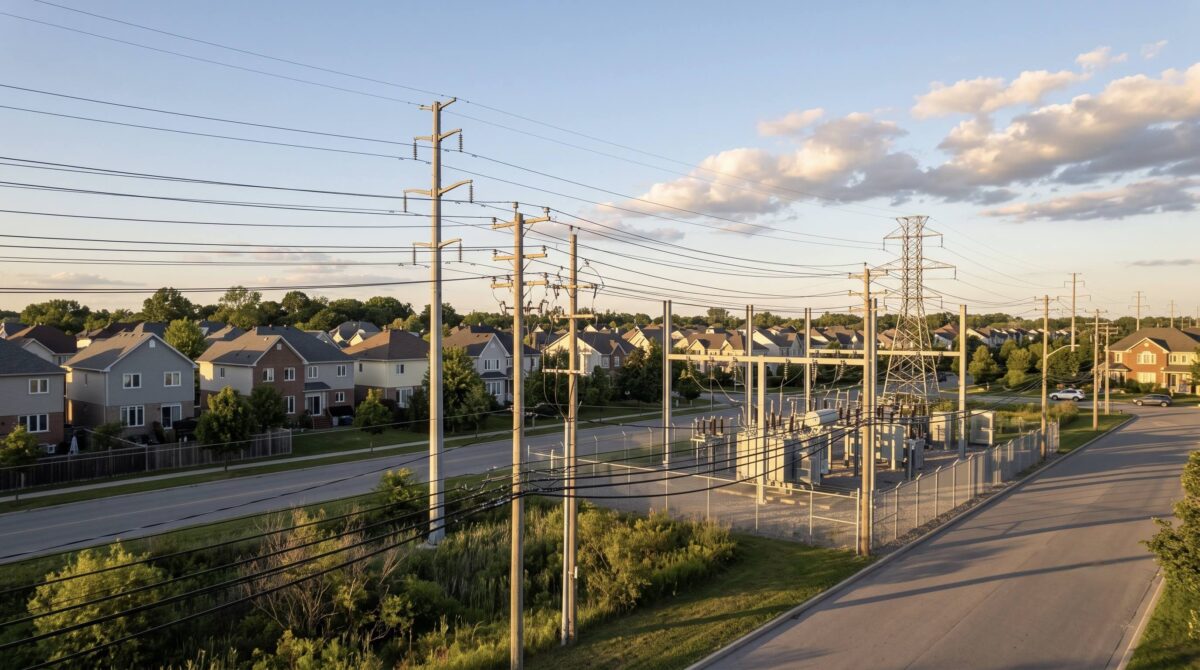
Energy affordability sits where household insecurity, utility finance, infrastructure planning, and business risk converge.
Income-support policies are often evaluated by what they cost and what happens directly to recipients. But household insecurity produces costs across the whole system — in utilities, health care, municipal services, employers, infrastructure politics, and business risk. Drawing from ESG measurement tools like Scope 3 accounting and double materiality, Arif Gasilov argues that income policy needs a wider lens: not only what transfers cost, but what they prevent.
What if a program that appeared to cost $19.3 billion did not really cost that much? That is the question raised by RMI’s analysis of a universal percentage-of-income payment plan, or PIPP, which would cap electricity bills at 4 percent of household income for eligible customers. On paper, the program would cost $19.3 billion nationally. RMI estimates that it would also generate roughly $10 billion in savings from avoided utility arrearages alone — cutting the net cost to about $9.3 billion.
Even that figure may still be too high, because avoided arrearages are only the easiest savings to see. When households with severe energy burdens choose between medicine and the light bill, the costs do not disappear; they resurface elsewhere — as heat-related illness, missed work, respiratory stress, emergency assistance, collection and reconnection costs, and municipal services for families in crisis. The budget line is only the beginning of the real cost.
The same is true of basic income and other income-support policies. When we judge them only by direct spending and direct recipient outcomes, we miss the wider system effects that can make an intervention more valuable, less costly, or both.
The stakes are not abstract. RMI finds that household utility debt in the U.S. climbed from $17.5 billion at the end of 2023 to about $23 billion by mid-2025, leaving roughly 21 million households behind on their bills. RMI has also reported that one in three U.S. households have gone without food or medicine just to keep the lights on. Existing assistance helps, but it reaches a fraction of those who qualify — only about one in six income-eligible households receives help paying energy bills. A durable income floor could buffer the households that fall outside narrowly targeted programs. But current methods of evaluation obscure the full picture.

Household insecurity is often measured at the kitchen table first, but its costs move across utilities, health systems, employers, and public budgets; Photo by Getty Images
Most income-support evaluations ask narrow questions: Did the recipient find work? Did household income rise? Did spending change? These matter — but they measure what happens closest to the program, while the downstream savings and risks land elsewhere, scattered across health systems, utilities, schools, employers, and municipalities.
Corporate sustainability faced the same problem. Before companies were asked to account for value-chain emissions, a firm could report a clean operational footprint while its emissions were simply pushed upstream to suppliers or downstream to customers. The Greenhouse Gas Protocol’s Scope 3 standard did not solve carbon accounting, but it forced a sharper question: what happens outside the reporting boundary?

The costs of household energy insecurity often appear outside the home, long after the bill comes due.
Income policy is still in its pre-Scope 3 stage. It measures the equivalent of Scope 1 — the direct effect on recipients — and rarely the equivalent of Scope 3: the effects that ripple through the rest of the system because a household did, or did not, have a stable income floor.
The evidence is not missing. The American Enterprise Institute has catalogued 122 such pilots across more than 30 states, and reviews of guaranteed-income pilots have found benefits for health, food security, and mental well-being. But those findings stay scattered across separate studies and institutional mandates, while much of the public debate stays fixed on employment effects. What is missing is a shared accounting lens.
Carbon pricing offers a useful distinction between a shadow price, which helps an organization model risk, and a real internal fee, which moves money and changes behavior. Most guaranteed-income experiments are closer to shadow prices: time-limited, small, and rarely built with a path to permanence. They are worth running, but they should be designed to illuminate system costs and open a route to lasting change, not just to yield another round of publishable data.
The deeper question is whether income policy can move from generating information to changing how costs are measured, prevented, allocated, and paid.
The same boundary problem now runs through the politics of energy infrastructure. As data-center growth drives new demand and new buildout, the question of who pays for the grid is becoming contested. The Environmental and Energy Study Institute has argued that data-center power demand is contributing to higher energy bills, while also noting that many utilities are facing large interconnection requests and major infrastructure needs.
Nevada shows why affordability cannot be treated as a household issue alone: regulators approved customer cost recovery for portions of NV Energy’s $4.2 billion Greenlink transmission project, and Reno has since approved a data-center moratorium through August 2027 amid mounting concern over local impacts. The point is not that every dollar of household rate pressure traces to one industry or one project. It is that household affordability, utility finance, infrastructure approval, and business risk are bound together.
Sustainability practitioners would recognize this as a double-materiality question: the recognition that external conditions shape a business even as the business shapes the people and places around it. Under the European Union’s Corporate Sustainability Reporting Directive, that logic has become part of corporate reporting. Applied to income policy, the same logic surfaces a feedback loop: household hardship does not only harm families; it generates collection costs, service instability, political opposition, and permitting risk for the institutions operating in those communities.
If income policy were measured this way, three things would change. Programs would be judged on net system cost rather than gross program cost — not “How much does the transfer cost?” but “What real costs does it prevent, and where do the savings show up?” Pilots would be tested for how they address system effects, not just on whether they generate data. And policymakers, utilities, employers, health systems, and impact investors would gain a clearer view of their shared interest in reducing income volatility.
The deeper question is whether income-support policy can move beyond producing information and begin changing how costs are prevented, allocated, and paid for.
For practitioners, that shift is not academic. An investor underwriting community infrastructure or utility-adjacent assets can treat household energy burden as a leading indicator of permitting and political risk, rather than a separate social concern. A foundation funding guaranteed-income pilots can require that evaluations trace avoided costs across health, housing, and utility systems — and design the pilot with a pathway to permanence rather than another finite study. A community lender or developer can read local affordability data as a signal of the operating environment ahead. In each case, the move is the same: price the externality so it reflects reality.
The tools already exist. ESG and sustainability practitioners use them to make visible what conventional accounting leaves outside the frame — externalities, value-chain effects, hidden liabilities, and hidden value. Applying that discipline to income support would not settle the basic-income debate. It would, however, force an important question: not whether we can afford income supports, but how much we are already paying because households go without them.


Related Content
Gabriel Grant on giving shareholders a way to express what matters to them
71
0
For mission-led organizations, a change of manager tests whether workplace inclusion is built to last.
71
0
Artist Rob Strati on inherited objects, the limits of market price, and the creative possibilities…
109
0

Counting what we fail to prevent, sixty seconds at a time
103
0
Comments

Deep Dives
RECENT
 335
0
335
0
 409
0
409
0
 391
0
391
0
Editor's Picks
 71
0
71
0
 71
0
71
0
 109
0
71
0
71
0
71
0
109
0
109
0
71
0
71
0
71
0
109
0
Webinars

Signed by the author. Collected at the door at Lipton Hall, NYU School of Law,…
News & Events

The 2025–2026 edition also tries to count benefit corporations

The only craft-focused project in Catalytic Capital Consortium’s new cohort.

The September 14 program and a live IFI Tool demo are online
Subscribe to our newsletter to receive updates about new Magazine content and upcoming webinars, deep dives, and events.
Become a Premium Member to access the full library of webinars and deep dives, exclusive membership portal, member directory, message board, and curated live chats.


0 Comments