Building an Impact Economy in Georgia
Connecting Georgia’s social enterprises to markets and capital



Connecting Georgia’s social enterprises to markets and capital

 72
72
 0
0
Gabriel Grant on giving shareholders a way to express what matters to them
 92
0
92
0

For mission-led organizations, a change of manager tests whether workplace inclusion is built to last.
 76
0
76
0

Why free education tools need reliable access, credible evidence, and lasting support
 404
0
404
0

What Islamic finance and impact investing can learn from each other
 440
0
440
0

After the flood, recovery capital must do more than replace what was lost
 407
0
407
0

 1007
0
1007
0
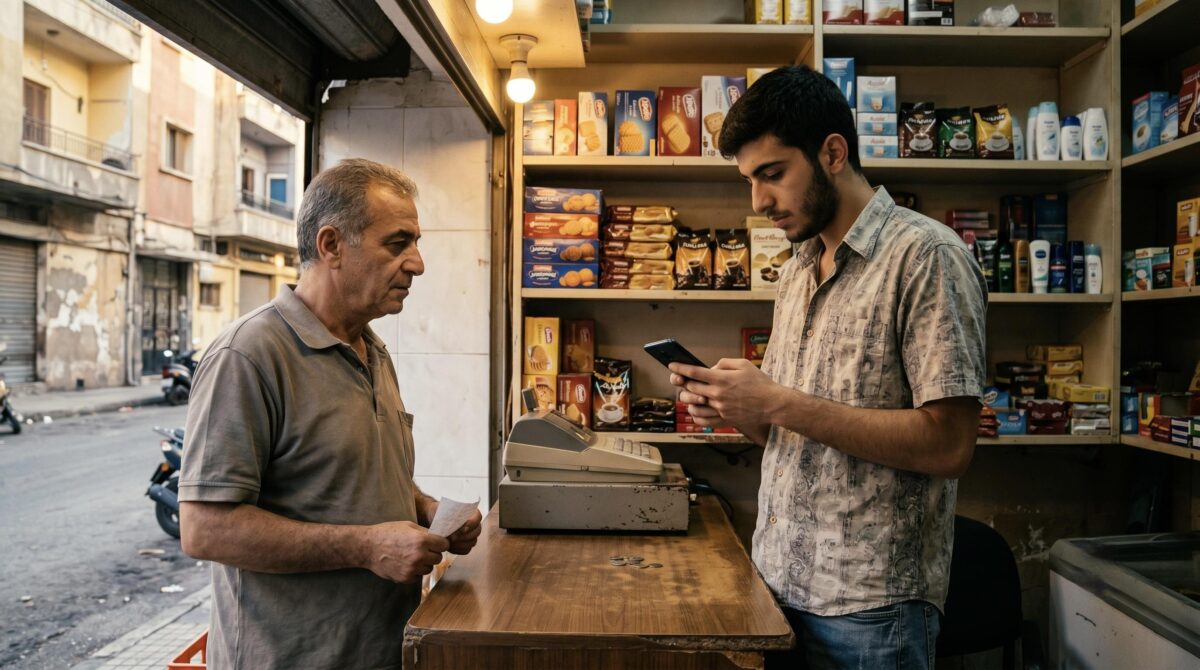
In Lebanon’s survival economy, everyday transactions increasingly depend on access to dollars, remittances, cash, and informal financial workarounds.
In Lebanon, the daily question “How much is the dollar?” reveals more than inflation. It exposes an economy where dollarization, remittances, fintech workarounds, and informal finance keep markets functioning while institutions weaken. Aiya Isabella Soueidan argues that Lebanon’s crisis economy is not yet durable recovery, but a sophisticated infrastructure of survival.
“Adde dollar?” — Arabic for “How much is the dollar right now?” — has become a daily ritual in Lebanon. It is asked in grocery shops, at pharmacy counters, over rent payments, and in family conversations about whether a transfer from abroad has arrived in time to cover school fees, fuel, or medicine. Prices are no longer fixed; they are continuously recalculated against a currency that has lost 98% of its value since 2019, with inflation peaking at nearly 269% in 2023. For many households, income no longer comes primarily from wages earned within the local economy but from remittances sent by relatives abroad — “fresh dollars” that determine whether basic consumption is possible.
For those still earning locally, the imbalance is stark. Wages often continue to be paid in Lebanese pounds while goods and services are priced in U.S. dollars. In this context, participation in the economy does not guarantee access to it.
Lebanon is not yet experiencing a durable recovery. It is operating through an economy of survival.
In volatile, conflict-affected settings, economic recovery is rarely linear. Activity often reorganizes around alternatives that compensate for institutional weakness. Lebanon’s post-civil-war economic model relied on high imports, persistent trade deficits, public debt, and financial flows sustained by diaspora capital. That model masked structural weakness until 2019, when a “Ponzi scheme”-style financial crisis, a sudden halt in capital inflows, and the collapse of trust in banks and public authorities triggered deep currency devaluation and restrictions on withdrawals. The economy contracted sharply — by more than 38% from pre-crisis levels — while the banking sector became largely inoperative because of frozen deposits and insufficient credit.
In place of a formal recovery process, an emergency economy surfaced, marked by dollarization, cash transactions, informal finance, and the replacement of institutional mechanisms with private and external flows. Households and firms continue to participate in the economy, but only under conditions that fundamentally alter how markets function and who can access goods and services.
This crisis does not exist apart from conflict. The 2023–24 Israel-Hezbollah war added displacement, infrastructure destruction, security risk, and lost productivity to an already fragile system. According to the World Bank’s Rapid Damage and Needs Assessment, the conflict imposed an estimated $14 billion in economic cost, including $6.8 billion in physical damage and $7.2 billion in economic losses, with recovery and reconstruction needs estimated at $11 billion.
Although macroeconomic indicators showed a cautious rebound in 2025, continuing instability and renewed strikes in 2026 have kept recovery conditions highly fragile. Lebanon’s survival economy is therefore shaped by both financial collapse and active insecurity.
Lebanon’s financial crisis is not merely defined by inflation. It is defined by the erosion of monetary authority itself. In most recovery settings, a central bank attempts to stabilize the economy through interest rates, liquidity tools, and monetary policy. In Lebanon, that mechanism has largely collapsed. As the Lebanese pound lost credibility as a store of value, businesses and households shifted savings and transactions into U.S. dollars and cash.
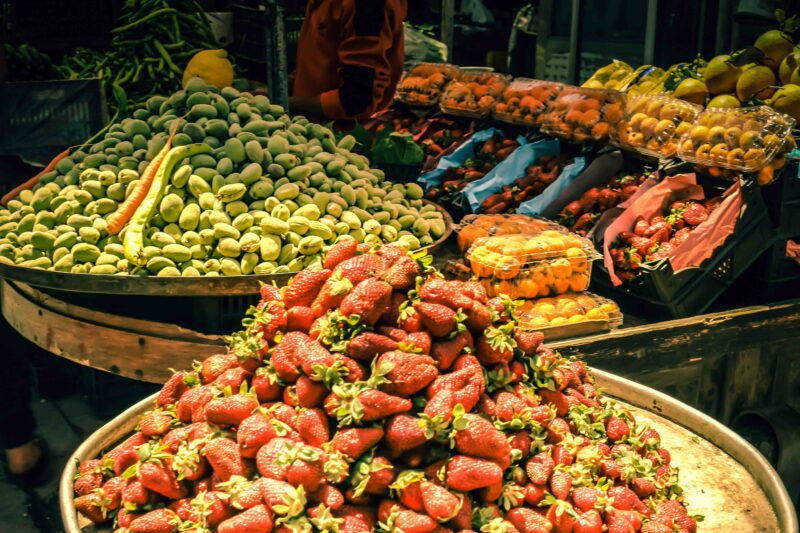 Markets remain open, but for households earning in Lebanese pounds, the basic question is whether income can still reach the price of food, rent, medicine, and fuel.
That shift toward dollarization was rational. When prices move quickly and the local currency cannot hold value, pricing in dollars gives firms a measure of predictability. But the adaptation creates a fundamental imbalance: businesses use dollars to protect themselves from inflation, while many workers still earn in Lebanese pounds.
Dollarization keeps some markets open and stabilizes prices for firms, but it also restricts access for households. Access to foreign currency becomes a prerequisite for economic participation, not merely employment. As economic activity moves into cash and informal channels, transactions also become harder to tax. That limits the state’s ability to generate revenue and invest in public infrastructure, reinforcing the very institutional weakness that led households and firms to abandon formal channels in the first place.
The consequences of dollarization extend beyond price volatility. Lebanon now operates as a bifurcated economy in which access to basic goods and services depends not only on employment, but on the currency in which income is received. For households earning Lebanese pounds, purchasing power has collapsed while the cost of necessities has risen sharply. In 2025, the cost of a basic food basket for a family of five was estimated at roughly 44 million Lebanese pounds — about $490 to $500 — while some wages had fallen below $50 per month during the crisis.
ESCWA estimated in 2021 that Lebanon’s multidimensional poverty rate reached 82% of the population. The point is not simply that the economy stopped functioning. Goods still move. Transactions still occur. Markets remain open. The deeper problem is that the system is calibrated for those who can access dollars, while many households participate in markets without being able to afford them.
In Lebanon, participation in the economy does not guarantee access to it.
In this setting, inflation is not primarily the result of overheated demand. It is driven by exchange-rate collapse, monetary fragmentation, and institutional failure. Standard policy responses do not address the underlying imbalance when wages, prices, savings, public salaries, and household consumption are effectively operating in different currencies.
In the absence of functioning banks and reliable wages, remittances have become one of Lebanon’s primary sources of liquidity. Small, family-run businesses often operate in cash and depend on diaspora transfers to finance rent, inventory, healthcare, education, and basic operations. In situations where formal institutions have failed, remittances become more than financial support. They become infrastructure.
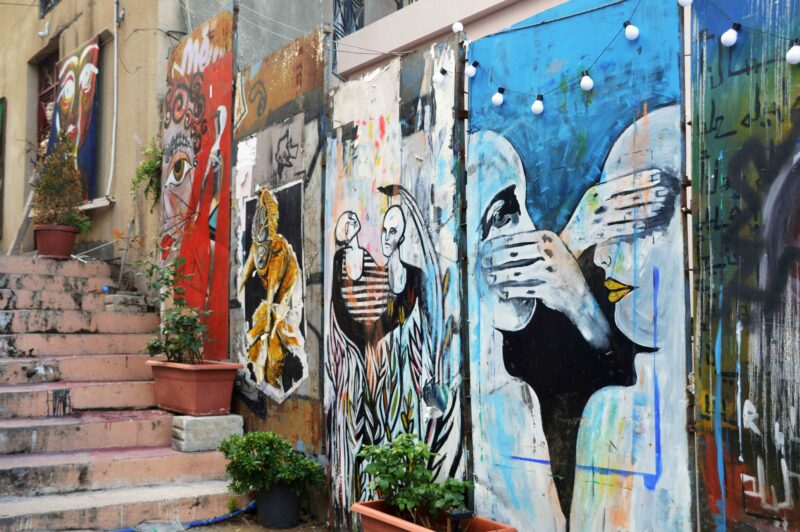 Lebanon’s crisis has produced not only financial collapse, but a deeper struggle over dignity, access, and the institutions required for recovery.A UNDP report found that Lebanon had received an average of $6.5 billion to $6.8 billion in remittances, while World Bank data show remittances reached roughly 53% of GDP in 2021, placing Lebanon among the world’s most remittance-dependent economies. Mercy Corps reported that 15% to 30% of Lebanese households depend on these flows for basic needs.
This survival function, however, comes with a structural trade-off. Remittances sustain consumption, but they do not automatically generate productive investment, credit creation, tax revenue, or institutional reconstruction. They allow households and firms to keep moving, but often outside the systems that would make recovery durable.
That is the logic of “stabilized fragility”: an economy can avoid total collapse by keeping markets open and households fed, while remaining trapped in low growth, weak institutions, and structural vulnerability.
Purpl is the clearest enterprise example in this article, but it is part of a wider survival ecosystem rather than a standalone solution. Across Lebanon, households and small businesses rely on cash pickup networks, informal money operators, diaspora transfers, digital wallets, and family-to-family support to move value around a banking system many people no longer trust. These mechanisms are pragmatic and often essential. They also show how much of Lebanon’s recovery burden has shifted from public institutions to households, diaspora networks, and private workarounds.
The Lebanese fintech Purpl, founded in 2021, illustrates how enterprises adapt around institutional failure. With banks imposing arbitrary capital controls, remittances increasingly moved through cash channels — sometimes carried physically by people returning to Beirut to avoid unreliable banks. Existing transfer companies could charge 9% to 12% per transaction, creating a need for lower-cost access to “fresh dollars.” Purpl emerged as a platform allowing diaspora members to send money that recipients could cash out in fresh USD.
That function became more acute during the 2024 conflict, as destruction and displacement further disrupted economic activity in southern Lebanon and parts of Beirut. Reporting based on Banque du Liban data found that diaspora transfers surged to $6.8 billion in 2024, before falling 9.3% in the first nine months of 2025 as regional conditions shifted.
Purpl helps prevent collapse, but it does not, by itself, rebuild the institutional architecture that recovery requires.
Purpl is therefore not a simple recovery success story. It is a useful and necessary workaround in a broken financial system. It helps households access liquidity, reduces friction for diaspora transfers, and gives small firms another route around banks that have lost public trust. But it also reveals the depth of the institutional failure: a fintech platform can make a survival system less punishing, but it cannot by itself rebuild monetary authority, public revenue, productive credit, or confidence in the banking system.
For the impact sector, the lesson is not that one fintech company can solve Lebanon’s crisis. It is that recovery work in a collapsed financial system must connect several layers at once: lower-cost remittance channels, accessible liquidity for households, working-capital tools for small firms, transparent pathways for diaspora capital to support enterprise development, and institutional reforms that gradually make formal finance trustworthy again.
The mechanisms that sustain Lebanon’s emergency economy also limit its capacity for long-term recovery.
First, currency collapse has undermined the state. Public-sector salaries have been hollowed out by inflation, and an Institute of Finance briefing estimated a 71% vacancy rate in public administrations. Recovery requires institutional capacity, but the institutions needed to lead recovery have themselves been depleted.
Second, informality keeps economic activity alive while pushing much of it beyond taxation and regulation. Cash transactions, informal money exchange, diaspora transfers, and parallel financial channels allow households and firms to function, but they also weaken the fiscal base needed for public investment.
Third, Lebanon is experiencing accelerating brain drain. Skilled workers who might help rebuild public systems, private firms, and civic institutions are leaving because wages, services, and opportunity have collapsed.
These dynamics are not separate from recovery. They define whether recovery is possible. An economy can transact, import, send, receive, and sell while still lacking the institutional capacity to transform survival into development.
Lebanon’s emergency economy offers several lessons for impact investors, fintech actors, diaspora-finance practitioners, and recovery funders working in unstable, conflict-affected contexts.
First, liquidity matters before investment readiness. In environments where banking systems have collapsed, firms may not need accelerator programs or pitch competitions as much as flexible working capital, affordable transfers, short-duration credit, and safe channels for household and enterprise liquidity.
Remittances have become more than financial support. They have become infrastructure.
Second, informality should not be formalized by force. When informal systems are carrying the economy, trying to shut them down without building credible alternatives can deepen exclusion. Practitioners should engage informal structures as they are while designing pathways toward progressive formalization: better documentation, safer digital rails, consumer protection, and tax systems that people trust enough to use.
Third, diaspora flows need bridges into productive investment. Remittances currently sustain consumption, but transparent, accessible tools could help redirect some diaspora capital toward enterprise development, employment creation, and local recovery without undermining the household lifeline those flows provide.
Fourth, institutional reconstruction is not optional. Public administration, civil-service capacity, financial regulation, and credible monetary governance are not background conditions. They are the infrastructure of recovery. Without them, fintech and remittances remain shock absorbers rather than engines of transformation.
Lebanon’s post-civil-war economic model was built on external flows and institutional weakness. When that model collapsed in 2019, a more fragile version of the same architecture took its place: dollarization, remittances, cash, fintech workarounds, informal exchange, and household-level risk absorption. Renewed conflict has intensified the exposure, adding destruction and displacement to an economy that had not yet rebuilt its foundations.
Stable institutions, accessible finance, productive investment, and a credible currency are prerequisites for durable recovery. Lebanon currently has open markets and completed transactions, but it is missing many of the systems that convert market activity into broad-based resilience.
Built outside the country’s banks and formal economy, Lebanon’s current system is a sophisticated infrastructure of survival. To move beyond stabilized fragility, the country will need institutions capable of governing currency, restoring trust, supporting enterprise, and distributing risk more fairly. Until then, Lebanon’s economy will continue to postpone recovery because it has not yet been given the conditions to begin.
--
This article is part of Impact Entrepreneur's Impact Journalism Institute, in collaboration with Arts4Refugees' A4R Media Hub, supporting emerging Gen Z journalistic voices covering how the Impact Economy is being built — and tested — in communities affected by conflict, displacement, and economic fragility.


Related Content
Connecting Georgia’s social enterprises to markets and capital
72
0
Gabriel Grant on giving shareholders a way to express what matters to them
92
0
For mission-led organizations, a change of manager tests whether workplace inclusion is built to last.
76
0

Artist Rob Strati on inherited objects, the limits of market price, and the creative possibilities…
115
0
Comments
Deep Dives
RECENT
 404
0
404
0
 440
0
440
0
 407
0
407
0
Editor's Picks
 72
0
72
0
 92
0
92
0
 76
0
72
0
92
0
72
0
92
0
76
0
76
0
72
0
92
0
72
0
92
0
76
0
Webinars

Signed and personally inscribed — you'll write the inscription as you order. Limited · 50…
News & Events

The board can add 2% for each 50% rise in the company’s value

Applications close December 2, or sooner once 250 arrive

Repeat borrowers in Colombia and Indonesia took it over the line
Subscribe to our newsletter to receive updates about new Magazine content and upcoming webinars, deep dives, and events.
Become a Premium Member to access the full library of webinars and deep dives, exclusive membership portal, member directory, message board, and curated live chats.


0 Comments