When Automation Outruns Trust
Why verified human judgment remains essential to digital scale



Why verified human judgment remains essential to digital scale

 104
 0

Whose evidence counts
 77
0

The emerging movement to reshape capitalism using purpose-driven M&A
 118
0

For mission-led organizations, a change of manager tests whether workplace inclusion is built to last.
 149
0

Artist Rob Strati on inherited objects, the limits of market price, and the creative possibilities…
 167
0

Counting what we fail to prevent, sixty seconds at a time
148
0
 6951
0

Recognizing youth as vital architects of systems change — and removing the barriers in their way
Twenty-eight-year-old Muhammad Hassan Dajana was born and raised in a small town in northwestern Pakistan, along the banks of the Indus River. He would watch the horizon darken as monsoon clouds swelled and then break open in a relentless downpour. The surging waters swept up single-use plastics from every corner of nearby municipalities, clogging narrow drains and waterways. The ensuing floods wreaked havoc. For Hassan and his community, climate action is not a distant concern — it is a matter of survival.

Muhammad Hassan Dajana
Witnessing the repercussions of climate change and pollution firsthand ignited in him a deep sense of purpose. One that has set him on a determined path to confront the crisis. He has since led a number of impactful initiatives, including Plastic Free Pakistan, which has been tackling single-use plastics since 2019; Our Green Masjids, which brought sustainability education into religious seminaries between April and November 2019; and Our Green Blue Rawalpindi, a project that ran from March 2022 to November 2023, empowering indigenous communities to plant native trees in urban hotspots as shade and carbon sinks.
Hassan is not alone. He is part of a growing global movement of young people stepping up to address the issues that matter most to them — from climate change and diversity to unemployment and geopolitical conflict. Through innovative and entrepreneurial approaches, they are reshaping economies, challenging outdated systems, and building inclusive solutions to the world’s most pressing problems.
A recent global survey of 4,000 young people across 140 countries found that 83% view the world as full of opportunity, and 74% feel empowered to act on the issues they care about. This optimism fuels a solutions-focused mindset — one that drives innovation, builds resilience, and enables effective collaboration.
Young people are directly impacted by today’s decisions and, therefore, deeply invested in shaping their outcomes. The 2025 Possibilists Study reveals a “strong sense of collective purpose” among youth, most of whom are driven not by individual gain, but by a desire to support their communities and empower others to get involved in changemaking.
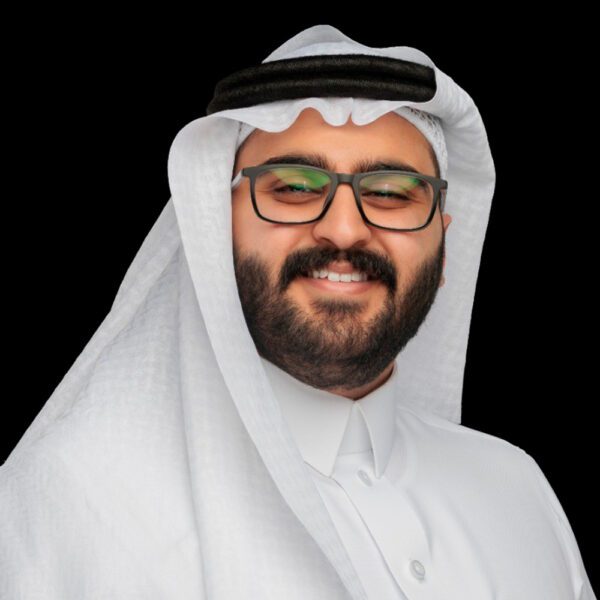
Faisal Alsheri
In 2020, Faisal Alshehri responded to widespread youth unemployment by launching Ataa Tech, a nonprofit that offers elementary-level tech courses in Arabic. The program has supported more than 13,000 Arabs from over 30 countries. Faisal later founded Olo, a for-profit company that provides upskilling programs and recruitment tools to connect talent with better job opportunities. Hundreds of young professionals have graduated from Olo’s programs, with 75% achieving a major milestone — such as a new job, promotion, or career switch — within six months.
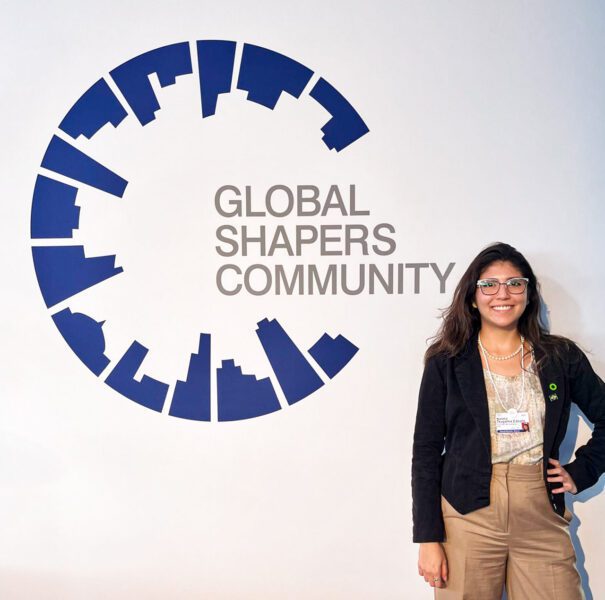
Natalia Tsuyama Cócolo
Meanwhile, Natalia Tsuyama Cócolo has dedicated her time and efforts to supporting youth engagement in local and global platforms such as the Feminist Action for Climate Justice Coalition (UN Women) and the G20 Civil Society Engagement Group (C20). She leads and mentors initiatives focused on feminist climate solutions, youth political participation, capacity-building and intersectional advocacy, especially from underrepresented territories in Brazil.
Like Hassan, Faisal, and Natalia leaders are part of the Global Shapers Community — a worldwide network of active changemakers with over 500 local hubs.
With nearly half of the global population under the age of 30 — and 70% in sub-Saharan Africa — young people represent not only the future, but the present. It is imperative we listen.
Despite their vision, energy, and relevance, many young social innovators face systemic barriers that prevent them from scaling their impact.
These pressures — compounded by economic instability, conflict, and climate crises — are taking a toll on youth mental health. Anxiety and burnout are on the rise, even among the most motivated leaders.
We are at a pivotal moment in history. The global challenges we face — environmental, social, political, economic — are deeply interconnected. Yet those most invested in long-term solutions remain sidelined by outdated systems and power structures.
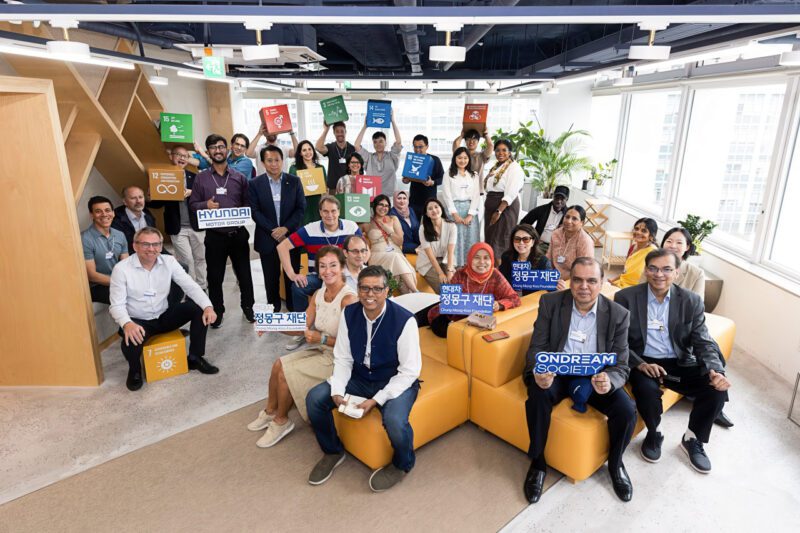
Schwab Foundation Summit entrepreneurs
This is not to diminish the contributions of earlier generations. Many of today’s social innovations and technological breakthroughs were built on their efforts. But sustaining this momentum — and advancing it — requires creating space for new leadership. That means embracing intergenerational collaboration, shifting power, and intentionally catalyzing youth-led action.
The private and public sectors both have critical roles to play in this transition. With the right resources, mentorship, and policy environments, young changemakers can drive transformative impact.
Zlto is a powerful case in point. Founded by Allan van der Meulen at age 20, Zlto is a South African platform that combats youth unemployment by rewarding community engagement and skill-building with a digital currency. Supported by RLabs and its GROW Academy — and later backed by Google — Zlto has since processed over 3 million transactions, engaged more than 850,000 users, and is now expanding internationally.
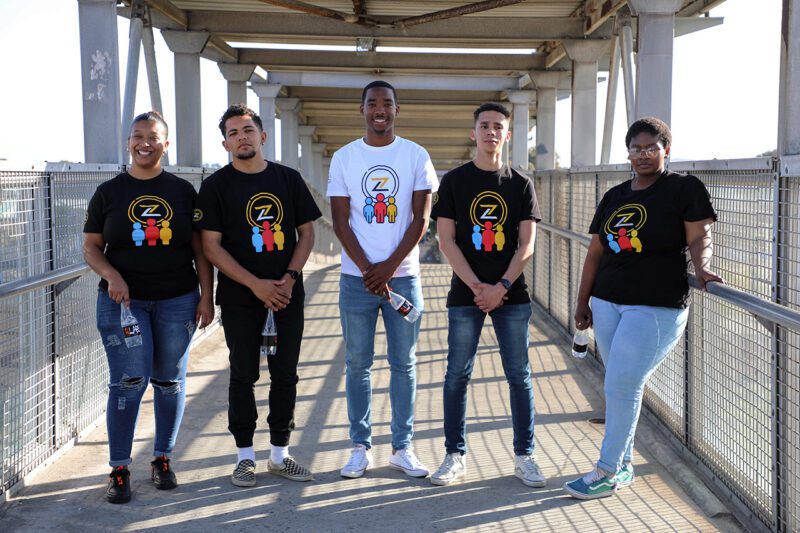
Zlto team; Image Coutesy of Zlto
To replicate and scale such success stories, the Schwab Foundation — in collaboration with the Global Shapers Community, SAP, and Hyundai Motor Group — has launched a three-year initiative. It brings together 15 Global Shapers who are also social innovators, Schwab Foundation Awardees, and key ecosystem partners. Their collective goal: to identify and remove systemic barriers, shift capital and influence, and build authentic cross-generational partnerships.
The question is no longer if young people can lead change. The question is: are we ready to support them as they do?


Related Content
Why verified human judgment remains essential to digital scale
104
0
Whose evidence counts
77
0
The emerging movement to reshape capitalism using purpose-driven M&A
118
0

Connecting Georgia’s social enterprises to markets and capital
 144
0
Comments
Deep Dives
RECENT
 149
0
 167
0
 148
0
Editor's Picks
 104
0
 5235
0
 4839
0
104
0
104
0
 77
0
 118
0
Webinars
Signed and personally inscribed — you'll write the inscription as you order. Limited · 50…
News & Events

A GIIN survey finds capital concentrated and confidence steady

Each donor gets one vote, whatever the size of the gift

Most deals will run from $500,000 to $2 million
Subscribe to our newsletter to receive updates about new Magazine content and upcoming webinars, deep dives, and events.
Become a Premium Member to access the full library of webinars and deep dives, exclusive membership portal, member directory, message board, and curated live chats.


0 Comments