When Impact Stops at the Office Door
For mission-led organizations, a change of manager tests whether workplace inclusion is built to last.



For mission-led organizations, a change of manager tests whether workplace inclusion is built to last.

 44
44
 0
0

Artist Rob Strati on inherited objects, the limits of market price, and the creative possibilities…
 85
0
85
0

Counting what we fail to prevent, sixty seconds at a time
89
0

How states can crowd in local early-stage capital
 369
0
369
0

Why last-mile healthcare needs an operating model, not just more mobile clinics
 352
0
352
0
How Australia’s succession wave could turn ownership into a funding model
 466
0
466
0
 4597
0
4597
0
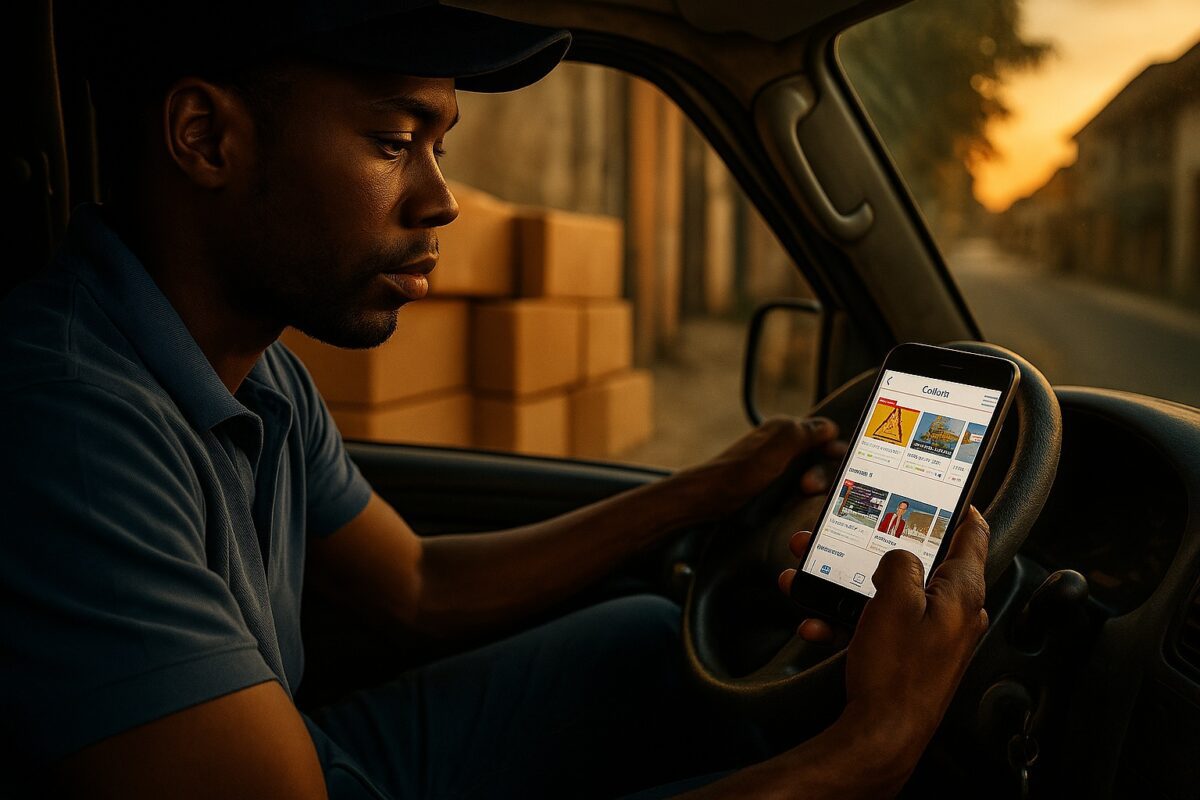
How mobile, market-driven learning is aligning people’s skills with what labor markets actually need.
Across much of the world today, unemployment is not a lack-of-talent problem — it is a mismatch problem. Millions of motivated, ambitious people are held back from building a dignified, sustainable future not because they lack drive, but because they lack the right skills to access the jobs their economies urgently need to fill.
This contradiction has become one of the defining labor challenges of our time.
According to the World Economic Forum’s Future of Jobs Report 2025, 39% of core skills used in today’s jobs are expected to change or become obsolete by 2030, a level of disruption that implies a major global need for upskilling and reskilling.
The gap is even sharper in the Global South. In Africa, the International Finance Corporation estimates that over 230 million jobs will require digital skills by 2030, while current training systems remain far behind that demand, particularly outside major urban centers. In India, a recent skills report highlights that only 56.35% of candidates are considered ‘employable’. And even in advanced economies, the skills gap is now among the most persistent barriers to economic growth.
Across the Global South and beyond, a new generation of organizations is stepping into this void — operating at the intersection of education, technology, and employment. Their goal: to close the disconnect between employers desperate for talent and workers eager for opportunity, using training models that are faster, more practical, more targeted, and directly tied to private-sector demand.
For years, the founders of 21CC Education — an India-based organization working across global labor markets — observed the same pattern repeating across industries: decisions made in polished boardrooms rarely resembled the realities playing out on factory floors.
Even in advanced economies, the skills gap is now among the most persistent barriers to economic growth.
Companies invested heavily in equipment, software, and infrastructure, yet invested far less in the people expected to operate those systems. As the founders jokingly noted, “no country had a monopoly on bad quality.” The problem was neither cultural nor regional. It was structural: people were not being trained properly — and training was no one’s priority.

21CC Education CEO Sanjay Tiwari
When 21CC Education launched in 2019, it did so from this frustration and from a conviction that learning needed to be reimagined entirely. If training could be made relevant, accessible, and even enjoyable, it could transform not only workplace performance but also the futures of millions left behind by traditional training systems.
For CEO Sanjay Tiwari, the mission was personal. He often recounts the story of his grandfather in early-20th-century Narsinghpur, Central India — a young boy selling homemade sweets on the street to help feed his family, washing up at day’s end, and studying under a streetlight.
More than a century later, Tiwari reflects, “selling food on the streets of India is still how children supplement the family income. The desire to learn is there. The opportunity is not.”
Today, with the global population above eight billion, hundreds of millions of people are searching for the skills needed to enter the workforce or upgrade their livelihoods. Meanwhile, industries across continents are desperate for trained workers: logistics companies needing thousands of drivers overnight, installation firms struggling to meet European compliance requirements, and employers worldwide unable to keep pace with shifting technologies.
The labor force exists — motivated, abundant, eager. What is missing are the right skills.
The widening gap between real-world demand and training supply pushed 21CC Education to invert the model. Instead of treating training as a bureaucratic formality, the organization positioned it as a dynamic, market-driven bridge between people and opportunity.
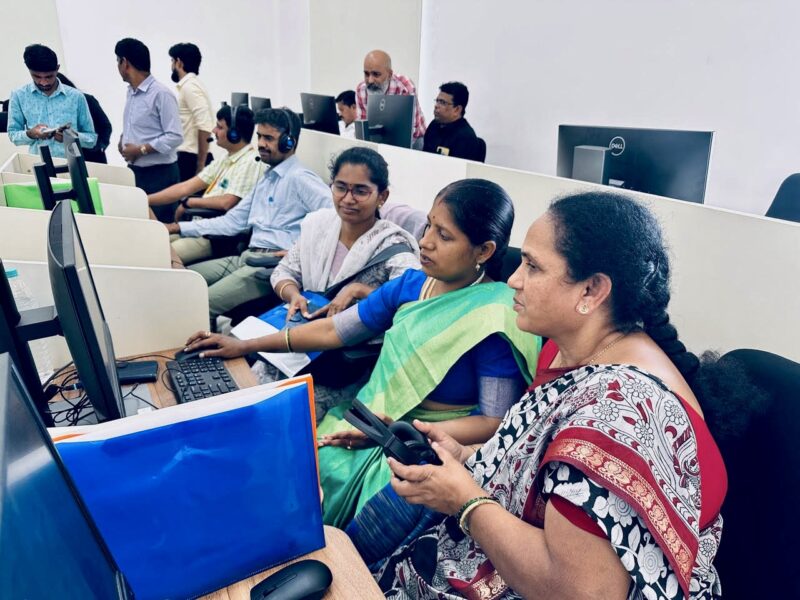
21CC Education Training Session
The starting point was simple: sit down with employers and ask, “What exactly do you need someone to know for this job tomorrow morning?”
Rather than offering long, generic courses, 21CC co-designs role-specific training that mirrors actual tasks and operating environments. Their team of writers, illustrators, and animators works with companies to translate standard operating procedures, safety guidelines, customer-service expectations, and compliance rules into short, scenario-based lessons that workers can understand and apply immediately.
These lessons are delivered through 21CC Skilled, a mobile-first learning app offering gamified modules, films, and animations. Learning shows up as bite-sized challenges, interactive stories, and quick videos that fit naturally into the rhythm of a delivery route, warehouse shift, or construction site.

For workers, it feels nothing like traditional education. They are not being lectured; they are playing, practicing, and repeating. Training becomes woven into their daily lives — something they can access on a phone, between shifts, on a bus, or during a break.
Progress is tracked through points, badges, and completion rates. Over time, these micro-credentials become something more meaningful: a digital skills passport that reflects what workers can actually do — in a language employers recognize.
After reimagining how people learn, 21CC tackled the next crucial question: what happens after training?
In a world where unemployment and skills shortages grow side by side, 21CC’s approach reframes what “training” can be.
The mobile platform was designed not only to teach, but also to connect. A worker in Lagos, Nairobi, Jaipur, or Casablanca can now complete a course and instantly appear on a recruiter’s dashboard. For employers with large-scale recruitment needs, the shift is transformative. Instead of sorting through CVs or relying on guesswork, hiring managers can see — immediately — who has mastered the required skills and who is ready to start work the next morning.
One of the clearest illustrations of this model’s potential comes from 21CC’s partnership with Sewa Bharat, an NGO expanding economic opportunities for women across India.

Together, they co-designed a three-month program introducing women from Haryana and West Bengal to the logistics industry — a field that had long excluded women and one many participants had never imagined entering. For most, it was their first step into paid, organized employment.
The program blended hands-on lessons, digital micro-learning, confidence-building exercises, and practical orientation to help women navigate male-dominated workplaces. It was not only skilling; it was exposure, reassurance, and an entry point into a new economic identity.
Eighteen months later, the impact was striking. An evaluator from the Wadhwani Foundation reported that 18 of the 145 women trained had already been promoted to team leaders or supervisors — a generational shift in many households. Women once on the margins of the labor market were suddenly leading teams, managing workflows, and holding positions of authority.
To meet fast-shifting labor needs, 21CC is now investing in new sectors. While operational costs are covered through subscriber fees and corporate licenses, the organization is raising capital to build AI-powered tools that personalize skilling pathways and offer tailored career guidance — helping workers identify opportunities they may never have known existed.
Ultimately, the model works because every stakeholder benefits.
Workers stay motivated because learning is relevant and accessible.
Companies receive staff who learn quickly, make fewer mistakes, and stay longer.
Foundations and CSR programs gain measurable outcomes: higher incomes, greater workforce participation for women, and more stable households.
But its most important contribution is conceptual.
In a world where unemployment and skills shortages grow side by side, 21CC’s approach reframes what “training” can be. It is no longer a perfunctory checkbox, a classroom certificate, or a capacity-building line item. It becomes a living bridge between learning and earning — especially for those historically shut out of opportunity.
The skills mismatch is not inevitable. It reflects systems designed without the people they aim to serve and without the employers who depend on them. The story of 21CC Education shows that when training is built with both workers and companies in mind, the gap begins to close.
A delivery driver in Nairobi, a young woman in Haryana, a warehouse worker in Casablanca: none are “unskilled.” They are, more often, under-trained and under-seen. Provide relevant skills in formats that fit their lives, connect them directly to employers who recognize their value — and the narrative shifts from shortage and frustration to mobility and leadership.
If there is a lesson here for governments, donors, and businesses, it is this:
the future of work will not be won by whoever has the most technology, but by whoever builds the strongest bridges between learning and earning.


Related Content
For mission-led organizations, a change of manager tests whether workplace inclusion is built to last.
44
0
Artist Rob Strati on inherited objects, the limits of market price, and the creative possibilities…
85
0
Counting what we fail to prevent, sixty seconds at a time
89
0

How collateral rules and payment terms keep impact capital out of reach
197
0
Comments
Deep Dives
RECENT
 369
0
369
0
 352
0
352
0
 466
0
466
0
Editor's Picks
 44
0
44
0
 85
0
85
0
 89
0
44
0
85
0
44
0
85
0
89
0
89
0
44
0
85
0
44
0
85
0
89
0
Webinars
Signed by the author. Collected at the door at Lipton Hall, NYU School of Law,…
News & Events

The September 14 program and a live IFI Tool demo are online

Pre-seed and seed startups can apply on a rolling basis

Their Built platform helps teams design, launch and run funds
Subscribe to our newsletter to receive updates about new Magazine content and upcoming webinars, deep dives, and events.
Become a Premium Member to access the full library of webinars and deep dives, exclusive membership portal, member directory, message board, and curated live chats.


0 Comments