The Economics of Belonging
How displaced Artsakhtsi are rebuilding livelihoods



How displaced Artsakhtsi are rebuilding livelihoods

 157
157
 0
0

 183
0
183
0

A common ledger for moving capital upstream
 222
0
222
0

A trust-based philanthropy model for culture change
 278
0
278
0

What Cyprus’s bicommunal enterprises reveal about trust, trade, and divided economies
 318
0
318
0

How impact entrepreneurs can build a more flexible capital stack
 359
0
359
0
Upcoming Events


 5465
0
5465
0

As public awareness of so-called “ESG investing” grows, a frustrating gap has emerged between its promise and its reality. Regulatory and media attention has rightly raised questions about how well ESG data integrates with real-world sustainability. But the problem runs deeper than flawed metrics — the dominant ESG framework itself has been co-opted and compromised, turning a once-useful tool into a dangerous distraction from the real work of building a sustainable economy.
This isn’t the fault of a single actor, but of a system shaped by asset managers, ratings agencies, consultants, and regulators whose incentives remain tethered to the old economy. The result: ESG has become an exercise in risk optics rather than systemic change.
Many of us wanted ESG to work. The premise was sound: companies that manage environmental, social, and governance risks well should, in theory, be more resilient and profitable.

In practice, however, the framework has been captured by the very incumbents it was meant to challenge. Consider this: MSCI gives Chevron — whose business model depends on accelerating climate change — an “A” ESG rating. Meanwhile, Moderna, whose core purpose is saving and prolonging human life, earns only a “BBB.”
That isn’t a bug in the system; it is the system.
Many of us wanted ESG to work. The premise was sound.
When frameworks reward companies driving ecological collapse and penalize those solving global crises, we are witnessing a methodological and ethical failure. ESG ratings now often serve to greenwash stranded assets, declaring that companies undermining our planetary life-support systems are “low risk” simply because they publish sustainability reports or have well-structured boards.
Let’s be clear: rigorous analysis of environmental, social, and governance factors is indispensable to modern investing. The issue lies in the framework used for that analysis. ESG as practiced is relative, backward-looking, and optimized for yesterday’s economy.

ESG asks: “Does this beverage company manage its water risk well?”
We ask: “Is this company’s business model compatible with a water-scarce future?”
ESG asks: “Does this fossil fuel company have good community relations?”
We ask: “Why analyze a stranded asset whose core product drives the crisis?”
ESG asks: “What’s this mining company’s safety record?”
We ask: “Does this company’s technology accelerate or impede the transition to a de-risked, post-scarcity economy?”
The difference isn’t subtle. ESG accepts the current economy and looks for marginal improvements; we recognize that the current economy is the source of systemic risk and invest in what replaces it.

This is why Green Alpha developed the Next Economy™ framework. It’s not a rebranding of ESG but a rigorous investment discipline grounded in three principles:
The transition to a sustainable economy is not optional; it is the most predictable source of both opportunity and disruption of our time.
When frameworks reward companies driving ecological collapse and penalize those solving global crises, we are witnessing a methodological and ethical failure.
For fiduciaries, continuing to rely on compromised ESG ratings is more than a missed opportunity — it’s a misreading of systemic risk. When analytical tools give high marks to companies that perpetuate that risk, it’s time to reach for better tools.
We’re not interested in finding the best-governed coal company. We’re investing in the energy systems, technologies, and resource models that make coal obsolete.
While others debate how to grade the old economy, we are financing the new one. The future of investing isn’t about marginally better ESG reports — it’s about aligning capital with the enterprises that will define economic reality for the rest of this century.
Companies clinging to unsustainable models aren’t “poorly rated”; they’re obsolete. No amount of ESG lipstick can alter that fact. For investors serious about returns and risk, the choice is clear: move beyond the theater of compromised ratings and embrace a discipline that authentically reflects the transformation ahead.
If the next economy is to be truly generative, then investors, entrepreneurs, and policymakers must share a new baseline — compatibility with a livable planet.



Related Content
183
0
A common ledger for moving capital upstream
222
0

How states can crowd in local early-stage capital
216
0

Why last-mile healthcare needs an operating model, not just more mobile clinics
 154
0
154
0
Comments
Deep Dives
RECENT
 278
0
278
0
 318
0
318
0
 359
0
359
0
Editor's Picks
 157
0
157
0
 183
0
183
0
 222
0
157
0
183
0
222
0
222
0
157
0
183
0
222
0
Webinars
Featuring
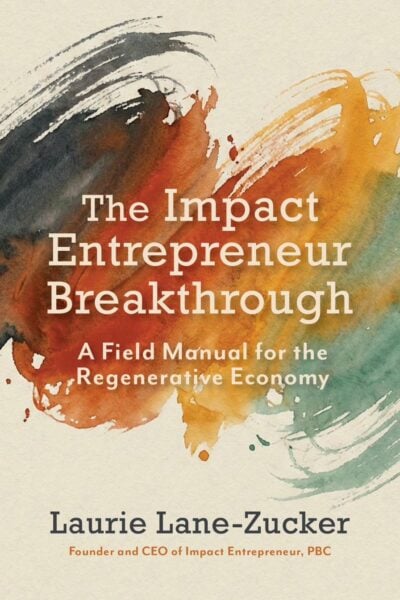
Laurie Lane-Zucker in conversation with Jeffrey Hollender, Sarah Holloway and Sara Minard
September 30 - 6:00 PM EST
Signed by the author. Collected at the door at Lipton Hall, NYU School of Law,…
Signed and personally inscribed — you'll write the inscription as you order. Limited · 50…
News & Events


For AI governance, strategic foresight, digital economy policy, and institutional design.

Helps foundations, DAF holders, and family offices model how impact-first investing can extend charitable capital
Subscribe to our newsletter to receive updates about new Magazine content and upcoming webinars, deep dives, and events.
Become a Premium Member to access the full library of webinars and deep dives, exclusive membership portal, member directory, message board, and curated live chats.

0 Comments