Dealmaking for Shared Prosperity
The emerging movement to reshape capitalism using purpose-driven M&A



The emerging movement to reshape capitalism using purpose-driven M&A

 58
 0

Connecting Georgia’s social enterprises to markets and capital
 106
0
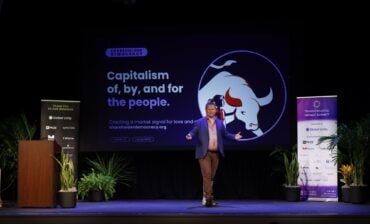
Gabriel Grant on giving shareholders a way to express what matters to them
 108
0

Why free education tools need reliable access, credible evidence, and lasting support
 473
0

What Islamic finance and impact investing can learn from each other
 477
0

After the flood, recovery capital must do more than replace what was lost
 428
0
 58
0

Values-aligned acquisitions can help purpose-driven businesses build economic power while protecting the people and capabilities behind their growth; Photo by Getty Images
Purpose-driven businesses need greater economic power to influence how capitalism works. Sandra Stewart explores how values-aligned mergers and acquisitions could help them grow — and why financing choices, seller preparedness and mission protections matter to the shared prosperity those deals aim to create.
Purpose-driven businesses aren’t going to grow organically. Not big enough or fast enough, anyway, to produce the shared-prosperity economy that impact entrepreneurs strive to create.
The solution, says a growing cadre of legal, finance, and acquisition experts — dubbed “the new dealmakers” at this year’s B Corp Champions Retreat — is mergers and acquisitions. Not the rapacious strip-and-flip model that makes a few people richer while leaving employees, suppliers, customers, and communities poorer, but a values-driven M&A approach designed to build economic power for purpose-driven businesses.
“In the United States and Canada — in the world, really — we’ve built an ecosystem around how to start a business and how to scale a business. But we don’t have anything like that around how to buy a business or how to exit a business,” said Hannah Sandmeyer, CEO of Up & Over Advisors, a buy-side M&A sourcing firm focused on values-aligned ownership transitions.
She and other consultants and investors are looking to create that missing infrastructure for purpose-driven businesses, spurred by what McKinsey calls “the Great Ownership Transfer,” a gathering wave of small-business ownership exits prompted by baby-boomer retirements. According to McKinsey, a better-functioning ownership transition market could preserve up to 12 million jobs and protect about $250 billion in annual local spending power. Those transitions could also expand good jobs and pathways to worker ownership — if B Corps and other purpose-driven businesses show up as buyers and demand more as sellers.
Jim Black, managing partner at the law firm ImpactGC, noted that the B Corp movement aims to shift the economy from shareholder-focused to stakeholder-focused capitalism. “M&A is a critical part of that because we can’t be the only ones who are growing organically while our non-mission-driven competitors are out there acquiring and gobbling up market share,” he said. “It’s important that mission-driven businesses start thinking in terms of how we can use all the tools of capitalism to grow our businesses in a way that conforms with and reinforces our values.”

Financing and integration choices help determine whether an acquisition reinforces a company’s mission as it grows; Photo by Getty Images
Peter Georgariou, founder and CEO of karmadharma, wants to build a “Deloitte for do-gooders,” he said. “I would like to see if we can scale our shop from $5 million to $100 million. We’ve done one acquisition and two joint ventures, so we are not experts by any stretch, and it is a humbling experience. But the approach and the mindset we’ve got is not strip-and-flip, for sure. I’d like to also avoid forced integration — I’d love to leave acquisitions with their identity and their people on the ground. And we’re not moving forward with growth at the expense of people.”
For buyers, having that kind of vision is crucial to determining good-fit acquisitions. Do you want to fully integrate acquired companies? Do you want to let them operate on their own? How do you recognize non-extractive synergies? How do you want to finance deals?
That last question carries extra weight because the capital structure — debt, an equity position, cash, seller financing, or a combination — affects how you can run the company. “It matters because if you as a buyer put a lot of debt into the business, and it’s heavily leveraged, it’s going to erode the mission. The financial pressure is going to force you to make a decision that you don’t want to make,” said Christina Sjahli, founder and CEO of Profit Reimagined, a fractional CFO firm for women and mission-driven founders.
It’s important that mission-driven businesses start thinking in terms of how we can use all the tools of capitalism to grow our businesses in a way that conforms with and reinforces our values.
“These are really important things to think through in advance,” Black emphasized, along with, “How am I going to make the business I’m acquiring more successful than it is today, not by subtracting cost, but by increasing growth and profitability?”

Established businesses hold skills and relationships that values-aligned acquisitions can preserve and build upon; Photo by Ahmet Kurt
Preparedness and vision are equally important for sellers. “Planning is underrated,” said Sjahli — and it’s essential to finding a buyer that will maintain your workforce, mission, and culture.
“You can ask for that commitment, but people often don’t because they are scared,” she said. “Sometimes they’re scared because they went into the process without thinking through their priorities, or because they’re burned out so they just want to sell, or they’re in a position where they have to sell. If you position yourself to choose, you can walk away from the deal when it’s not right.”
Getting into that position requires performing due diligence on your own company, Black said. “Look at your cap table: Are there investors that are going to be a problem? Are there a lot of vested options, or warrants, or convertible notes, or other things that are going to be messy in a transaction? A buyer is going to want to know they’re getting everything, and that nobody else has a claim on the company.”
Cleaning up your balance sheet is also important. “If you have any debt that may be a problem for an acquisition, take the time to deal with that, whether it’s repaying or restructuring it,” Black said.
If you position yourself to choose, you can walk away from the deal when it’s not right.
He noted that traditional M&A structures make it difficult to lock in mission and stakeholder commitments. “You can negotiate covenants in a purchase agreement stating that the buyer agrees to, say, recertify as a B Corp or operate the business in accordance with the values the founder established. But the reality is those types of covenants are very hard to enforce.”
Sellers typically have little visibility into the business after it’s sold, so it’s difficult to track compliance, Black noted. “And if a seller does see that the buyer is not complying with a covenant, they would have to hire a lawyer to make a claim for breach of contract months or even years after they sold the business. That’s asking a lot, and it generally does not happen. So it’s critical to really suss out beforehand, is this an aligned buyer? You have to be sure you can trust them.”
Alternatively, Black said, consider establishing a perpetual purpose trust or an employee ownership trust and selling to that entity. In this scenario, trustees have responsibility for upholding the commitments set out in the trust documents, which define oversight, decision-making, and enforcement. Trusts are not a guarantee against every future conflict, but they do provide real protection for mission priorities.
This is a practical opportunity, not a pipe dream: For owners who don’t need to walk away with the full sale price upfront, financing a sale to employees by taking a share of profits over time is an established path. And for those who need outside financing to provide immediate liquidity or buy out other shareholders, there’s a growing number of investors looking to fund employee ownership conversions.
To make it easier for purpose-driven buyers and sellers to find each other and source aligned service providers, Sandmeyer recently launched Steward Market, billed as “a values-first marketplace for ethical business transitions.”
She sees M&A as a catalytic tool for scaling purpose-driven businesses that has been hiding in plain sight. “Once we start seeing meaningful liquidity and visible examples of values-aligned acquisitions, that will create momentum,” she said. “A few successful transactions can show founders, buyers and capital providers what’s possible and begin to shift the market.”
Those visible examples — including what happens to jobs, mission, and business performance after a deal closes — will be important tests of whether values-aligned acquisitions can deliver on the movement’s ambitions.
Black, whose firm signed onto Steward Market as a service partner, shares Sandmeyer’s vision.
“I want us as a community to be more ambitious and audacious in our aspirations,” he said, noting that purpose-driven businesses remain a very small portion of the economy. “Only when we start to become real players in industries will we start to bend the curve on how capitalism works in America, Canada and other places.”


Related Content
Connecting Georgia’s social enterprises to markets and capital
106
0
Gabriel Grant on giving shareholders a way to express what matters to them
108
0

For mission-led organizations, a change of manager tests whether workplace inclusion is built to last.
 86
0

Artist Rob Strati on inherited objects, the limits of market price, and the creative possibilities…
126
0
Comments
Deep Dives
RECENT
 473
0
 477
0
 428
0
Editor's Picks
 58
0
 106
0
 108
0
58
0
58
0
106
0
108
0
Webinars
Signed and personally inscribed — you'll write the inscription as you order. Limited · 50…
News & Events

A hybrid program for undergraduate and MBA students on November 7

Any firm may respond by November 20, with no scoring or ranking

Fair Weave is a handwoven textile company based in Cambodia
Subscribe to our newsletter to receive updates about new Magazine content and upcoming webinars, deep dives, and events.
Become a Premium Member to access the full library of webinars and deep dives, exclusive membership portal, member directory, message board, and curated live chats.


0 Comments