Beyond Investment Readiness
How collateral rules and payment terms keep impact capital out of reach



How collateral rules and payment terms keep impact capital out of reach

 106
106
 0
0

Why free education tools need reliable access, credible evidence, and lasting support
 120
0
120
0

What Islamic finance and impact investing can learn from each other
208
0

How states can crowd in local early-stage capital
321
0

Why last-mile healthcare needs an operating model, not just more mobile clinics
 288
0
288
0

How Australia’s succession wave could turn ownership into a funding model
 400
0
400
0

 5350
0
5350
0
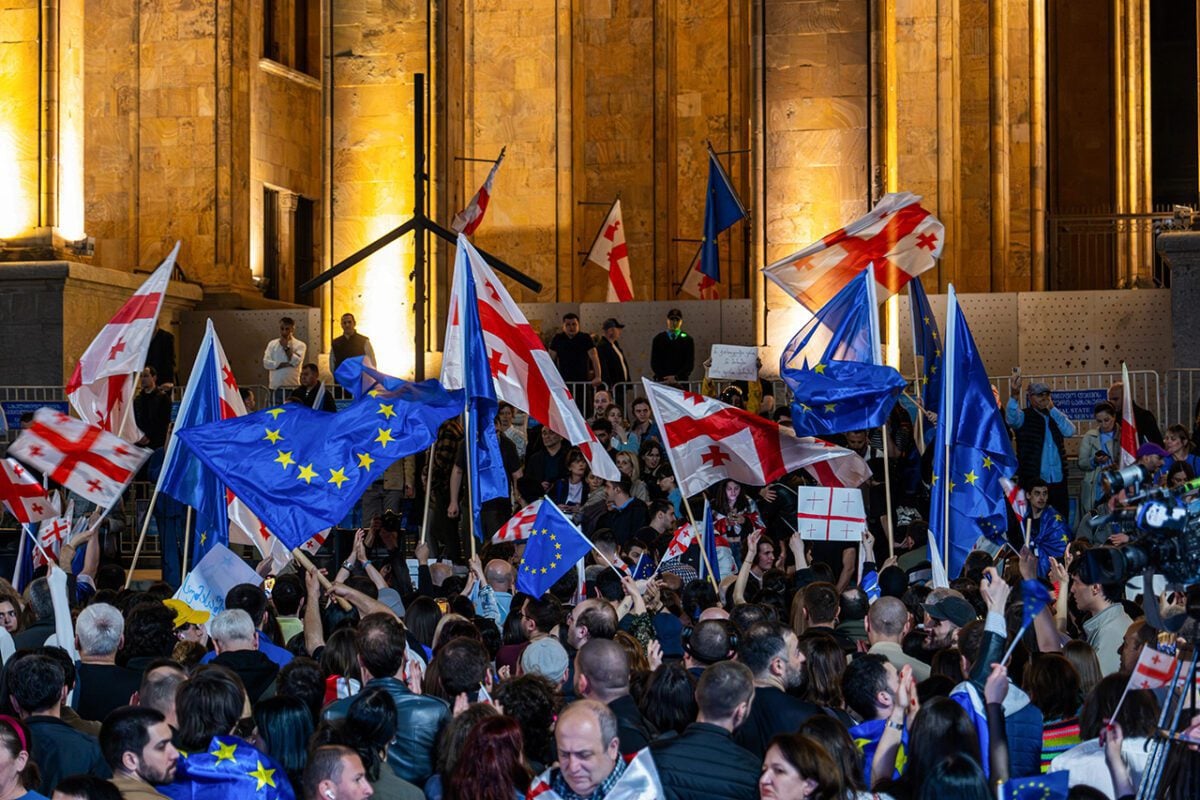
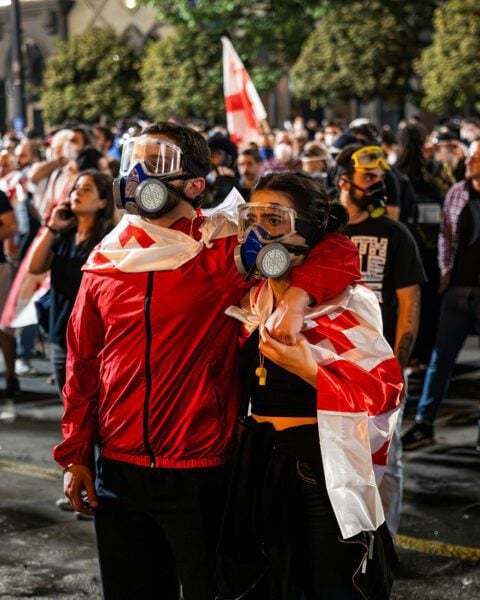
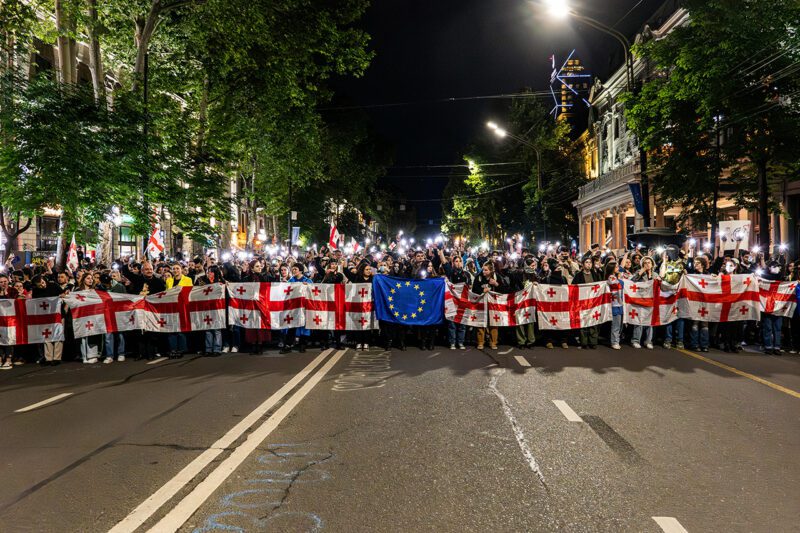
Georgia, a small country at the geopolitical crossroads of Europe and Asia, is once again at a critical juncture. Mass protests have erupted in response to its government’s rollback of democratic norms and a growing estrangement from the European Union — a reversal that threatens to undermine not only the country’s nascent green economy but also its emergence as a key energy partner in the region.
Last November, Prime Minister Irakli Kobakhidze of the ruling Georgian Dream (GD) party announced a delay in EU accession negotiations until at least 2028. This followed a parliamentary election cycle widely condemned by the European Parliament for irregularities. The move was a blow to Georgia’s democratic aspirations — and to its environmental ambitions. In December 2023, the country had reached a milestone, becoming the first in the South Caucasus to be granted EU candidate status.
But by early 2024, the Georgian government passed a "Russian-style" foreign agent law requiring NGOs and media outlets receiving more than 20% of their funding from abroad to register as under foreign influence. The EU halted accession progress, warning that the law must be repealed to resume talks.
Georgia’s story is a warning about the fragility of the green transition when democratic institutions falter.
At the center of this rightward shift is Bidzina Ivanishvili, a billionaire oligarch and de facto powerbroker. His net worth is estimated at roughly one-quarter of Georgia’s GDP. His hillside compound in Tbilisi, said to house a billion-dollar art collection, has become a symbol of concentrated wealth and political opacity. Ivanishvili has framed critics as stooges of a "global party of war" seeking to entangle Georgia in Western conflicts.
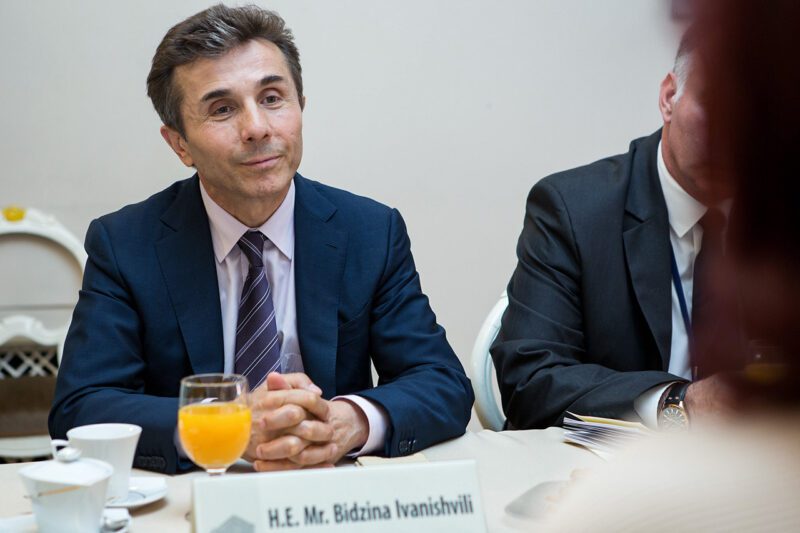 Bidzina Ivanishvili, Georgian billionaire oligarch and "de facto powerbroker"
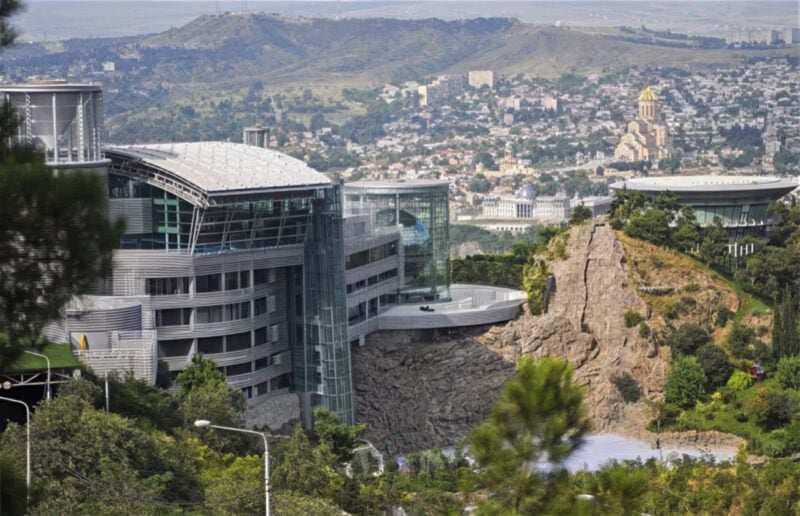 Ivanishvili’s mega mansion sits perched on a hill overlooking the Tbilisi skyline. Inside lies an art collection worth over $1 billion with works by Picasso and Hirst; Photo by Marika Kochiashvili
The dream of EU membership had been more than symbolic. For many Georgians, the bloc represented a framework for green growth, foreign direct investment, and adherence to strict environmental standards. Georgia had taken bold steps in the last decade: issuing its first green bond, expanding 24-hour electricity access to all citizens, and aligning regulatory frameworks with EU benchmarks.
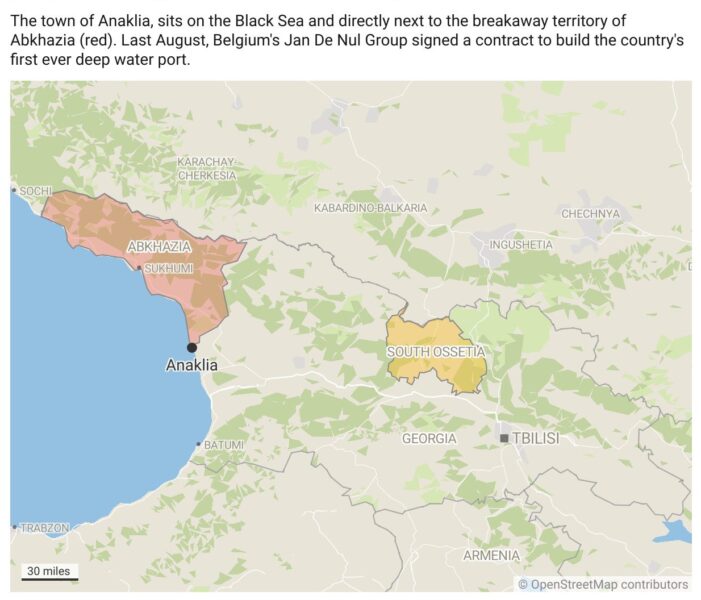 Map of Georgia
One landmark achievement was Georgia’s accession to the Treaty Establishing the Energy Community — a move that integrated the country more fully into the European energy system. This brought hope for long-term investment in renewables, especially hydroelectricity, which already supplies 81% of Georgia’s electricity.
Georgia’s green economy is not merely a domestic matter — it is an emblematic case study for how authoritarian drift, oligarchic entrenchment, and weak regulatory enforcement can imperil climate progress.
However, reforms have clashed with entrenched corruption and oligarchic control. In 2023, the government attempted to sell over 260,000 acres of protected woodland in the Racha region to Davit Khidasheli, a businessman with close ties to Vladimir Putin. The plan to convert the land into a private hunting club was thwarted only after pressure from environmental group Saving Rioni Valley, which had consolidated a number of smaller grassroots organizations.
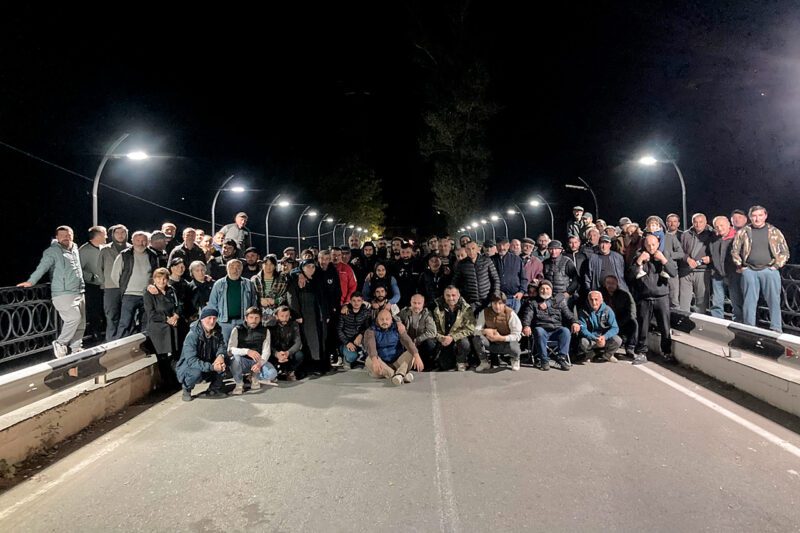 Environmental protestors from the group Saving Rioni Valley pose together on a highway in the highland region of Racha; Photo credit: Save Rioni Valley
Their success was rare but significant. The proposed sale would have violated the Bern Convention, an EU-mandated biodiversity protection agreement. The group’s statement — “the license was issued without consent from the people… minerals and water resources ended up in private hands” — underscored the disconnect between the government’s public commitments and its private dealings.
 Finance as both solution and vulnerability
The role of finance — both corrupt and catalytic — is central to Georgia’s green economy story. Ivanishvili’s Georgia Co-Investment Fund, operating through a web of shell companies in Luxembourg and the Cayman Islands, controls vast assets in real estate and energy. It is a case study in how capital, when unaccountable, can subvert democratic and environmental goals.
Yet innovative finance also offers a pathway forward.
Public development banks have played a pivotal role: the Asian Development Bank and the European Bank for Reconstruction and Development have collectively channeled over $1 billion into Georgia’s sustainability efforts. The German KfW has invested more than €200 million into energy reforms — most recently funding a green hydrogen pilot in Batumi to decarbonize public transportation.
What’s missing is a more coordinated and conditional approach that links these investments to enforceable environmental and governance standards. Blended finance mechanisms, like sustainability-linked bonds and outcome-based contracts, could better align investor incentives with community impact. For example, Georgia might explore issuing green impact bonds that tie repayment terms to verified improvements in rural electrification, biodiversity protection, or emissions reductions.
Elsewhere in Eastern Europe, countries like Moldova have piloted diaspora bonds that enable expatriates to co-invest in national infrastructure. In Georgia — where remittances make up nearly 13% of GDP — this model could both raise capital and strengthen civic ties.
Georgia’s green future will not be determined by technocrats alone. Civil society has shown remarkable resilience, from halting the Namakhvani hydropower plant (a Turkish-Norwegian project fast-tracked without environmental review) to resisting forest privatizations.
These grassroots movements offer a critical counterbalance to elite capture. But they operate in increasingly dangerous conditions. Some activists face legal reprisals, while others are targeted in disinformation campaigns.
Meanwhile, Western responses remain cautious. The U.S. Congress’s proposed MEGOBARI Act — a bipartisan effort to reaffirm support for Georgian democracy — is a welcome step. But sanctions on oligarchs must be enforced. The EU, for its part, must examine how financial opacity within its own member states, such as Luxembourg, enables the very behavior it condemns abroad.
More broadly, Georgia’s story is a warning about the fragility of the green transition when democratic institutions falter. The EU’s decarbonization agenda hinges not only on clean technology but on geopolitical reliability. Georgia — a vital corridor for Black Sea energy transport — is slipping through the cracks of Western complacency.
Georgia’s green economy is not merely a domestic matter — it is an emblematic case study for how authoritarian drift, oligarchic entrenchment, and weak regulatory enforcement can imperil climate progress. But it is also a laboratory for how innovative finance, international solidarity, and citizen movements can push back.
The stakes are high. The longer reforms stall, the greater the risks to Georgia’s environment, energy independence, and democratic fabric. If the West wants to support a green and democratic future in Georgia — and in similarly vulnerable states — it must match its rhetoric with real resources, rigorous standards, and respect for the citizen-led movements already lighting the way.


Related Content
How collateral rules and payment terms keep impact capital out of reach
106
0
Why free education tools need reliable access, credible evidence, and lasting support
120
0
What Islamic finance and impact investing can learn from each other
208
0

After the flood, recovery capital must do more than replace what was lost
 315
0
315
0
Comments
Deep Dives
RECENT
 321
0
321
0
 288
0
288
0
 400
0
400
0
Editor's Picks
 106
0
106
0
 120
0
120
0
 208
0
106
0
106
0
120
0
208
0
208
0
106
0
106
0
120
0
208
0
Webinars
Signed by the author. Collected at the door at Lipton Hall, NYU School of Law,…
Signed and personally inscribed — you'll write the inscription as you order. Limited · 50…
News & Events

The foundation begins putting the larger pool to work in 2027

Federal policy uncertainty and limited grants top 2026 risks

An introductory program for foundations and family offices
Subscribe to our newsletter to receive updates about new Magazine content and upcoming webinars, deep dives, and events.
Become a Premium Member to access the full library of webinars and deep dives, exclusive membership portal, member directory, message board, and curated live chats.

0 Comments